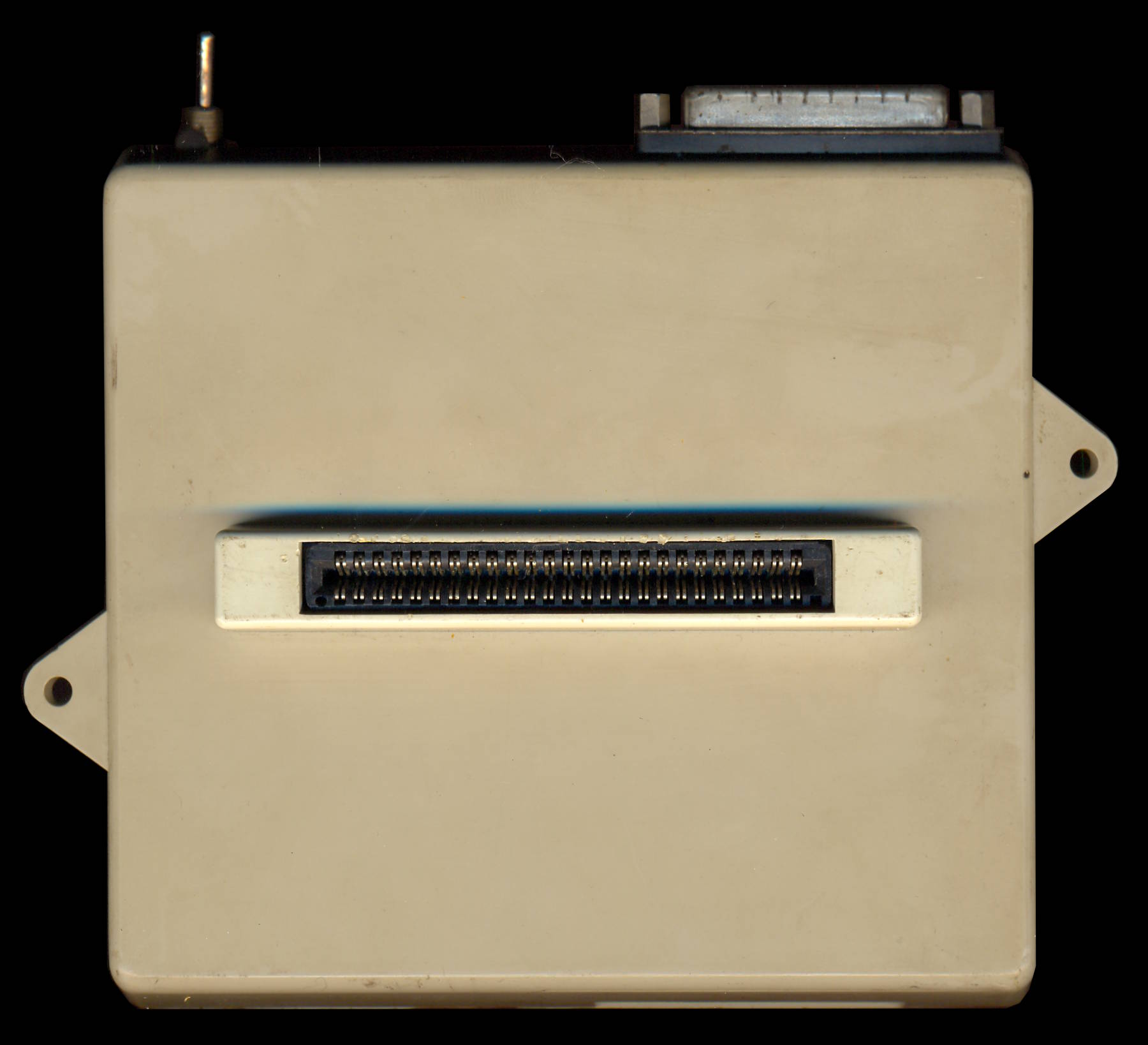
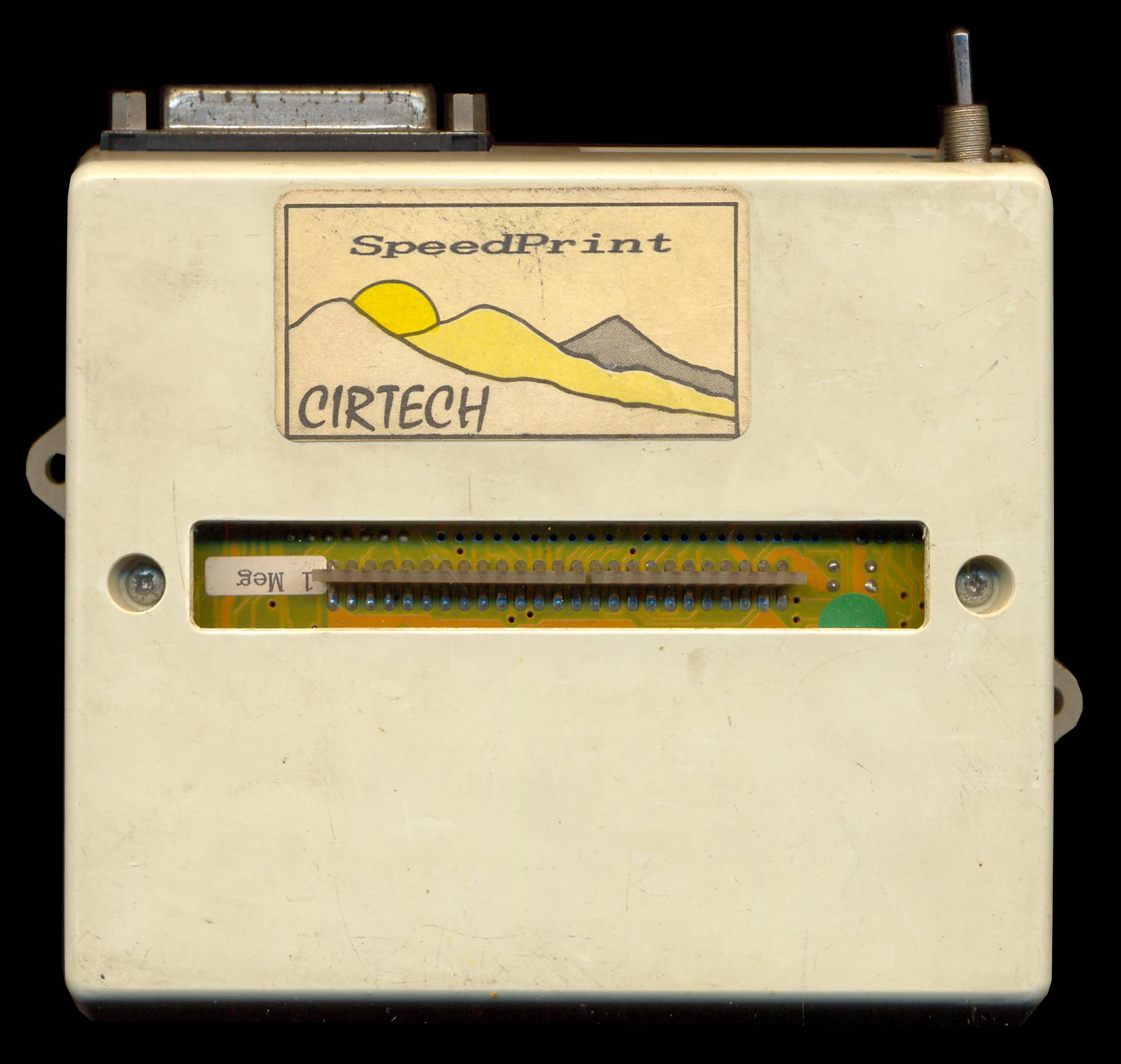
The **SpeedPrint** from the British firm [[en:companias:Cirtech|Cirtech]] is an advanced printer interface for the [[en:pcw|PCW]] that implements a standard Centronics parallel port. Unlike conventional print adapters, this device was specifically designed to optimize system performance during intensive printing tasks, releasing the computer's memory almost immediately through the use of hardware temporary storage (print buffer).
The architecture of the **Cirtech SpeedPrint** stands out for solving one of the Amstrad PCW's biggest bottlenecks: the mandatory waiting time while the native dot-matrix printer or an external Centronics printer processed text or graphic documents under LocoScript or CP/M.
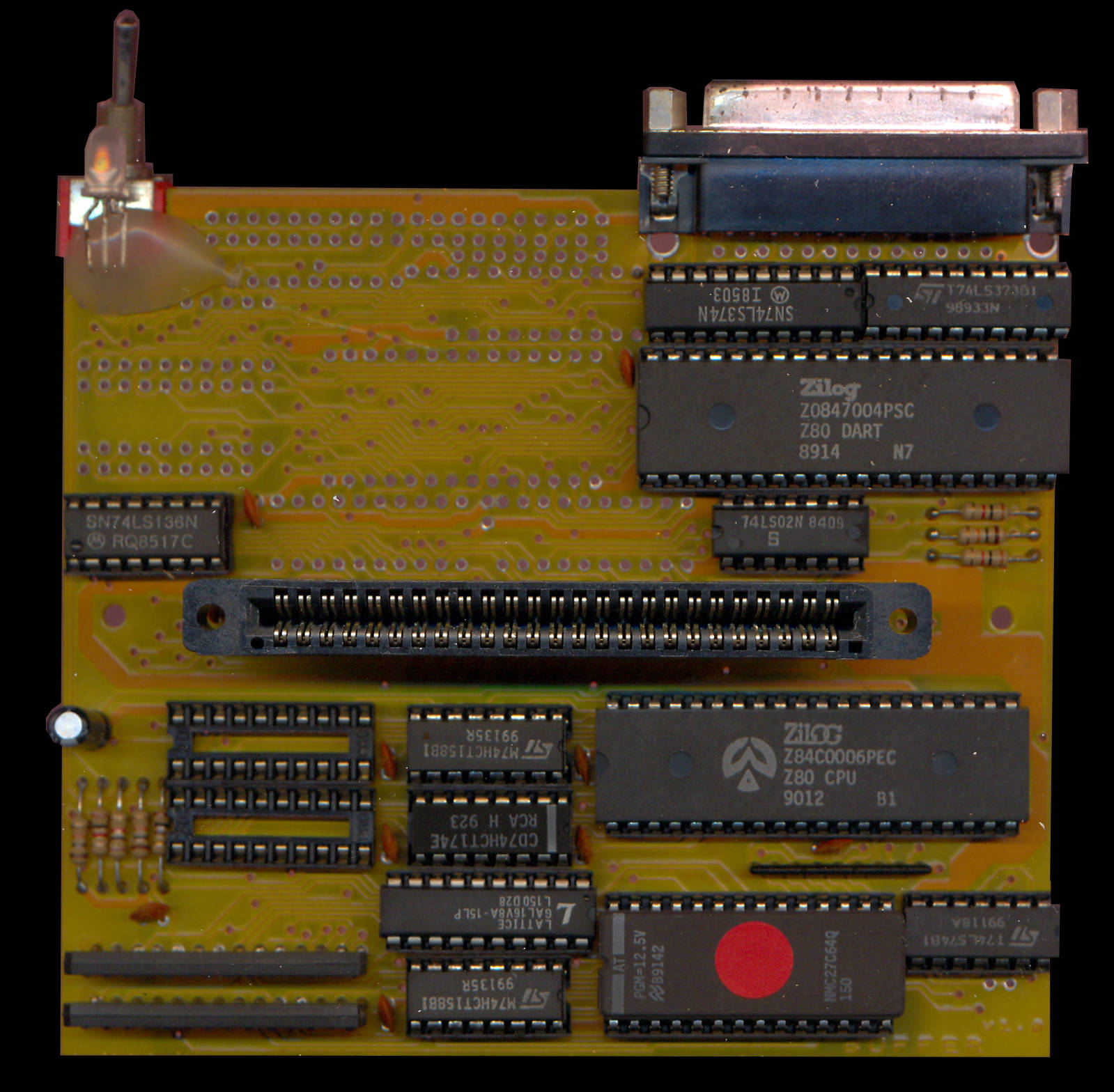
Physically, it consists of a compact white module equipped with a connector for the machine's rear expansion bus and a standard 36-pin Centronics output port. Internally, its circuitry integrates logic chips and dedicated memory configured to intercept the machine's print queues. The resident driver software supplied by Cirtech redirects the massive data flow towards the peripheral's embedded memory at the maximum speed allowed by the Z80 processor, giving the user immediate control of the keyboard to continue editing or executing other office tasks while the print queue is emptied in the background autonomously.
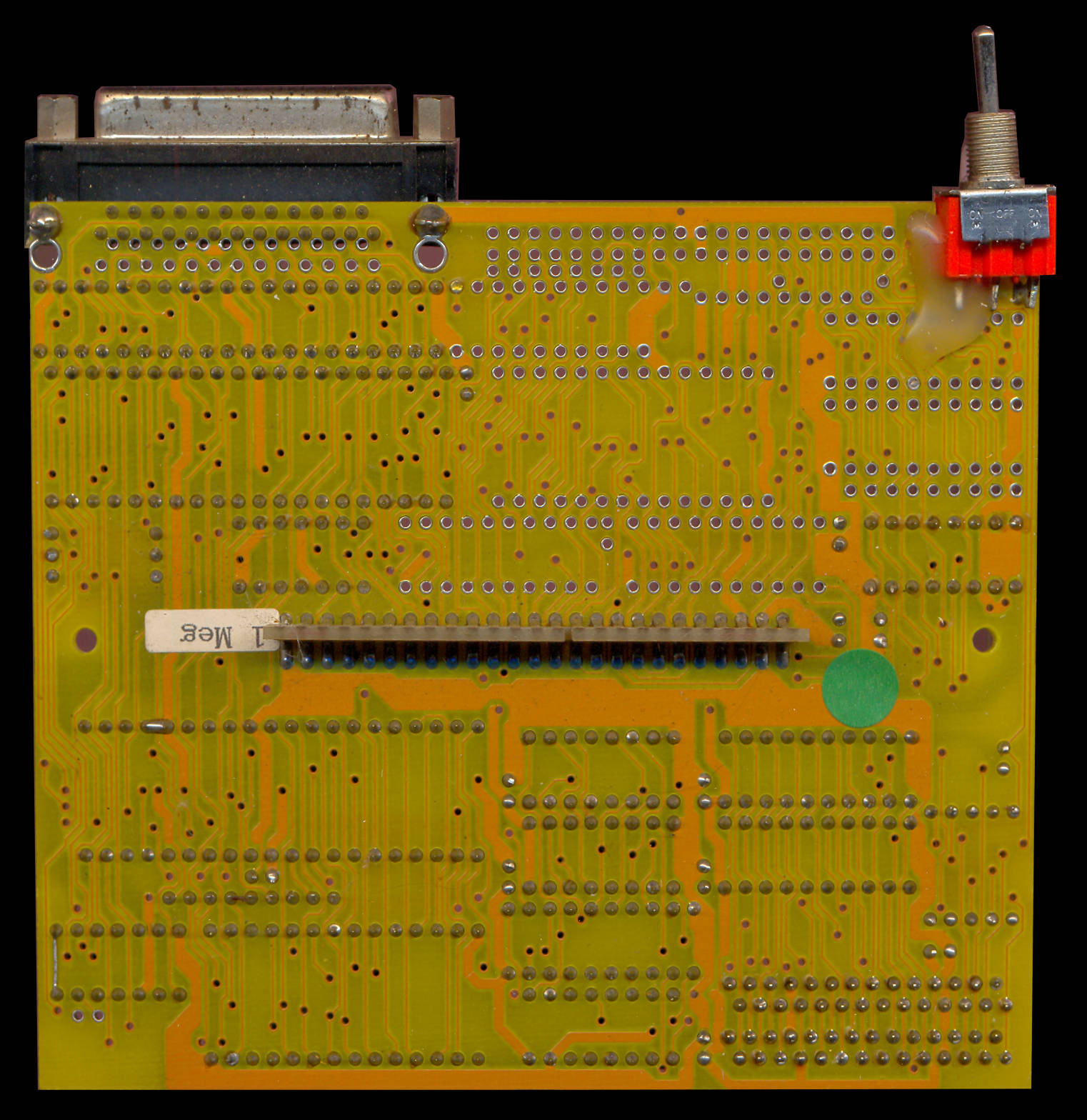
At the silicon level, the SpeedPrint printed circuit board (PCB) stands out for an advanced topology that combines physical storage arrays, synchronous Centronics handshaking control logic, and Cirtech's signature industrial-grade shielding against bus shorts:
- The Dedicated Silicon Buffer Array: Technical data confirmed by low-level hardware logs from joyce.de shows that the standard stock model came factory-equipped with 32 KB of static RAM (SRAM) dedicated exclusively to text buffering. Higher-end hardware revisions included modular sockets allowing a hardware drop-in expansion up to 64 KB or 128 KB. This dedicated silicon matrix holds dozens of text pages completely independent from the computer's native system RAM.
- Autonomous Centronics Handshaking Controller: The interface mounts discrete 74LS series TTL logic gates tasked with running the hardware print synchronization parallel to the computer. While the PCW's Z80 CPU is fully released back to the operator, the interface chips monitor return signaling status directly from the cable lines (such as
BUSY or the character-processed acknowledgment pulse /ACK). The card dynamically feeds the buffered data array into the external output port using the physical active-low triggering pulse /STROBE.
- Shielded TTL Line Buffers (74LS Series): To protect the computer from analog feedback loops, Cirtech routed all parallel signals through inverting TTL commutator buffers and Schmidt triggers (such as the 74LS14 or 74LS244). This acted as a permanent electronic fuse: if the high-current mechanical pin and pinfeed motors of the external printer suffered a short circuit or induced magnetic reverse currents, only the cheap, discrete ICs on the SpeedPrint board would burn out, protecting 100% of the internal motherboard and Z80 CPU of the PCW.
The ingenuity of the SpeedPrint architecture relies on intercepting native Amstrad Input/Output vectors to ensure instant out-of-the-box compatibility without patching office software binaries:
- Printer Address Shadowing: The board's decoding logic monitors the address bus and intercepts memory cycles aimed at the official Amstrad printer addresses: ports
0E2h (Centronics data write) and 0E3h (status lines read). When LocoScript or a CP/M Plus spooler pushes a byte to port 0E2h, Cirtech's hardware captures it in nanoseconds at full bus speed. Simultaneously, when reading port 0E3h, the card forces an artificial "Printer Ready" state (pulling the BUSY line low). This completely tricks the Z80 CPU into treating the expansion board as an instantaneous printer, causing the PCW to dump document data as fast as the CPU clock permits, returning keyboard controls back to the office worker immediately.
- Resident CP/M Software Control (`SPRINT.COM`): For advanced CP/M Plus environments, the utility bundle included a resident background driver named
SPRINT.COM. This utility provided low-level control over the physical buffer, injecting a visual state bar on the upper corner of the monitor screen to show buffer capacity, allowing operators to trigger hardware print pauses, or safely flush the internal SRAM array in the event of an external printer paper jam.