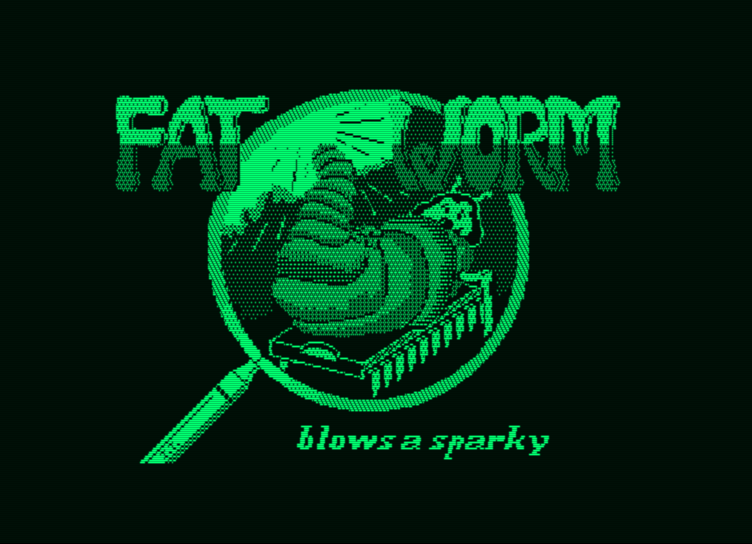
FAT WORM BLOWS A SPARKY
TECHNICAL SPECS

Production Team:Original Coding & Design: Julian Breeze
Original Music & Sound: Ron Hubbard
Game Year:1986 (Original)
Port Year:2023
Compatibility:PCW 8256 - PCW 8512 - PCW 9512
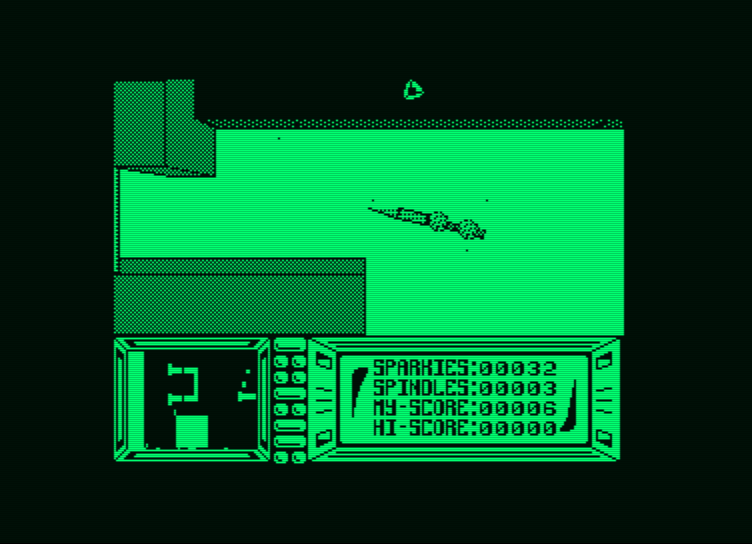
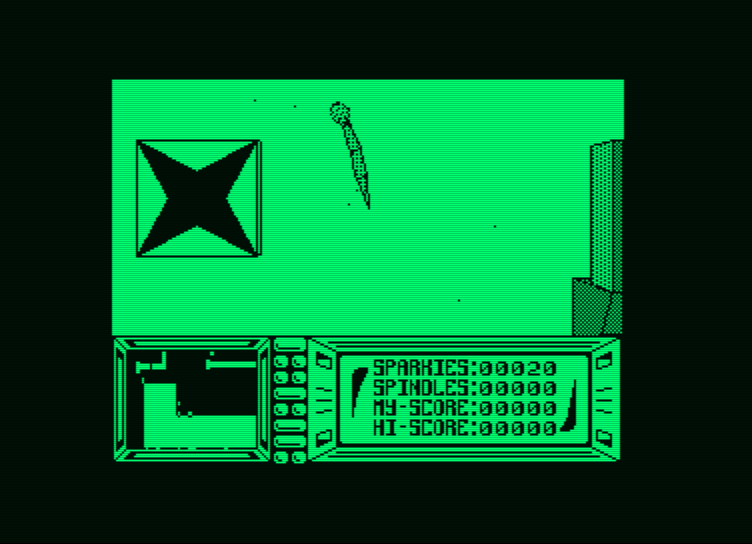
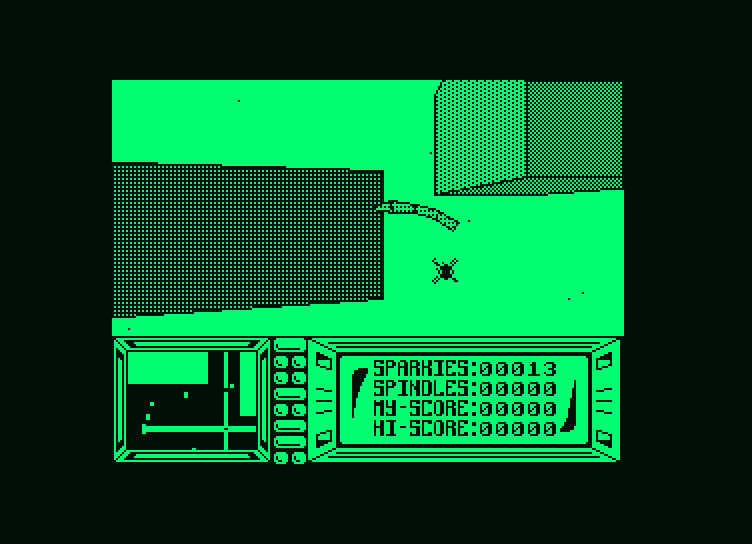
Graphics:3D Solid Polygons (Hidden Wireframe)
Sound:Adapted Internal Beeper & DK'Tronics Sound (DK'Sound)
Peripherals:Redefinible Keyboard / DK'Tronics Joystick
Loading:Single Load
Genre:Action Adventure / Strategy / Three-Dimensional
Language:English (Port texts and original menus)
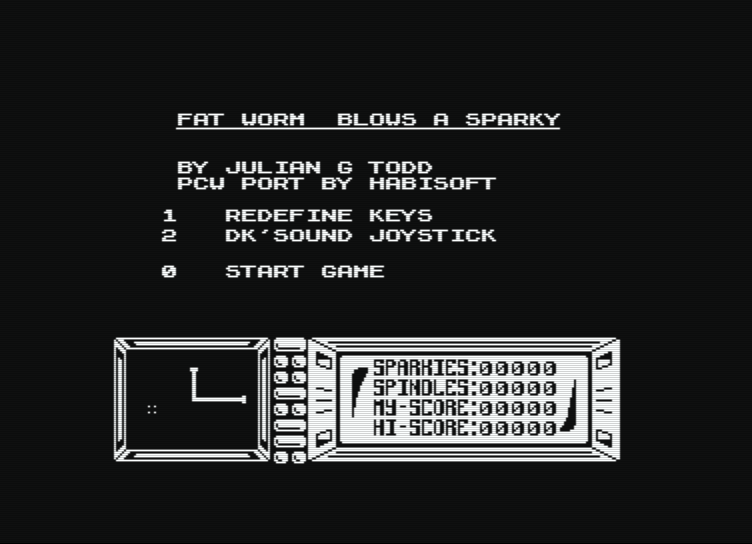
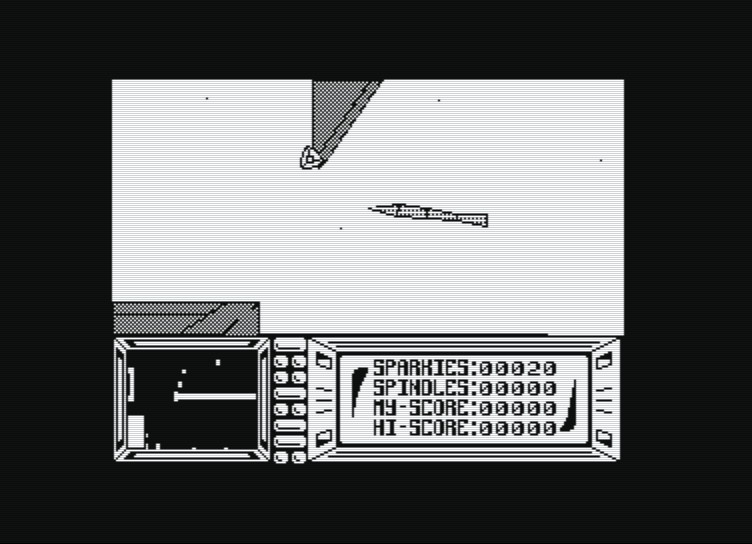
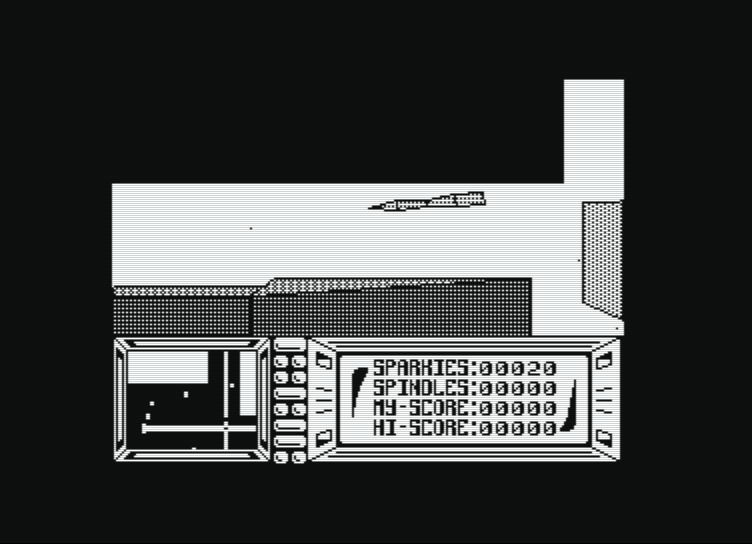
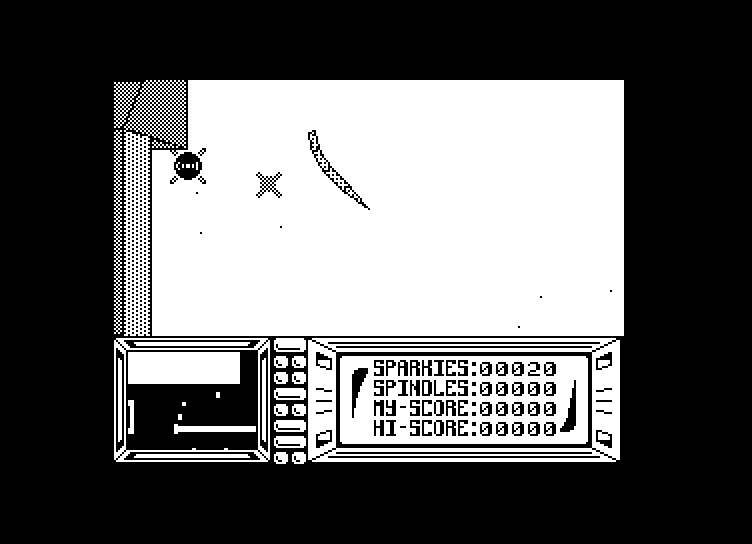
Screenshots
Description
Originally released in 1986 by the prestigious British studio Durell Software and designed by Julian Breeze, Fat Worm Blows a Sparky immediately stood out as an absolute programming milestone for 8-bit systems (ZX Spectrum, Amstrad CPC, and Commodore 64). In an era dominated by pixelated 2D perspectives, this title broke the mold by implementing a stunning real-time 3D engine powered by solid polygons and hidden wireframe geometry. This technical achievement reaches a historic milestone with the extraordinary 2023 port by HabiSoft, natively adapting this complex three-dimensional environment to the architecture of the Amstrad PCW.
The game's premise plunges us into a surreal, abstract sci-fi journey inside the printed circuit boards of a micromechanical computer. Players take control of Sparky, a charismatic silicon cyber-worm (the "Fat Worm"), who has accidentally become trapped within the intricate pathways of a high-density motherboard. Sparky's core mission is to sabotage the machine's operations by devouring a specific number of mysterious floating logic components known as "Logons," while simultaneously searching for the processor's exit before his energy reserves drain completely or the relentless security network destroys him.
Far from a linear adventure, Fat Worm's three-dimensional stages present a massive interconnected network filled with geometric ramps, elevated bridges, steep drops, and hidden nooks that require pristine spatial handling. The interactive environment features its own ecosystem of threats: from automated CPU sentinels patrolling the logic nodes, to the destructive "Sparks" (high-voltage electrical charges) that actively hunt our protagonist. The remarkable smoothness with which the graphics engine calculates perspective lines when rotating the camera or bending the worm's segmented body caused a sensation in the press back in the day and keeps its technical charm fully intact in this new port.
To survive this hostile circuitry, Sparky doesn't just dodge threats; he can gather and eject different types of energy "Tokens" that alter his movement physics or serve as defensive projectiles against enemy systems. HabiSoft's port pushes the Amstrad PCW's Z80 microprocessor to its limits to match the original geometric calculation rate, delivering an astonishing refresh rate for a system primarily built for word processing. The original menus and iconic level design are 100% preserved, offering the retro preservation community one of the purest and most challenging 3D experiences ever engineered on classic microcomputers.
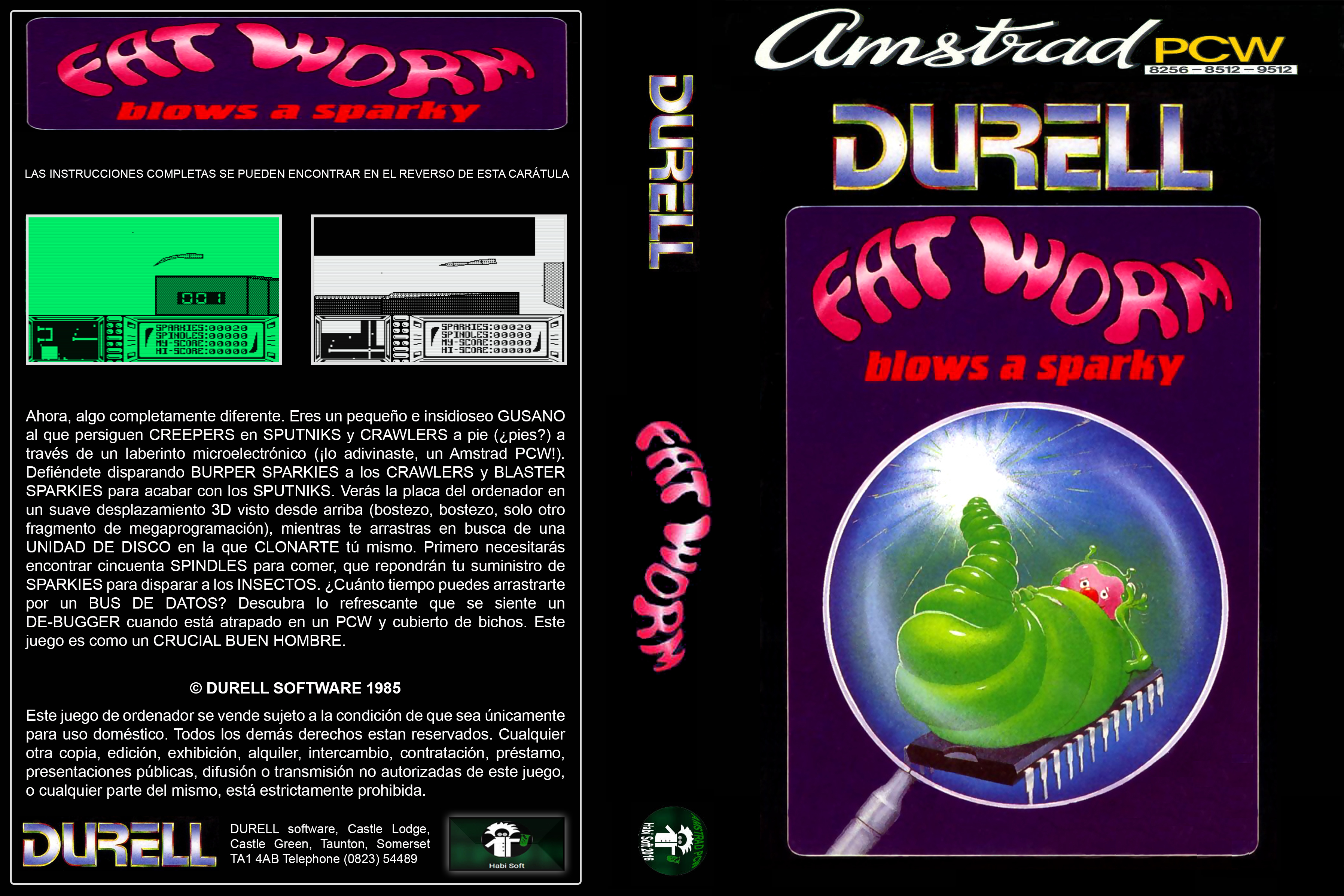
Inlay Card
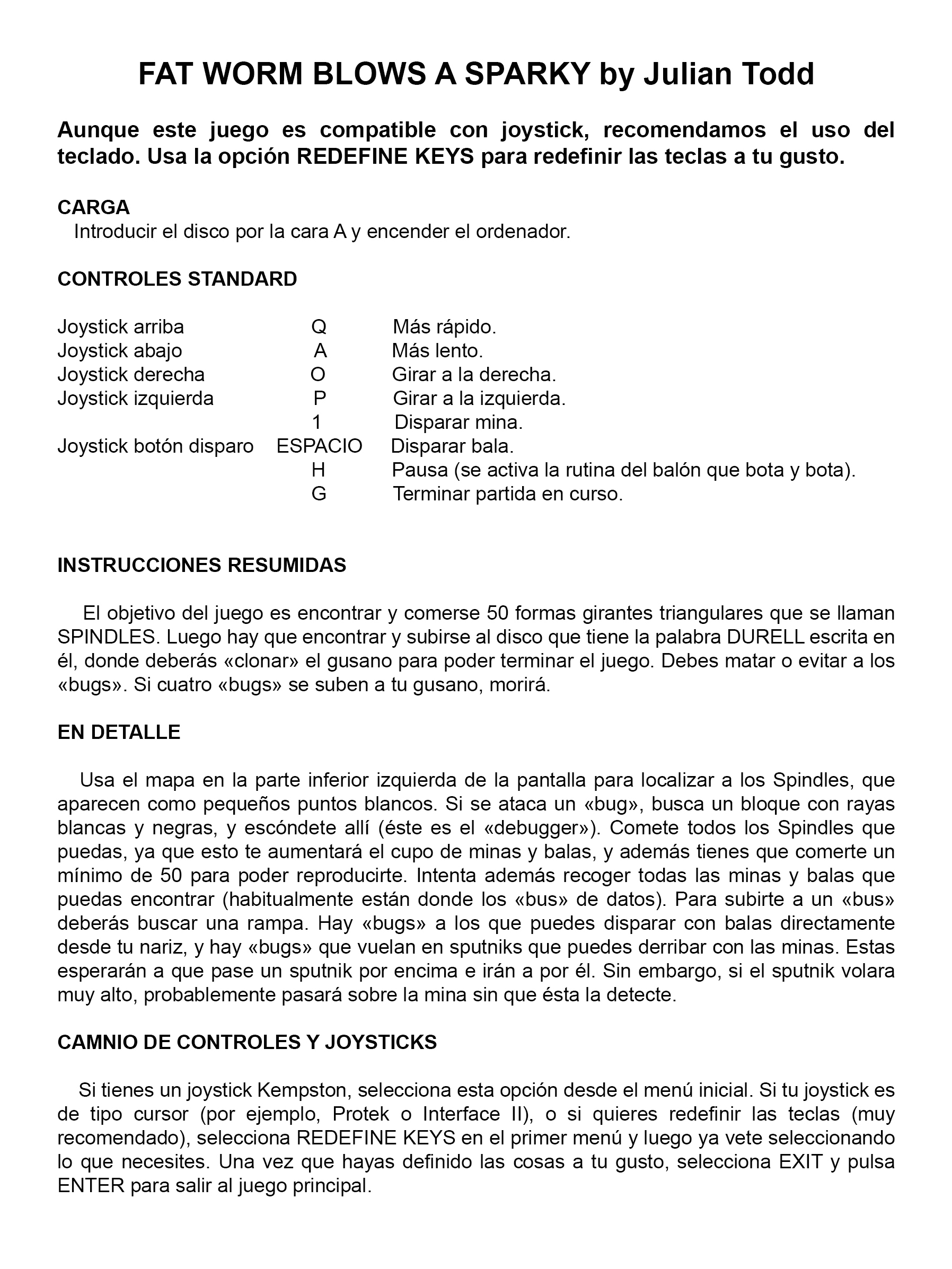
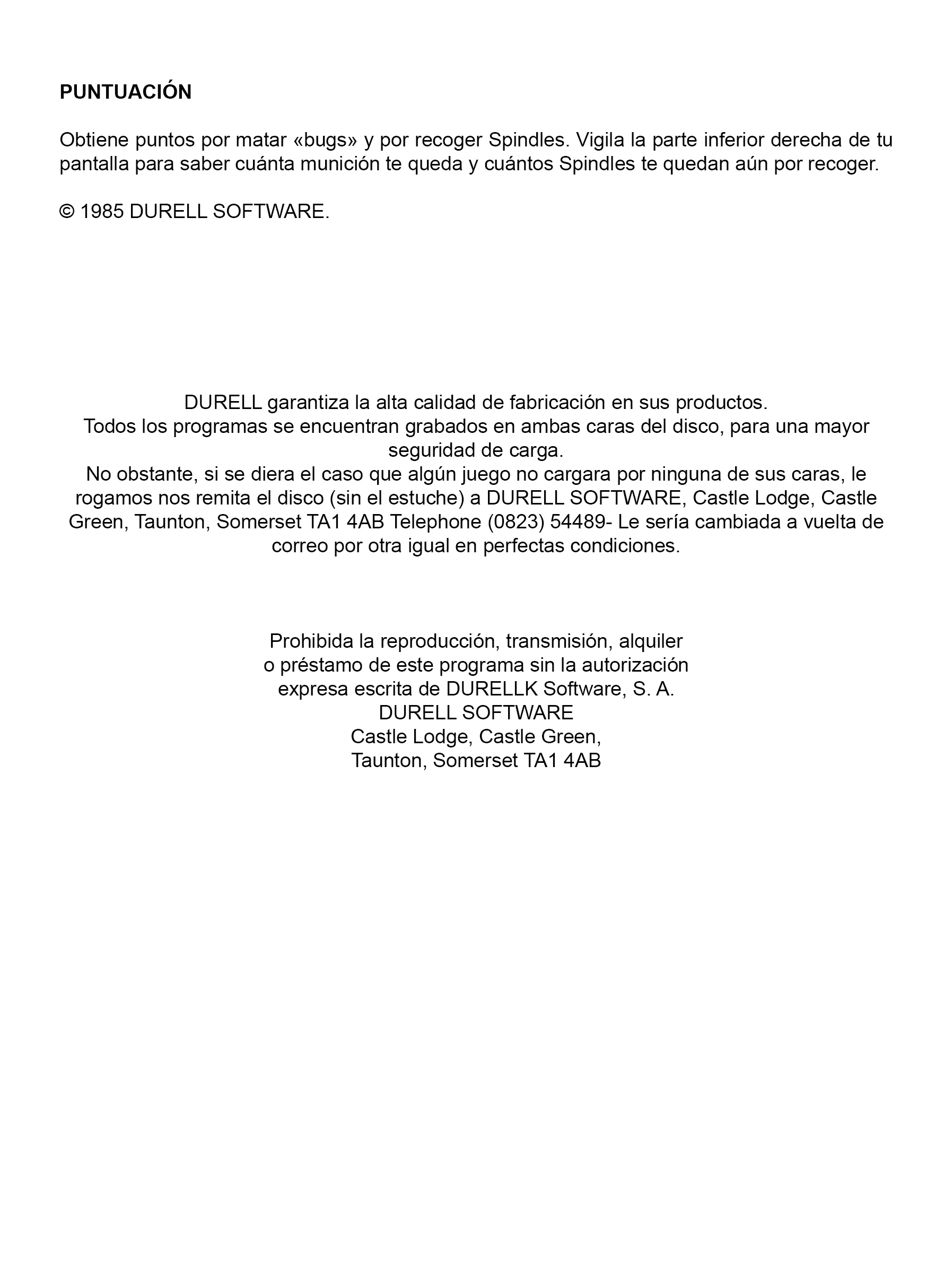
Manual
The official documentation scanned in high fidelity is attached below.
Disks
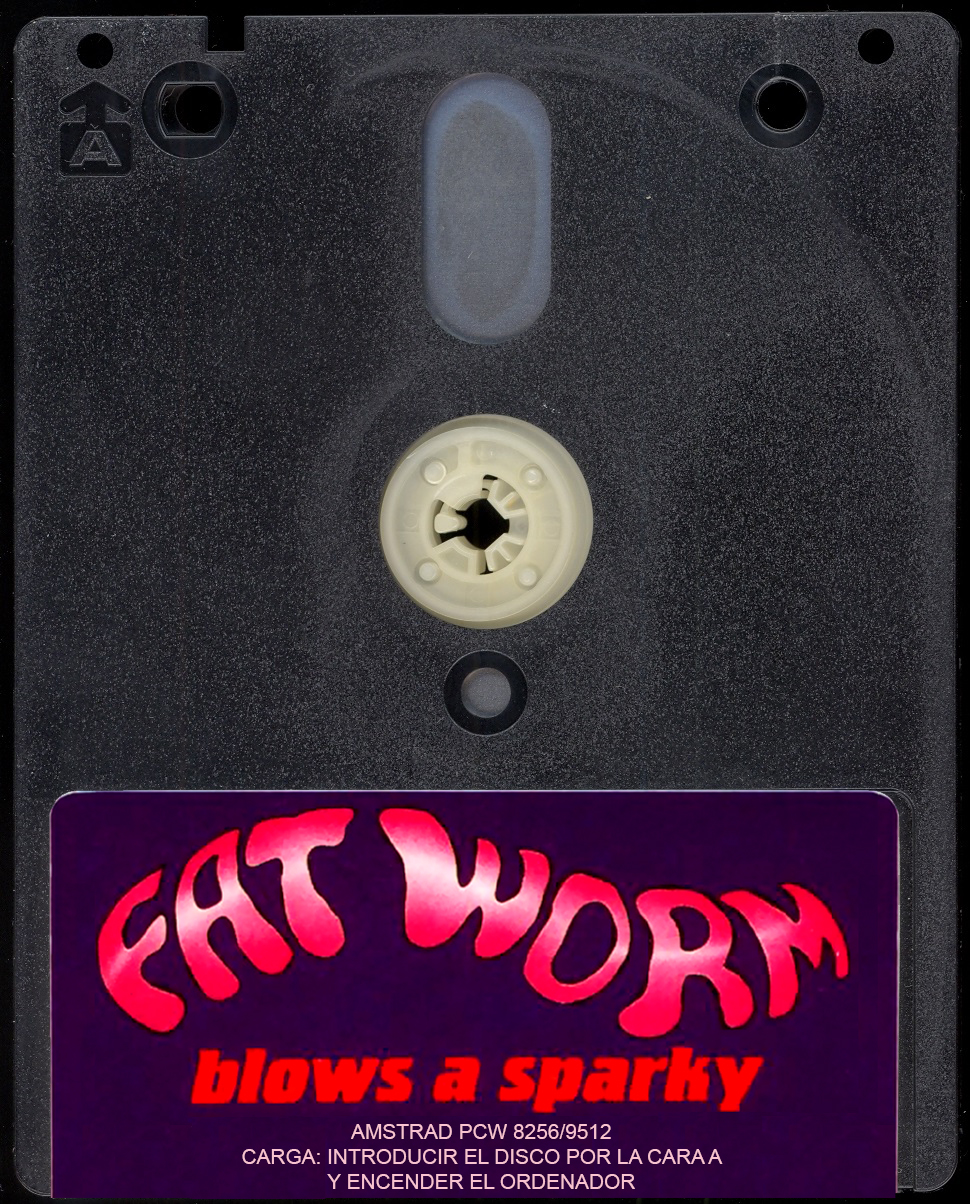
Disk Labels
Dimensions for 3" disks: Height: 7.00 cm - Width: 7.10 cm.
Extras
Keyboard and Controls
The game inherits the original three-dimensional inertial control scheme. It supports the DK'Sound / DK'Tronics joystick. The keyboard layout is fully redefinable via the internal game menu; the default configuration mapping is detailed below.
Q Key:FASTER (Accelerate / Move Forward)
A Key:SLOWER (Brake / Reverse)
O Key:LEFTER (Turn Left / Camera Rotation)
P Key:RIGHTER (Turn Right / Camera Rotation)
SPACEBAR:BLASTER (Fire Defensive Projectile)
1 Key:BURPER (Eject Jump / Boost Token)
H Key:BOUNCER (Activate Geometric Bounce)
G Key:ABORTER (Abort Current Game)
Hints and Tips to Complete the Game
• Momentum and Drifting: Sparky has mass, meaning his movement is heavily affected by inertial physics. When descending steep geometric ramps, let go of the accelerate button (FASTER) and use tap steering to avoid slamming into logic walls, which drastically drains your core energy bar.
• Logon Management: Your top priority to unlock deeper CPU nodes is devouring floating "Logons". Map out a clean, looping route across the motherboard grid; leaving an item behind and back-tracking through hostile security units will cost you precious seconds.
• Strategic Ejections: Do not waste your offensive tokens (BLASTER). CPU security sentinels become exponentially more aggressive as the clock ticks away. Save your ammunition exclusively to clear tight corridors or when trapped by high-speed electrical "Sparks".
• Geometric Maps: Memorize the location of the connecting ramps. Many sections look like dead ends on a flat 2D layout, but the 3D polygon layers hide pathways leading down into lower processing blocks.
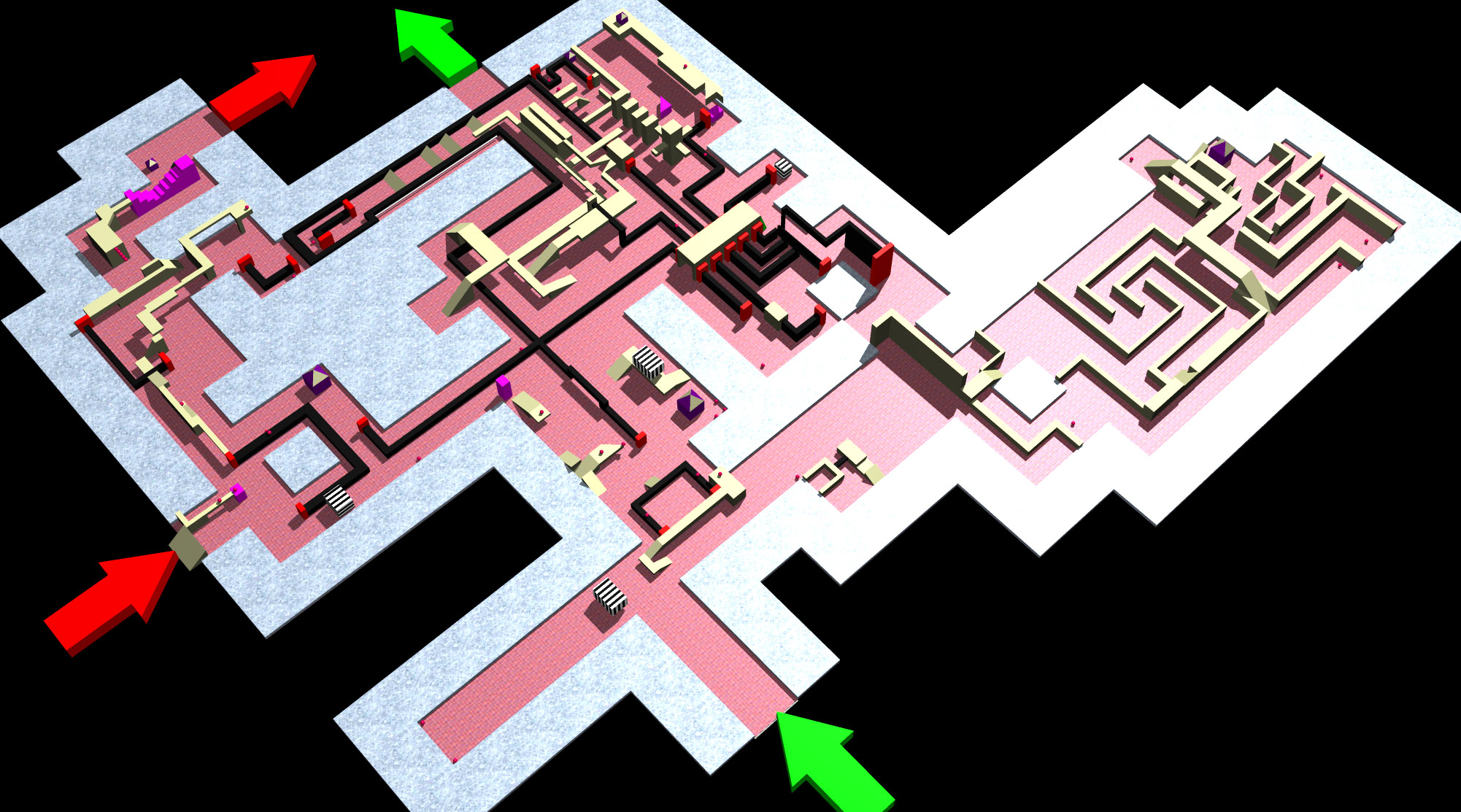
Map
The complete cartographic layout of the motherboard circuit is attached below. Clicking the map will display it tailored to your screen view inside the viewer.
Promotional Poster
Available Downloads
Game
Manuals
Videos
{{youtube>QhcldfDMwho?large}}