The AMX Mouse (originally marketed as a core component of the AMX Desktop System) was the most revolutionary, influential, and commercially successful pointing input peripheral in the history of the Amstrad PCW 8256 / 8512 (and the subsequent Schneider Joyce series in the German market). Launched in mid-1986 at a bundle price of £69.95 and developed by the prestigious British engineering firm Advanced Memory Systems (AMS) Ltd., this three-button optomechanical hardware disrupted the rigid paradigm of a purely keyboard-driven office computer, transforming the PCW into an interactive graphical workstation suitable for artistic drawing and advanced desktop publishing (DTP).
At the physical hardware level, the mouse did not utilize a standard serial connection. Instead, the package included the AMX Interface, a dedicated external expansion bus controller module that plugged directly into the rear edge connector slot of the computer's mainboard. Advanced Memory Systems designed the hardware to be completely pass-through: the interface housing replicated the electric signal lines of the expansion bus via an integrated rear connector to preserve the native Amstrad dot-matrix printer capabilities. Concurrently, it injected a standard Centronics parallel port (enabling links to third-party Epson dot-matrix or early professional laser printers) and an Atari-standard DE-9 9-pin joystick port directly into the PCW layout.
Regarding the technical low-level register architecture of the 8-bit Z80 microprocessor, the AMX interface protocol stands out for its synchronous simplicity. The expansion board did not integrate an intelligent processing chip; instead, it dumped the mechanical switch states and optical counters directly onto specific Input/Output base addresses (I/O Ports):
- Button and Joystick Control Port (0A0h / &HA0): The digital lines of the alternative Atari joystick and the three mechanical mouse switches were intercepted by sharing this port under active-low logic (a binary 0 logic state flags an active contact to ground or a switch depression):
- Bit 7: Mouse Left Button state (returns a 0 value when pressed).
- Bit 6: Mouse Middle Button state (returns a 0 value when pressed).
- Bit 5: Mouse Right Button state (returns a 0 value when pressed).
- Bit 4: Up Direction / Fire Button of the alternative Atari-specification joystick.
- Bit 3: Down Direction of the alternative Atari-specification joystick.
- Bit 2: Left Direction of the alternative Atari-specification joystick.
- Bit 1: Right Direction of the alternative Atari-specification joystick.
- Bit 0: Complementary timing synchronization line for ground pulses.
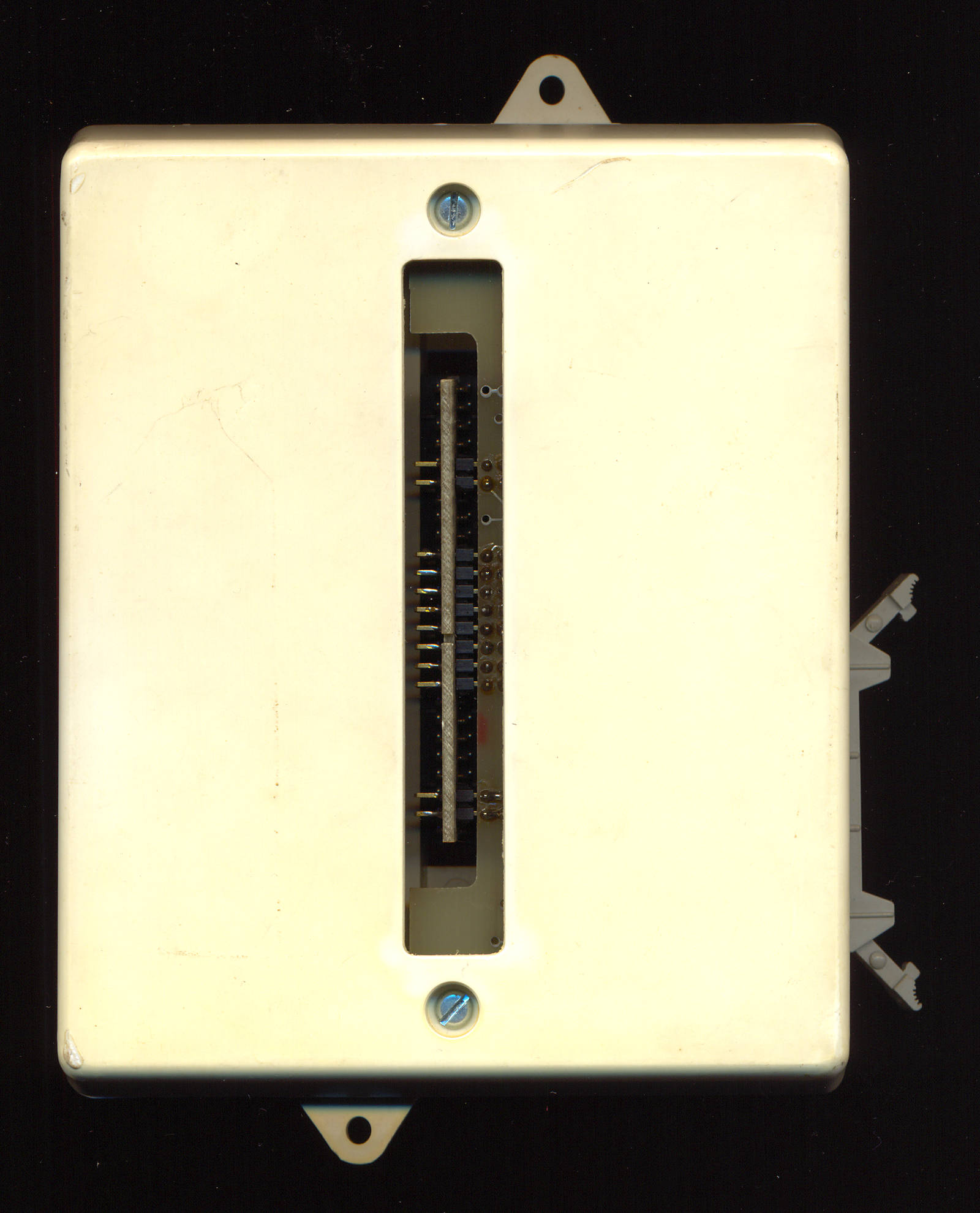 Frontal
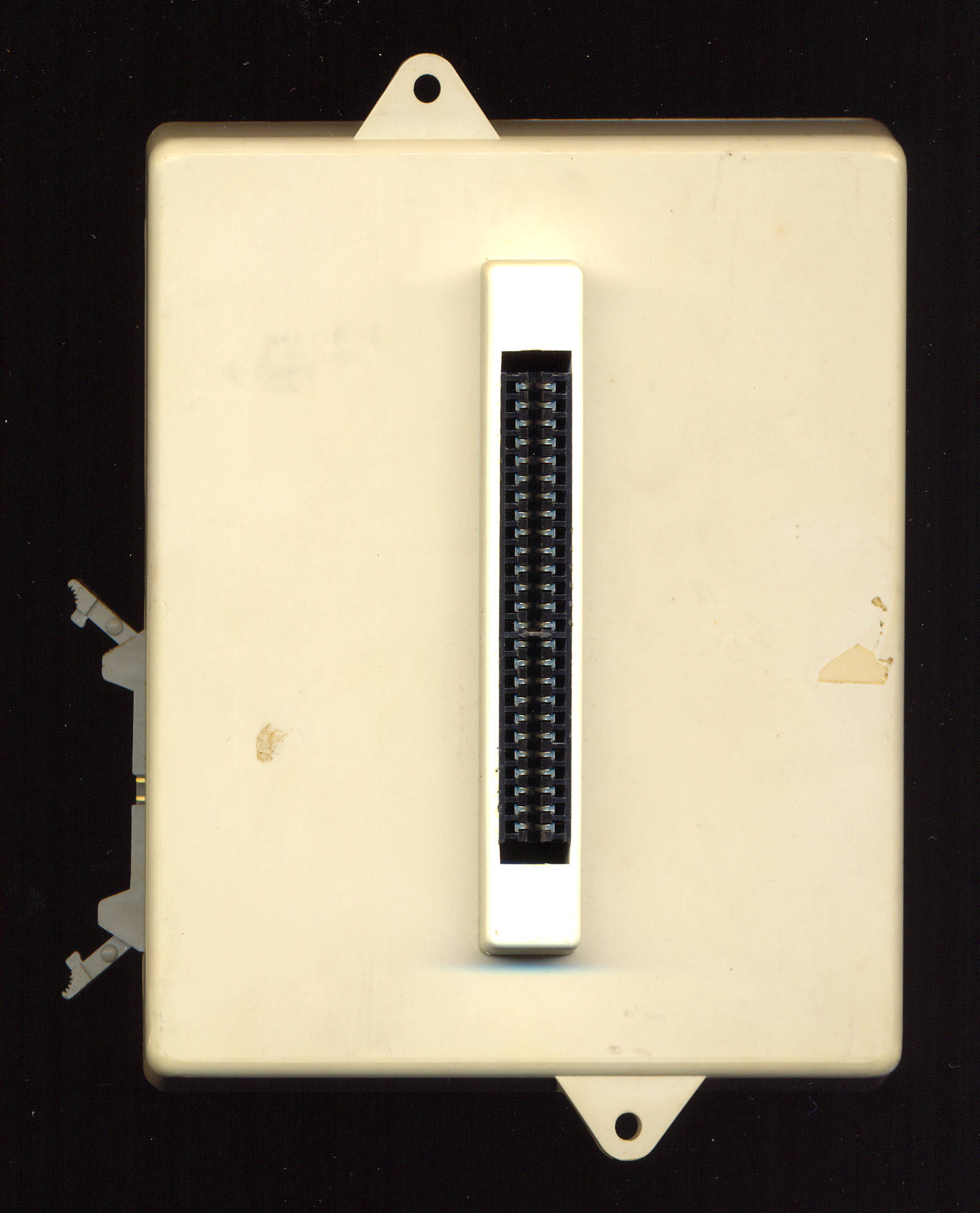 Rear
Rear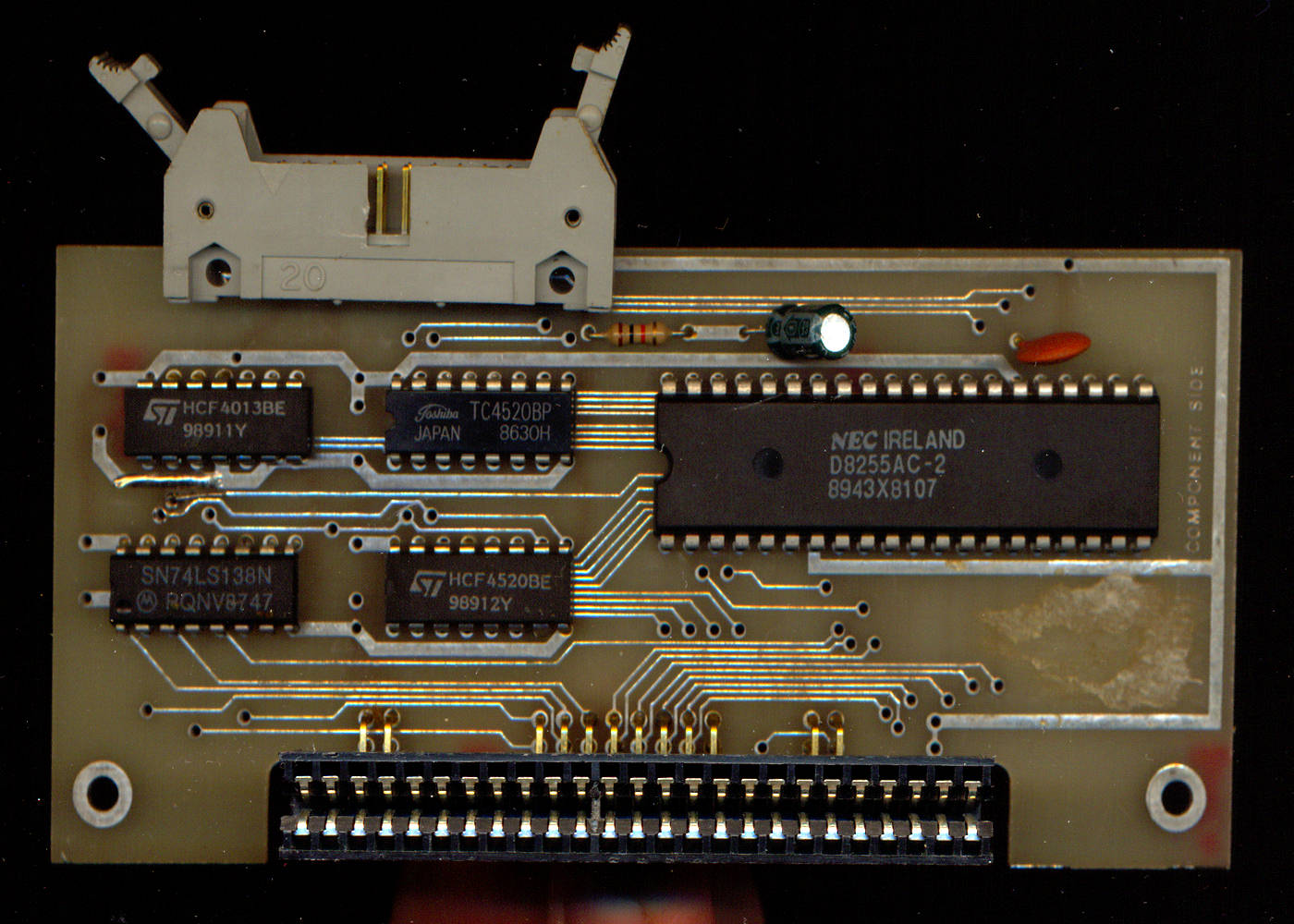 PCB Components
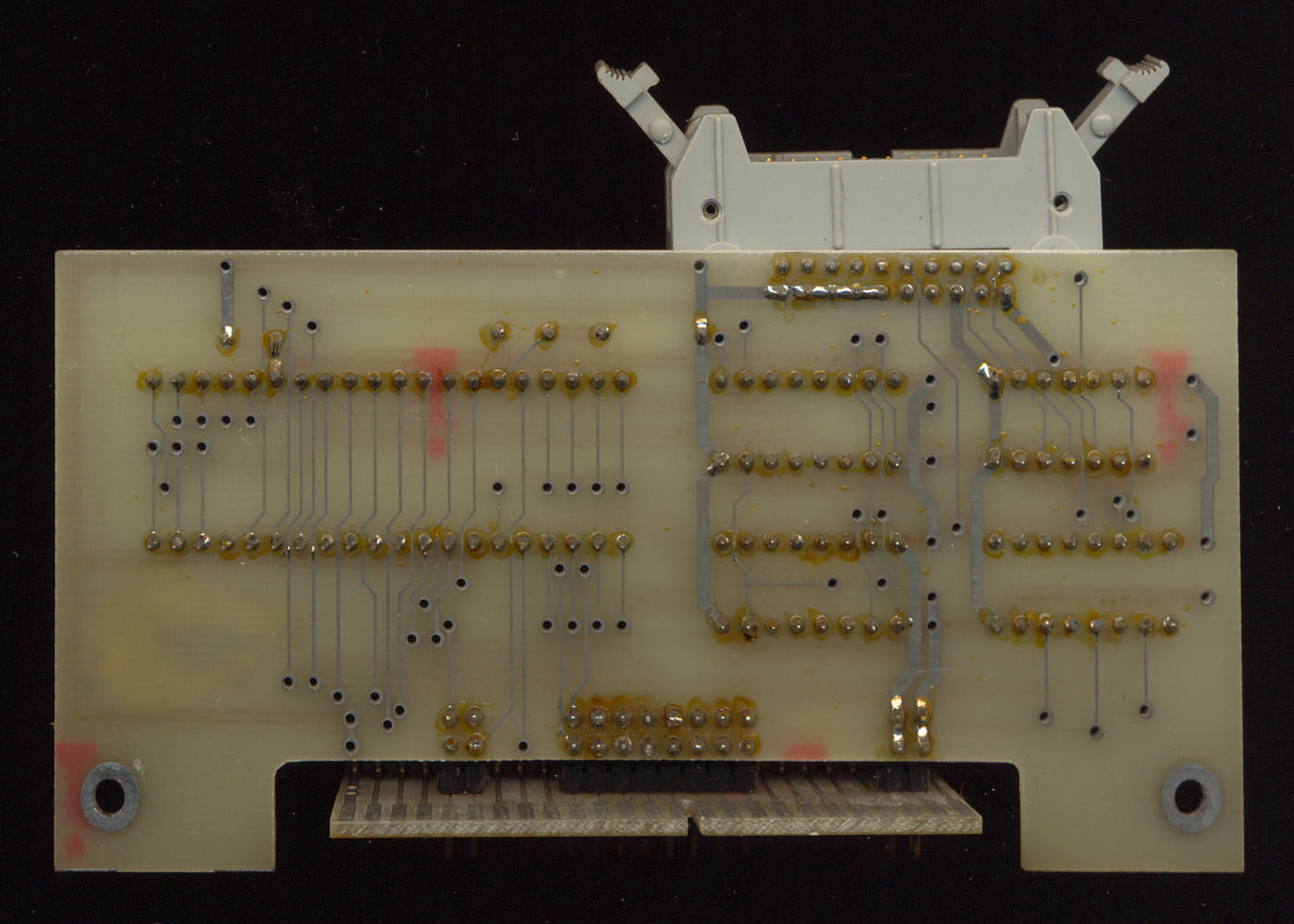 PCB Solder Tracks
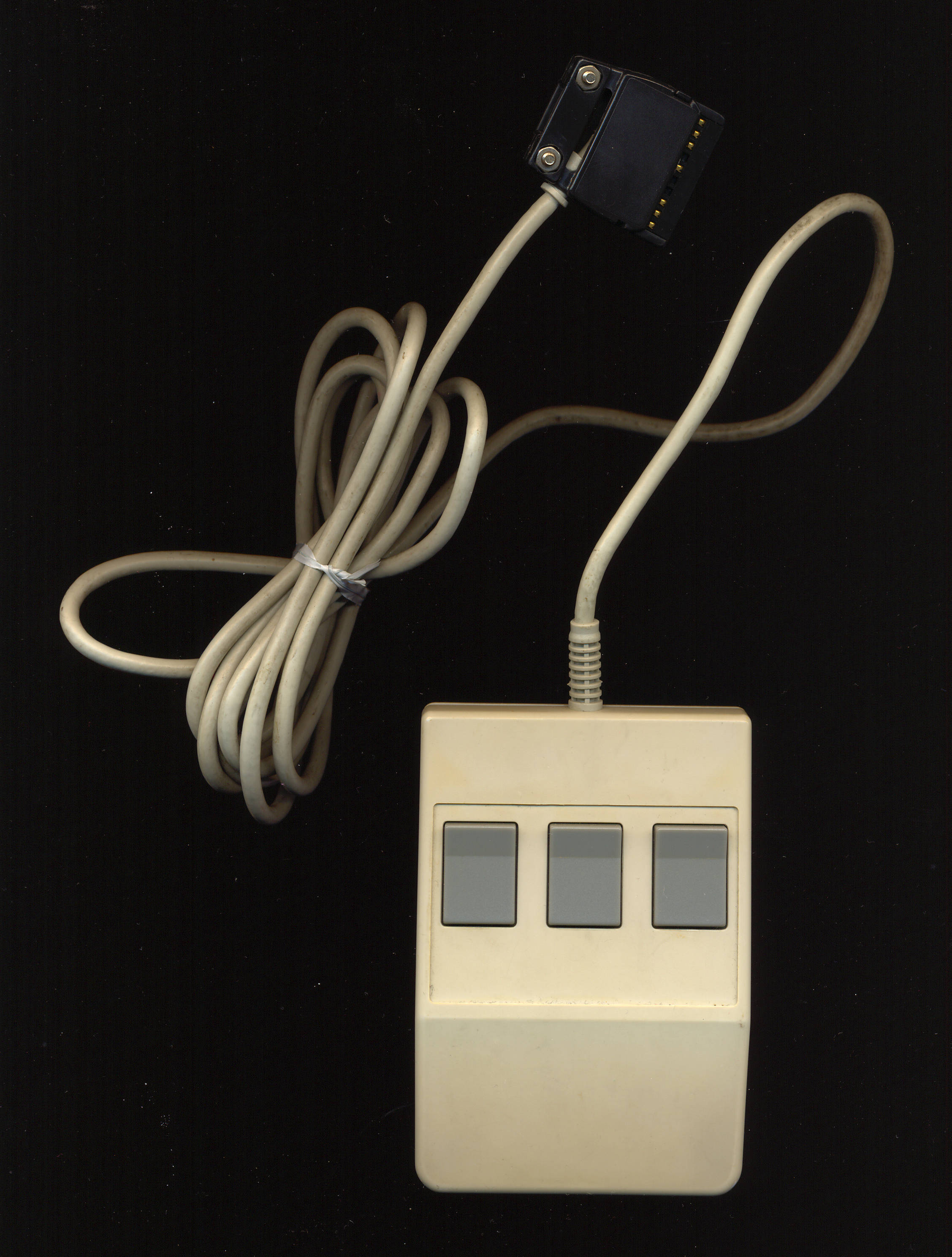 Top Casing
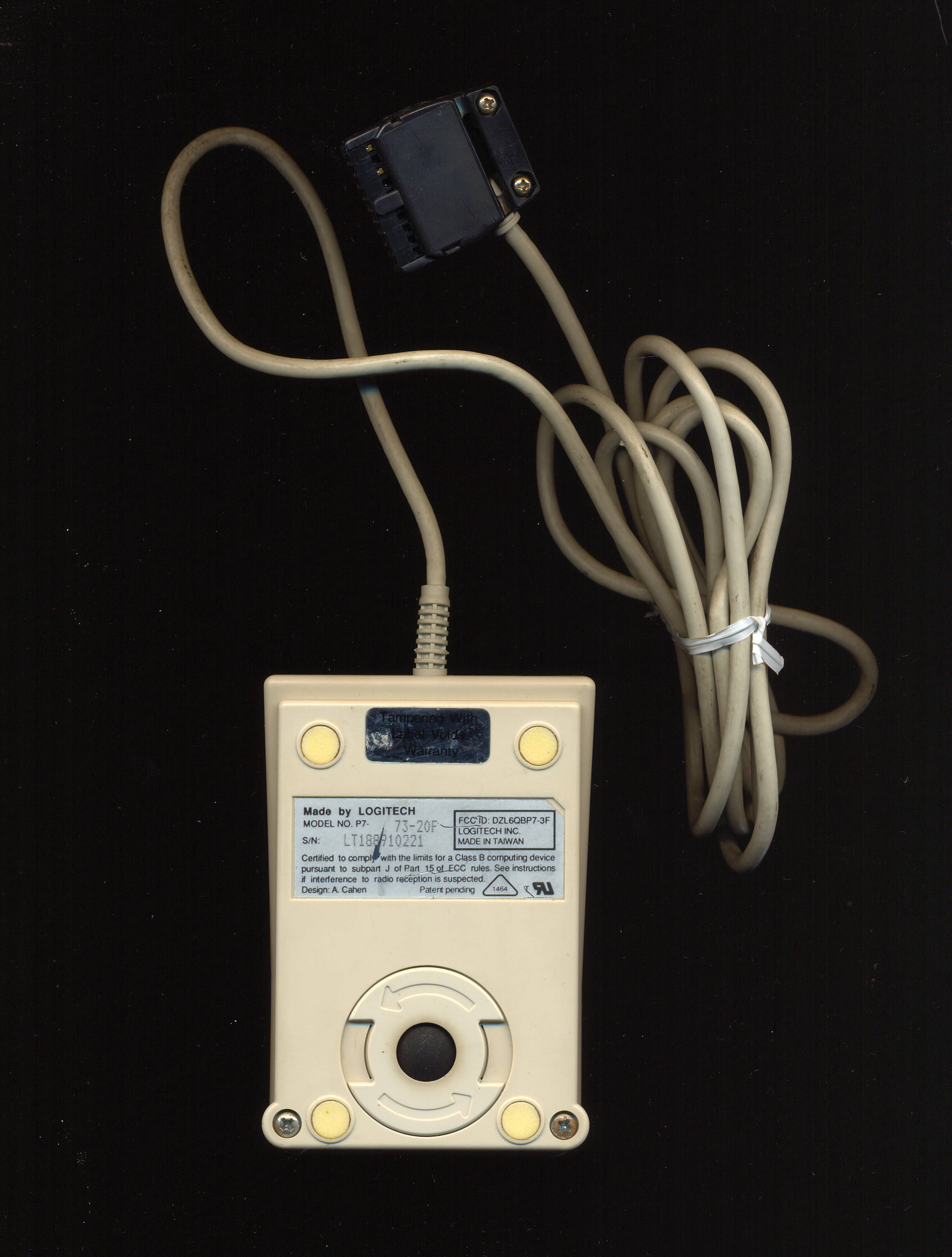 Bottom Casing
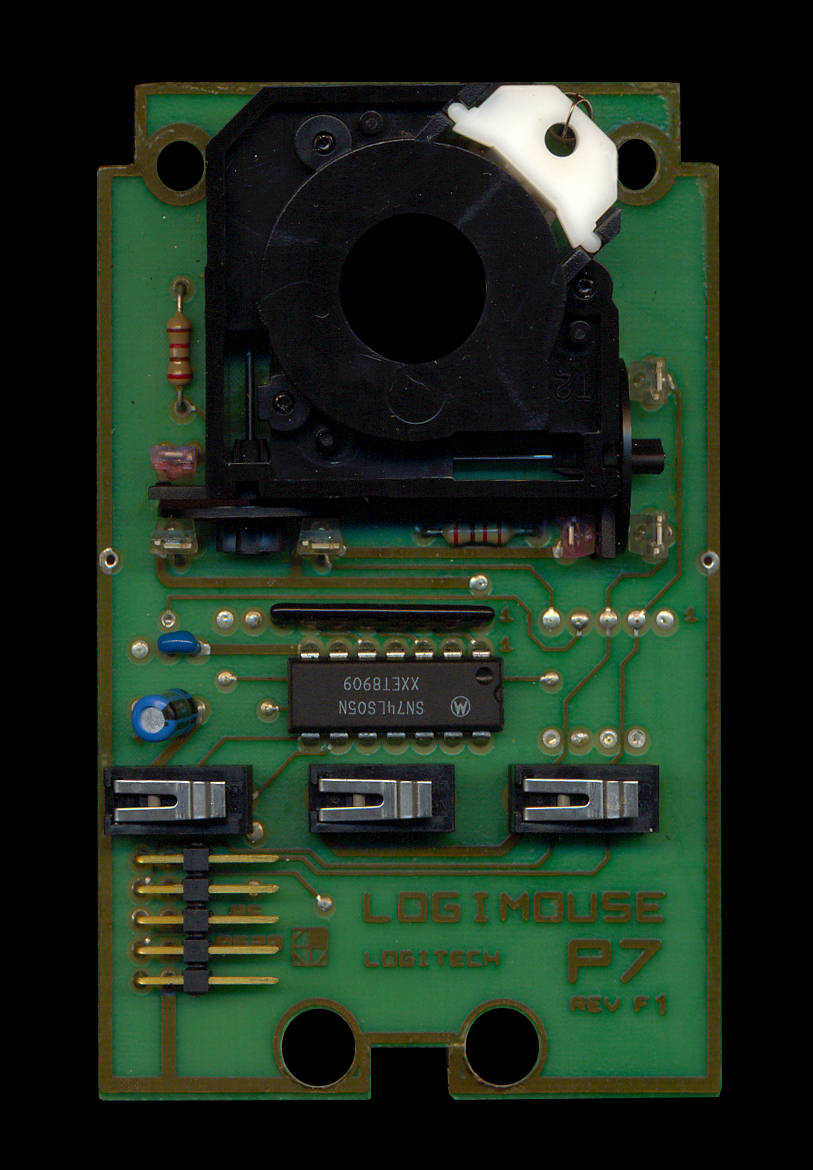 PCB Top View
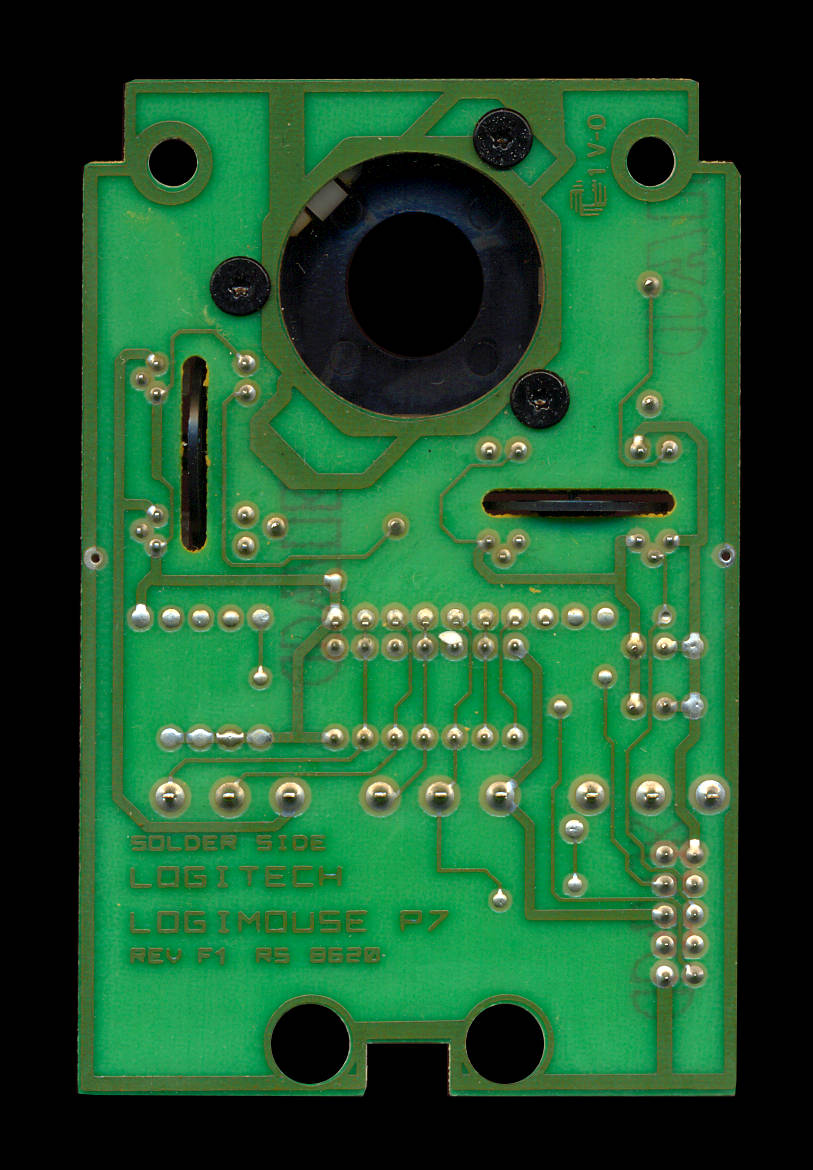 PCB Bottom View
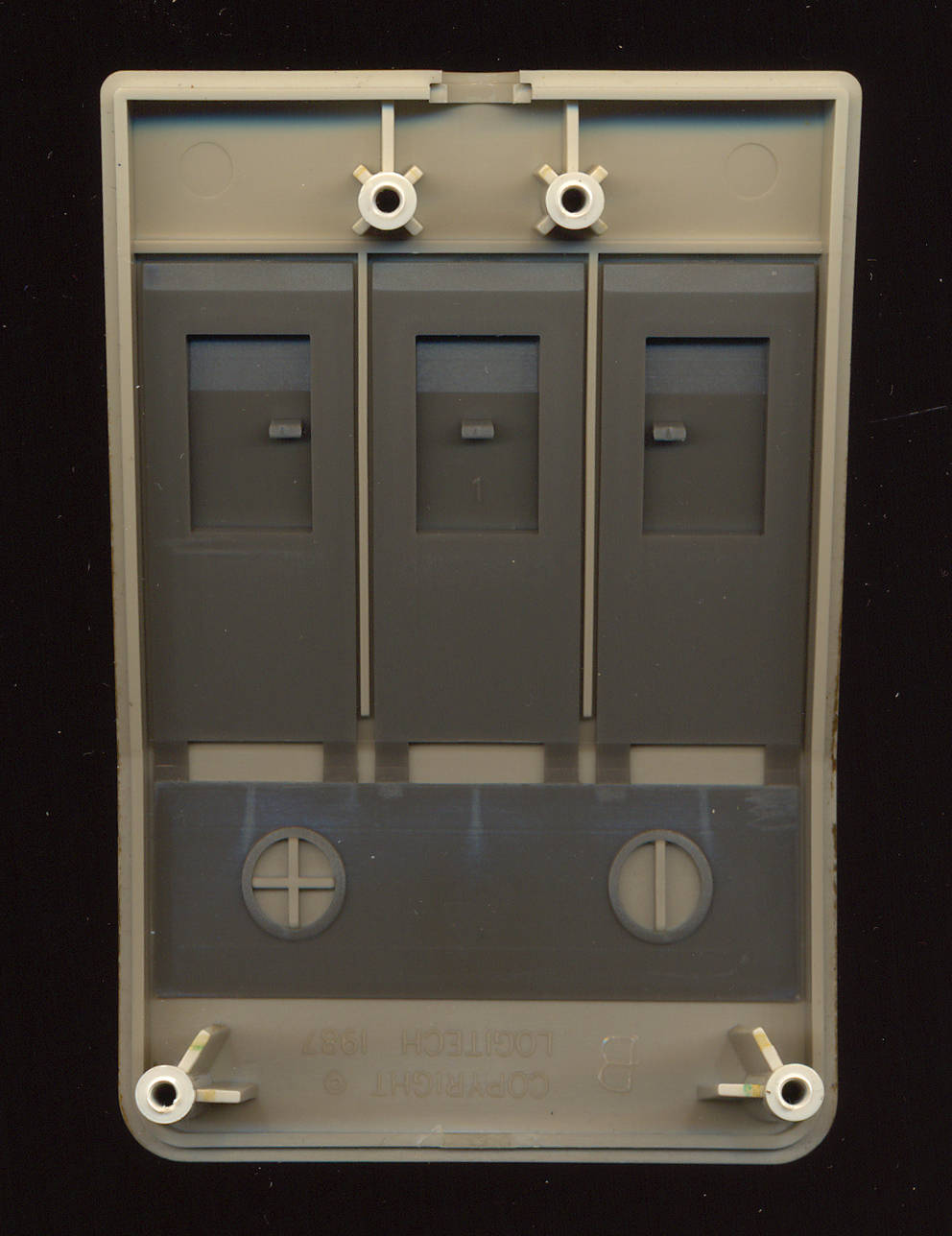 Inner Top Assembly
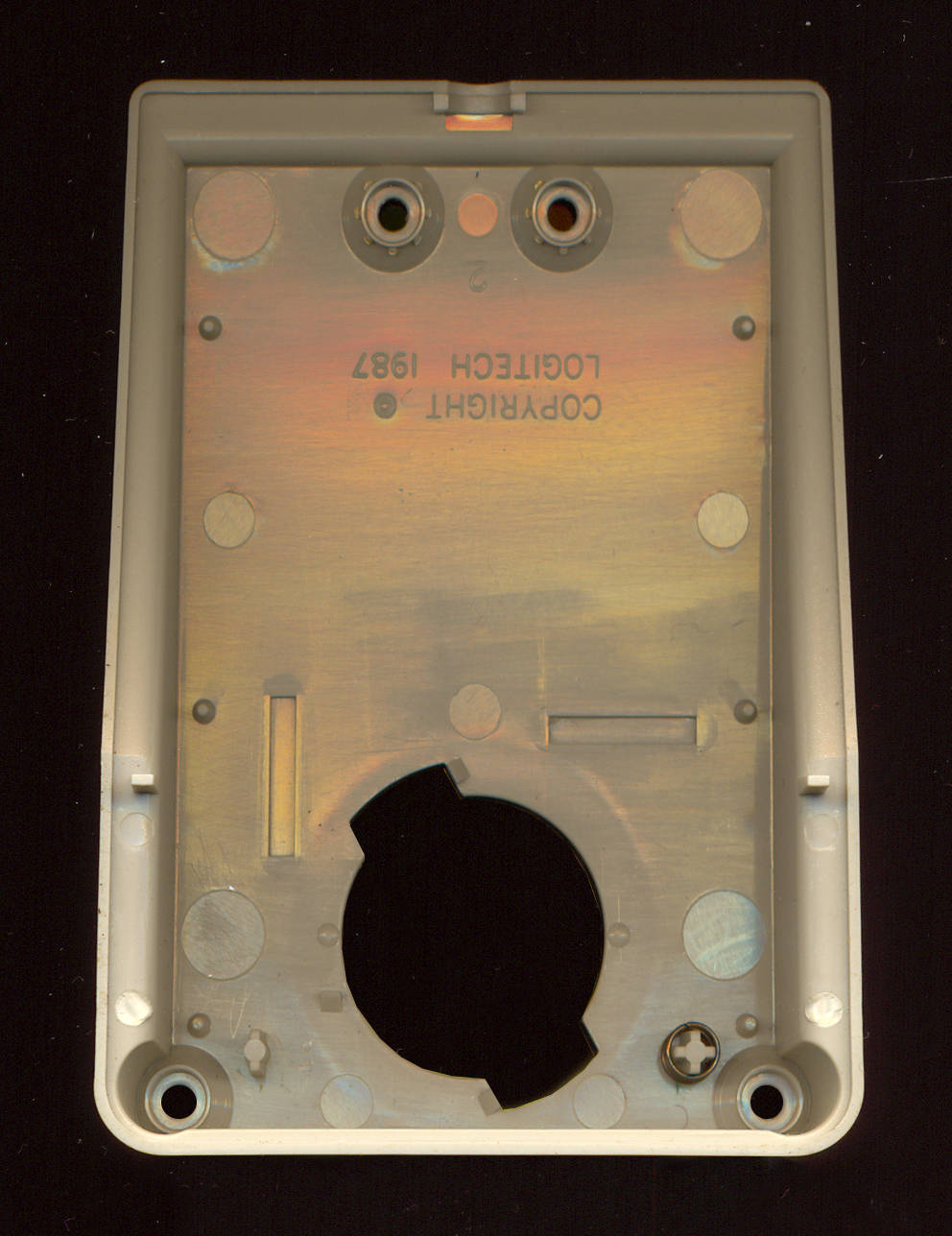 Inner Bottom Assembly