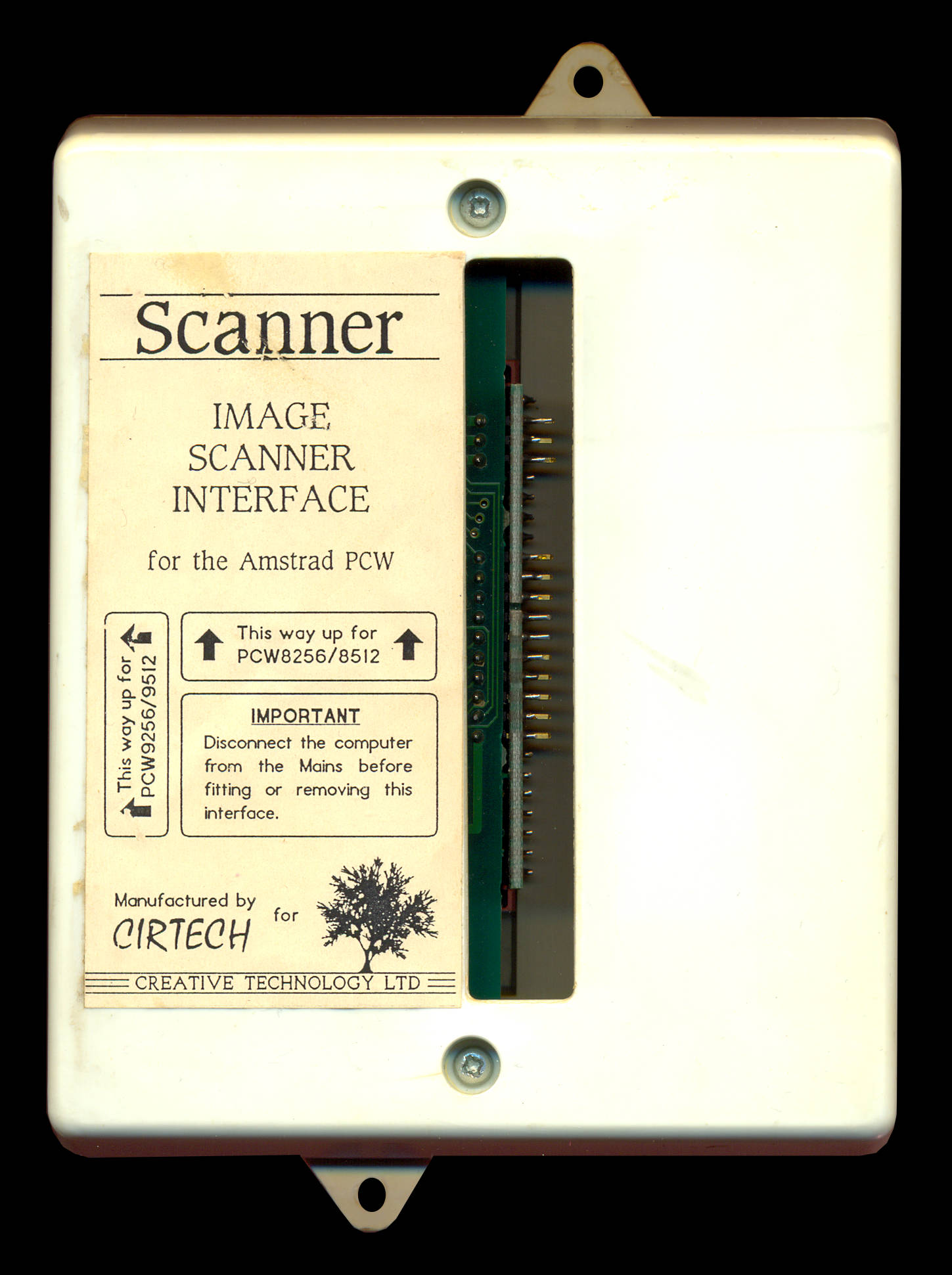
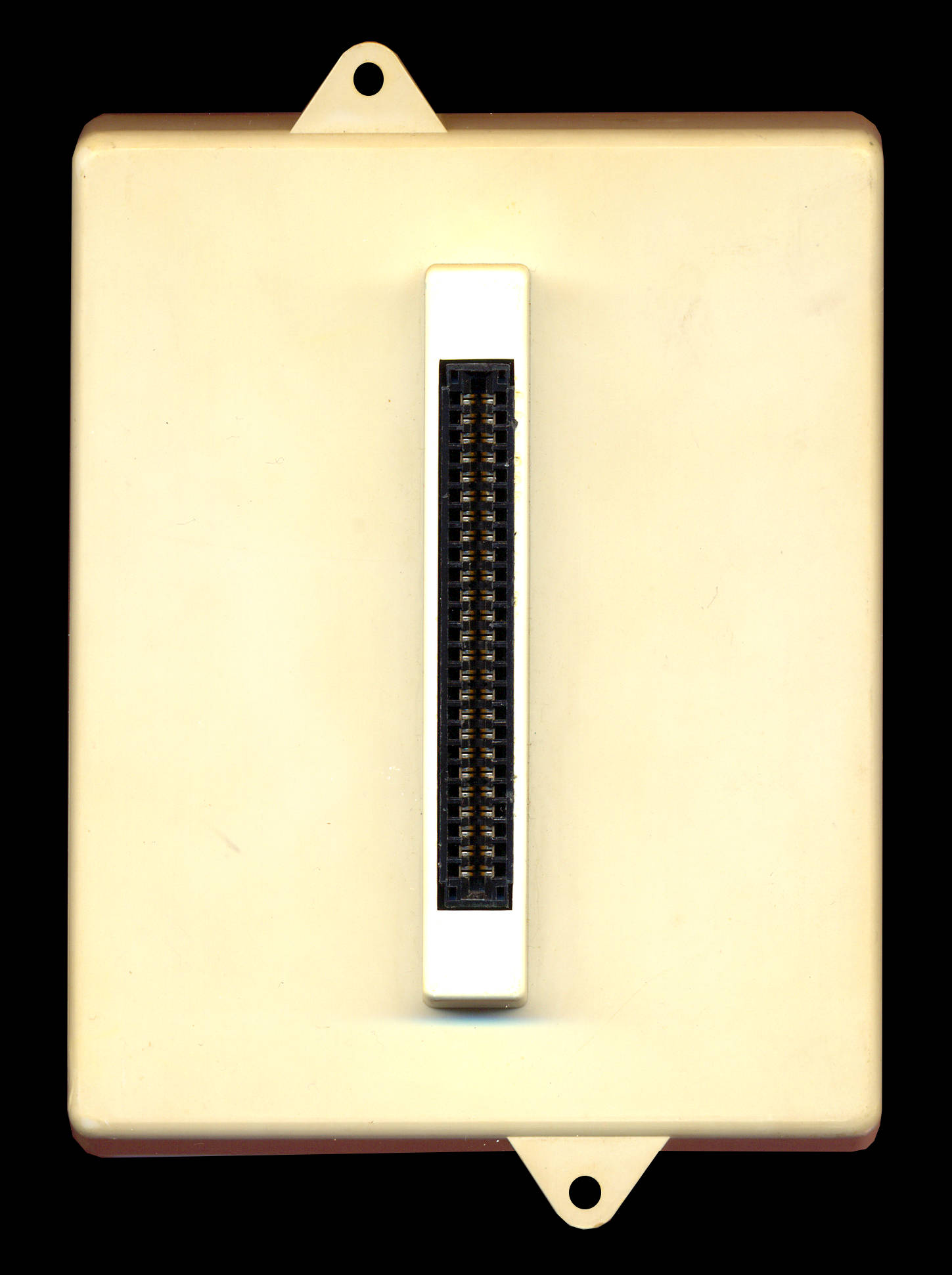
The CT Scanner by Cirtech is an image capture device that connects to an interface fitted onto the PCW expansion port.
CT Scanner
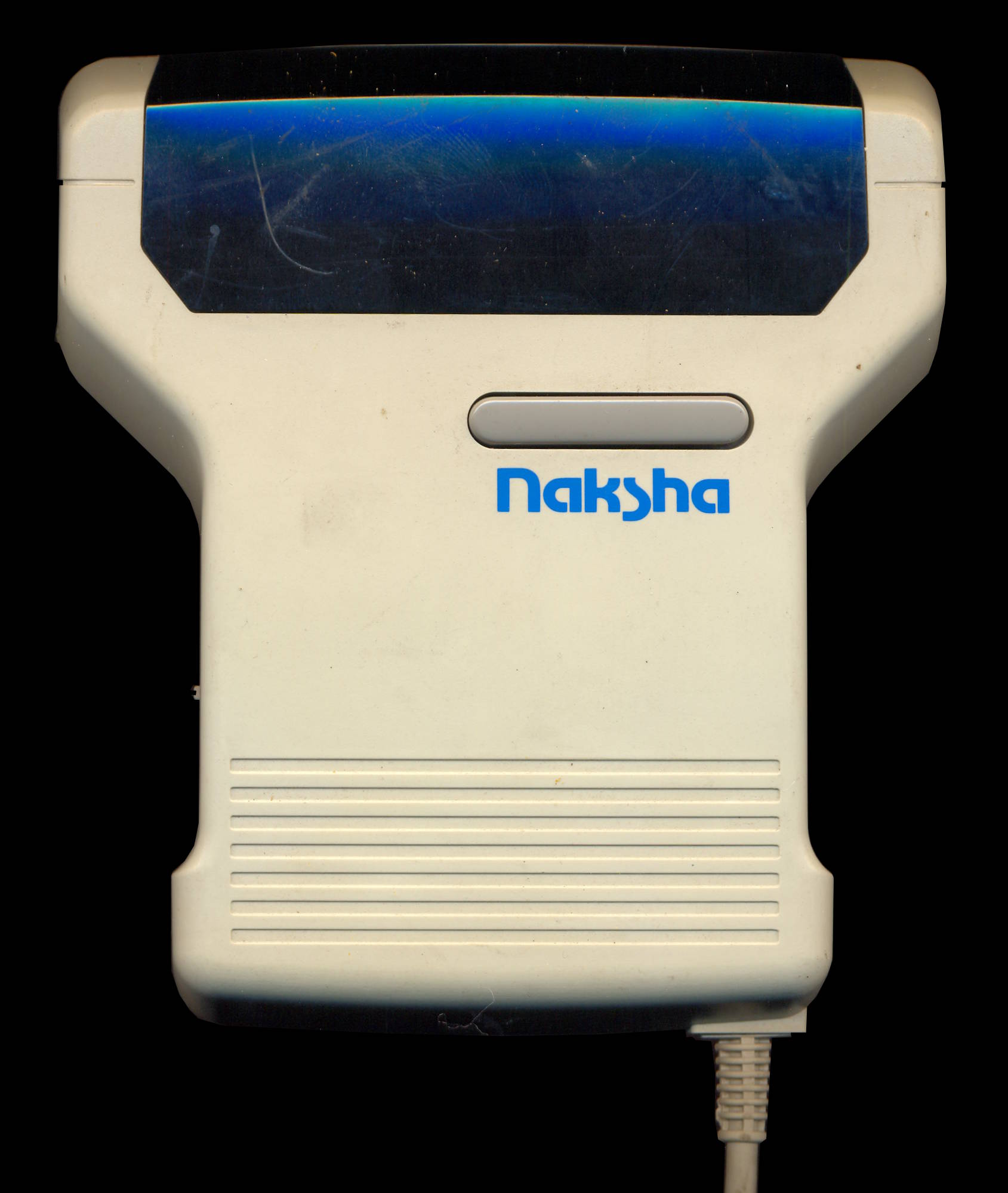
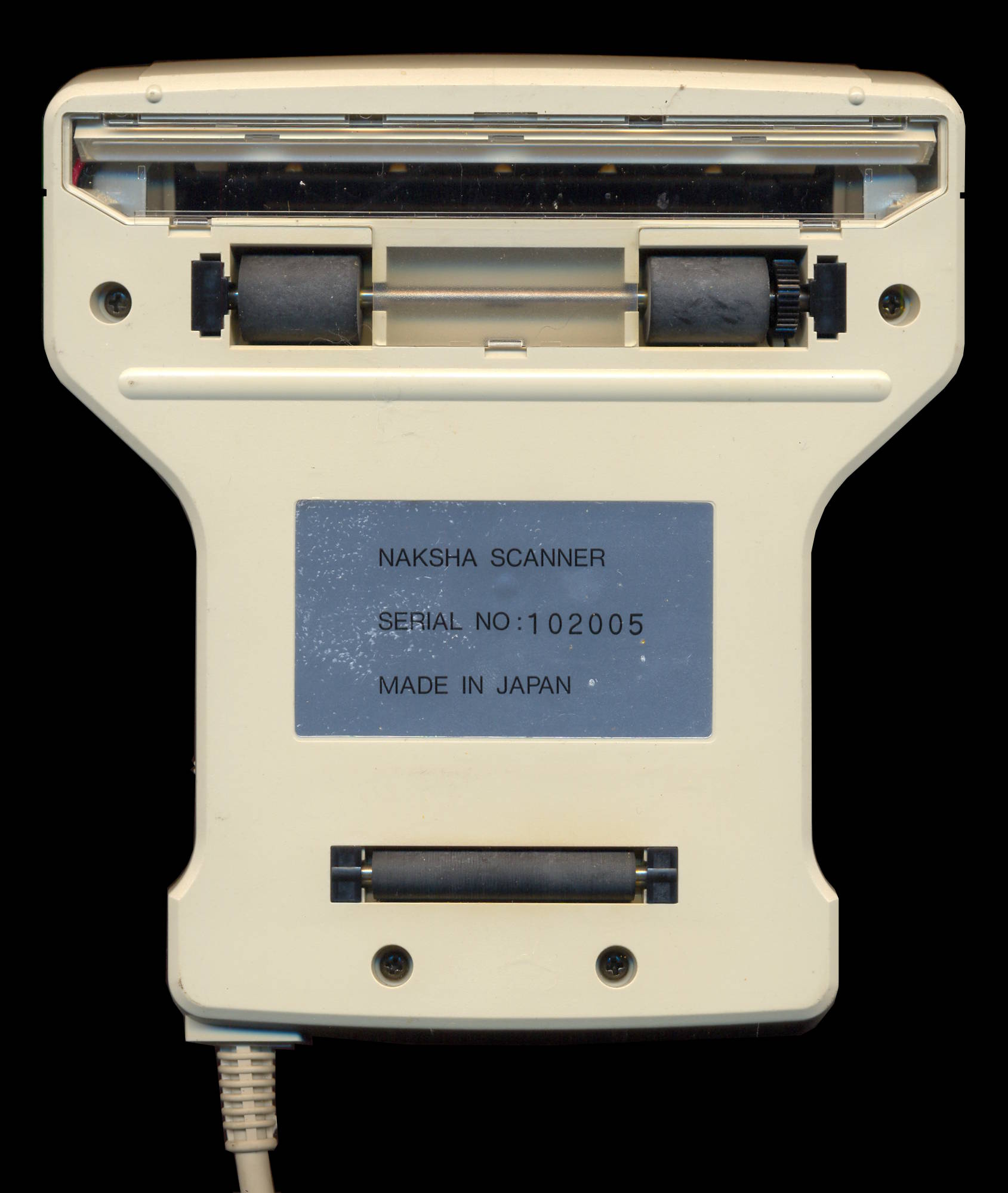
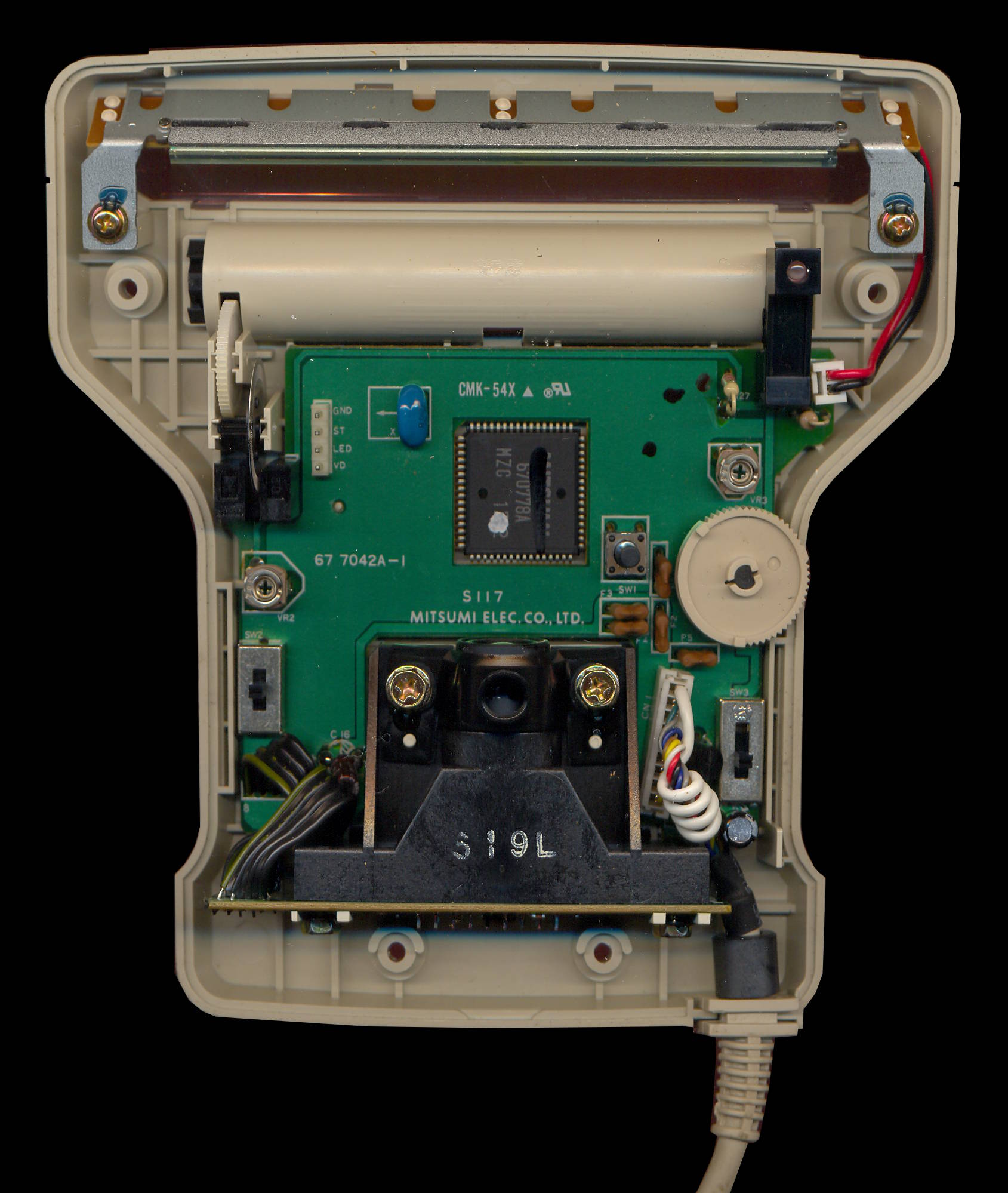
A> CT SCANNER
Hardware Images
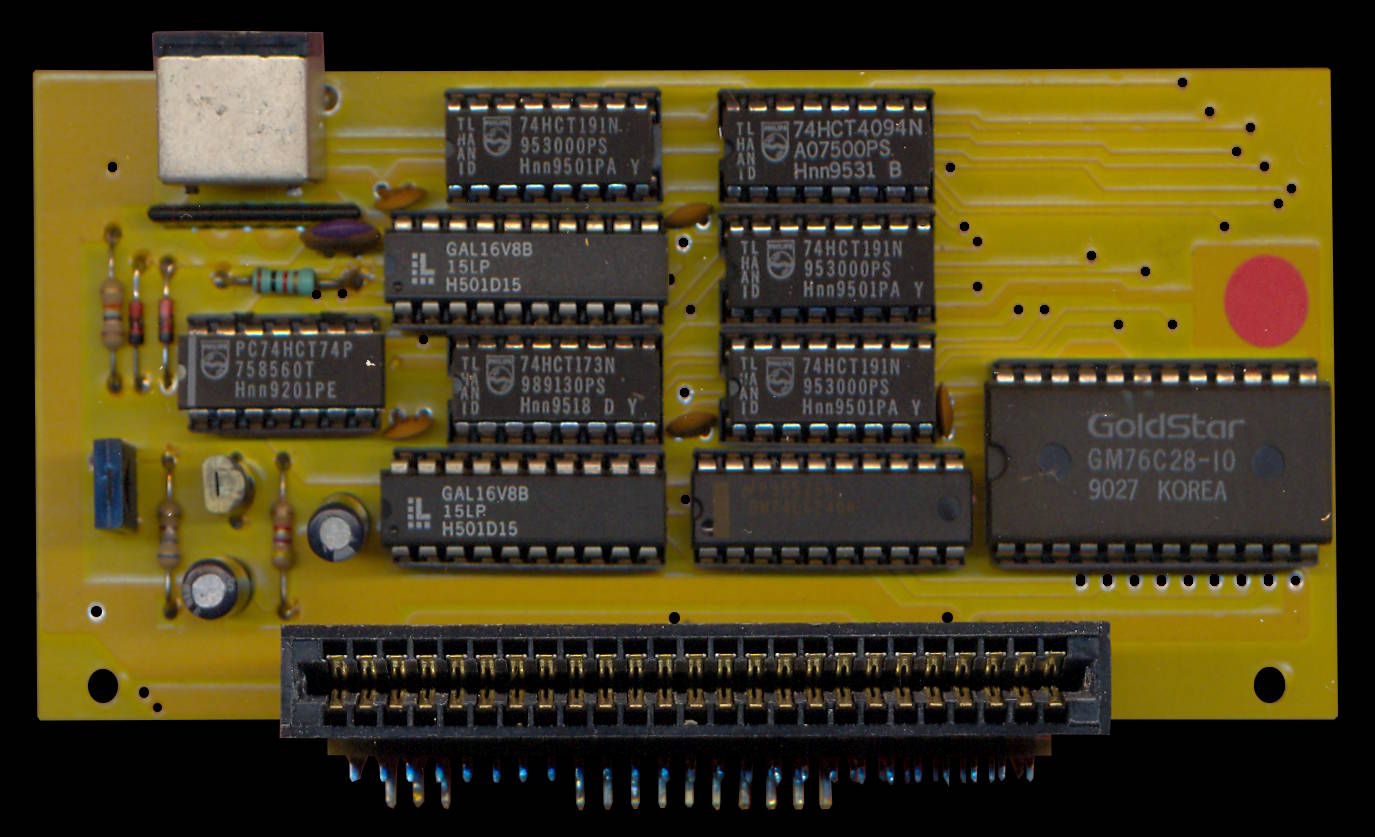
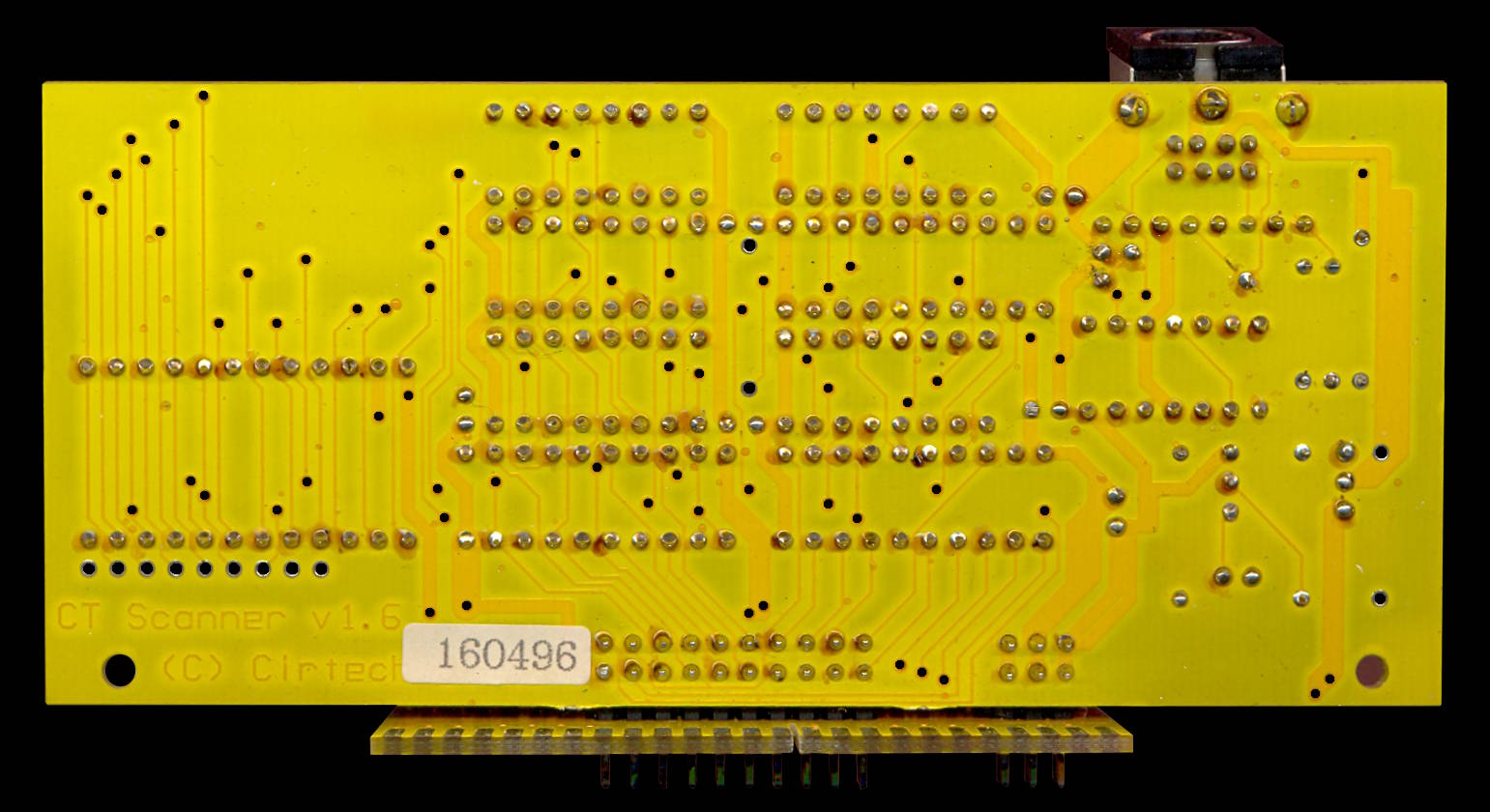
Interface TopInterface BottomInterface PCB TopInterface PCB BottomScanner TopScanner BottomScanner PCBDescription, Context and History of Preservation
Designed, manufactured, and marketed in the United Kingdom starting in **1987** by the renowned Scottish firm **Cirtech** (led by engineer Ian Leyland), the CT Scanner (with hardware revision v1.6 established as the mature production standard) represents one of the most brilliant and highly sought-after peripheral engineering solutions in the Amstrad PCW ecosystem. In an era when traditional flatbed desktop scanners commanded prohibitive prices that easily doubled the cost of the computer itself, Cirtech developed a hybrid hardware kit capable of transforming the Amstrad PCW's native dot-matrix printer (8000 series models) into a high-resolution optical image digitizer.
Unlike independent capture devices, the CT Scanner lacked its own motors to move the optical sensor. Instead, the system relied entirely on reusing the precision servomechanisms already built into the stock Amstrad printer. The user removed the ink ribbon cartridge from the printer and, in its place, clipped a small optical reading head fitted with a reflective photodetector capsule.
Upon feeding the document or image into the platen roller and launching the dedicated software supplied by Cirtech, the computer sent bursts of "transparent" print commands. These commands forced the printer carriage to perform continuous horizontal sweeps (X-Axis) and synchronous roller micro-advances (Y-Axis). Simultaneously, the optical head projected a beam of light onto the paper and measured the bounced light intensity, digitizing the document line by line in a purely mechanical fashion.
Hardware Architecture and PCB Components
The internal printed circuit board (PCB) of the modular interface in its v1.6 revision demonstrates Cirtech's high industrial manufacturing standards, utilizing discrete filtering components and optimized logic chips for real-time analog signal acquisition:
- Precision Analog-to-Digital Converter (ADC): The heart of the daughterboard is an analog-to-digital converter IC based on successive approximations. The reader head returns a continuous analog electrical signal proportional to the amount of reflected light (where white paper returns maximum voltage and black ink absorbs the beam, reducing voltage). The ADC converts this stream into binary values readable by the PCW processor.
- Control Logic with Programmable Array Logic (PAL): Unlike cheap interfaces from competitors that saturated the CPU through aggressive polling loops, Cirtech's PCB incorporates PAL (Programmable Array Logic) integrated circuits. These chips handle ultra-fast decoding of the Z80 bus addresses and stabilize the logic lines required to coordinate ADC data sampling exactly at the instant the print head passes over each physical grid coordinate.
- Signal Isolation and Operational Filters: The board integrates discrete operational amplifiers to boost the subtle voltage sent by the read head's phototransistor, alongside decoupling capacitors to filter out electromagnetic noise generated by the printer carriage's powerful coil motors while in motion.
I/O Port Mapping and Low-Level Bit Logic
For direct communication with the Amstrad PCW's Zilog Z80 CPU, the Cirtech interface's PAL logic matrix decodes a specific port range on the upper hardware bus. This allows the software to pull digitized brightness data from the ADC in real time:
- Image Data Read Port: Executing an input port instruction (
IN A, (C)) targeted at the address mapped by the Cirtech PAL forces the ADC to instantly dump the binary brightness state of the pixel currently pointed to by the optical reading head. - Thresholding and Dithering Logic: Because the native video hardware of the Amstrad PCW 8256/8512 is structurally restricted to a pure monochrome layout (pixels are either completely on or off at the mapped video RAM level), Cirtech's software performed advanced algorithmic processing. If the byte read from the ADC crossed a middle threshold, it was saved as white; otherwise, it was stored as black. To simulate grayscale depths (photographic scanning), the software executed error-diffusion or matrix-dithering algorithms, distributing dense black pixel clusters in darker zones and sparse dots in lighter fields.
Software Integration and Capture Modes
The commercial kit was supplied with a 3-inch floppy disk containing advanced utility software engineered exclusively for the PCW's CP/M Plus operating system environment:
- Scanning Resolution: The horizontal resolution (X-Axis) was determined by the software sampling frequency synchronized with the printer carriage velocity, matching speeds up to 200 dots per inch (DPI). The vertical resolution (Y-Axis) depended directly on the step increments of the Amstrad line-feed platen roller motor, enabling high-precision micro-stepped line-by-line sweeps.
- File Formats and Editing Utilities: The software featured a real-time monitor display that progressively "drew" the scanned image from the bottom up as the platen rolled forward. Digital images could be cropped, inverted in polarity (negative/positive), and saved in proprietary graphics storage formats. These files could then be imported directly into desktop publishing suites or converted for word processors, dramatically expanding the office press capabilities of the computer.