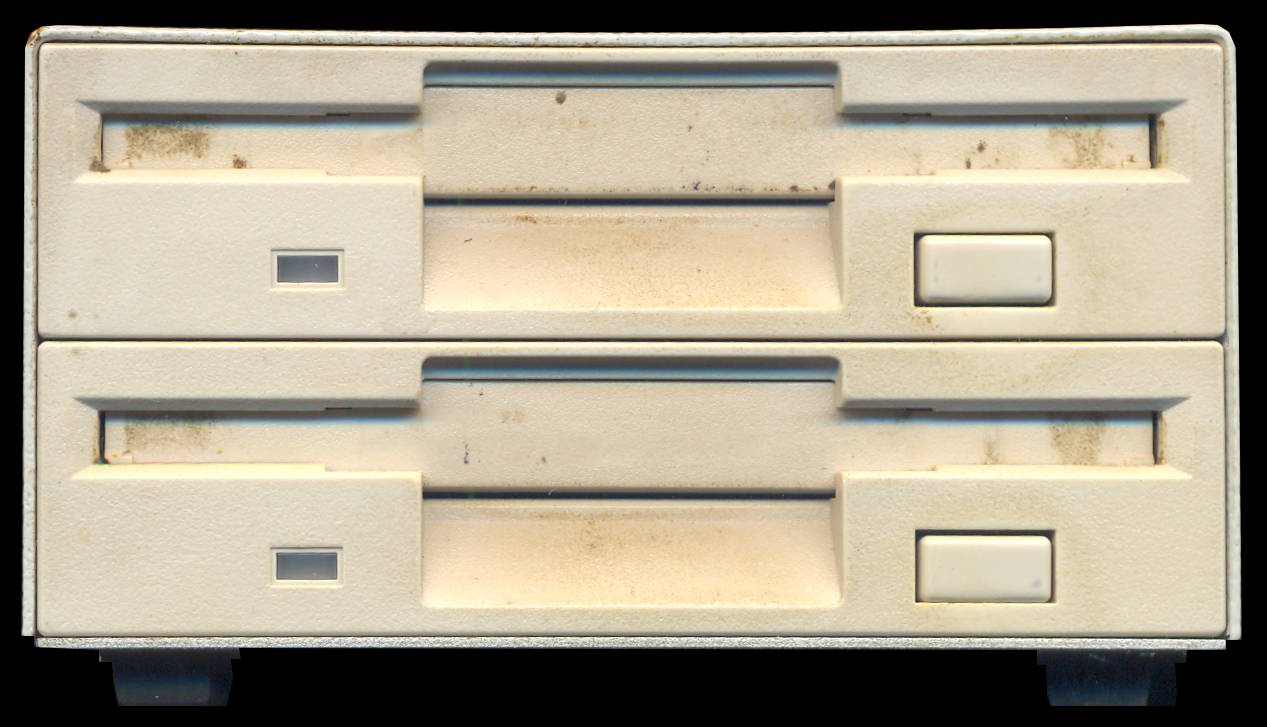
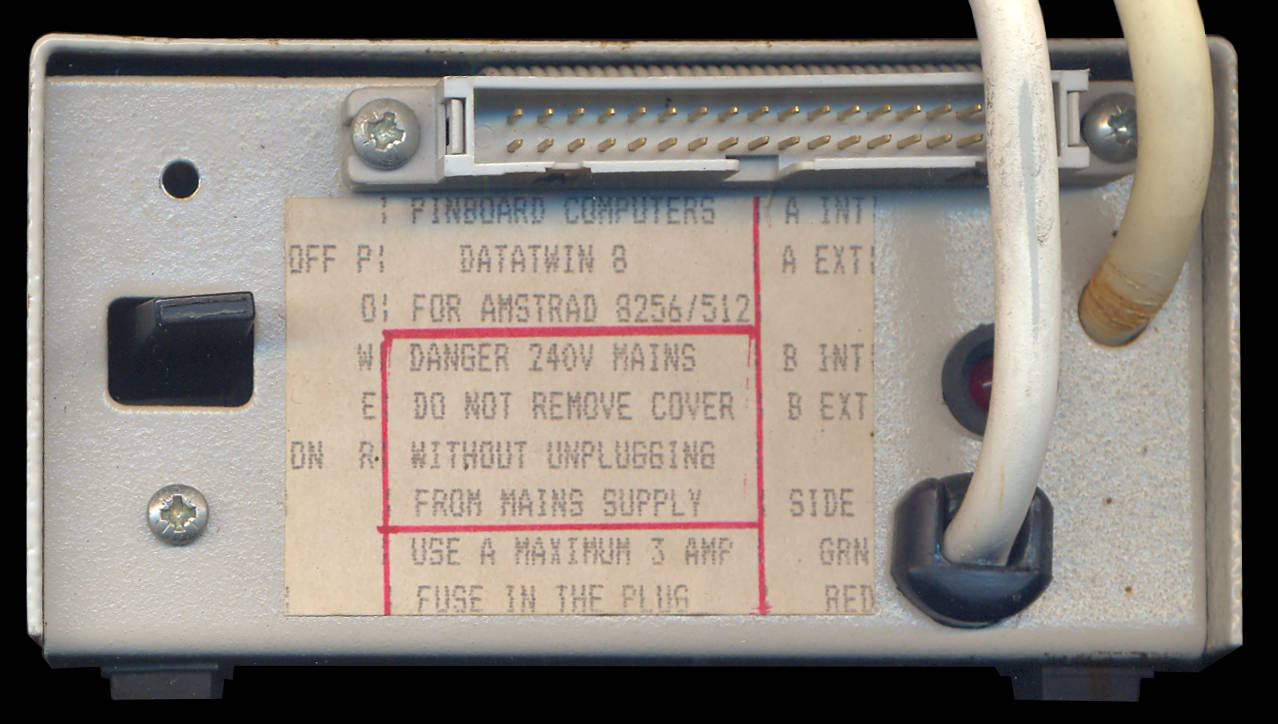
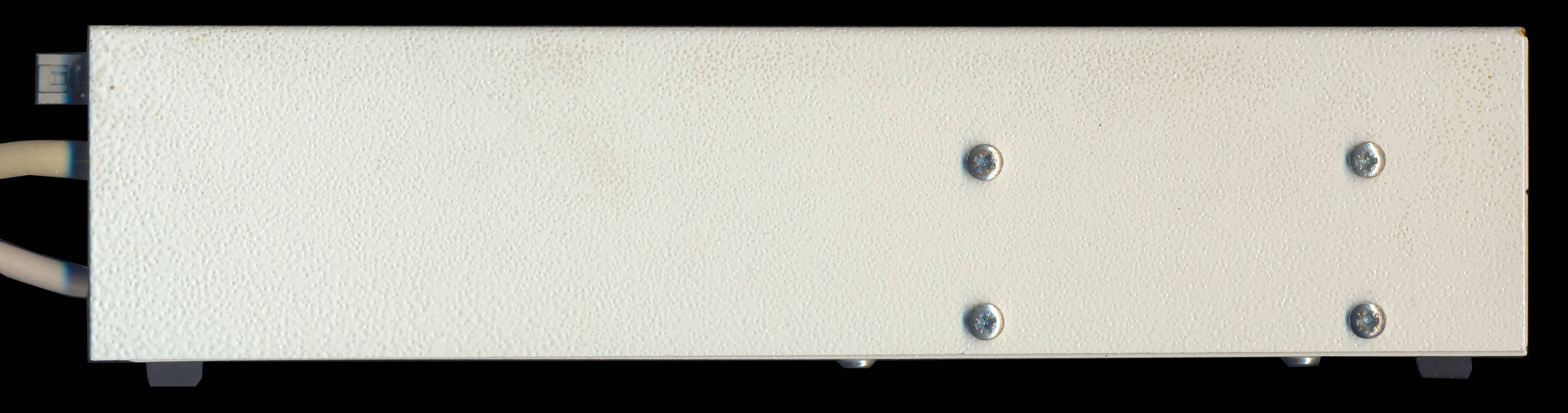
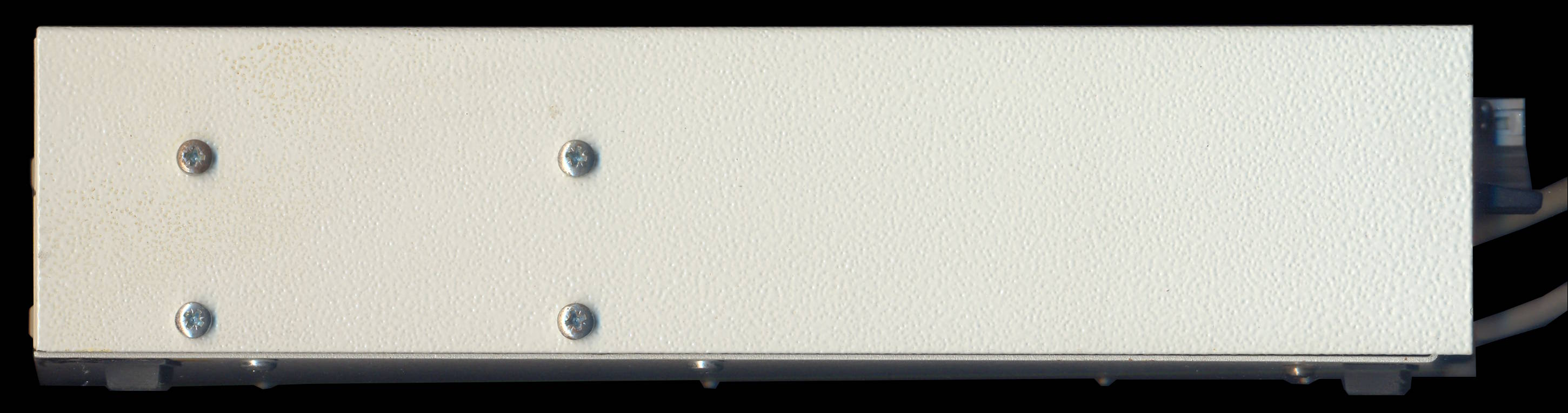
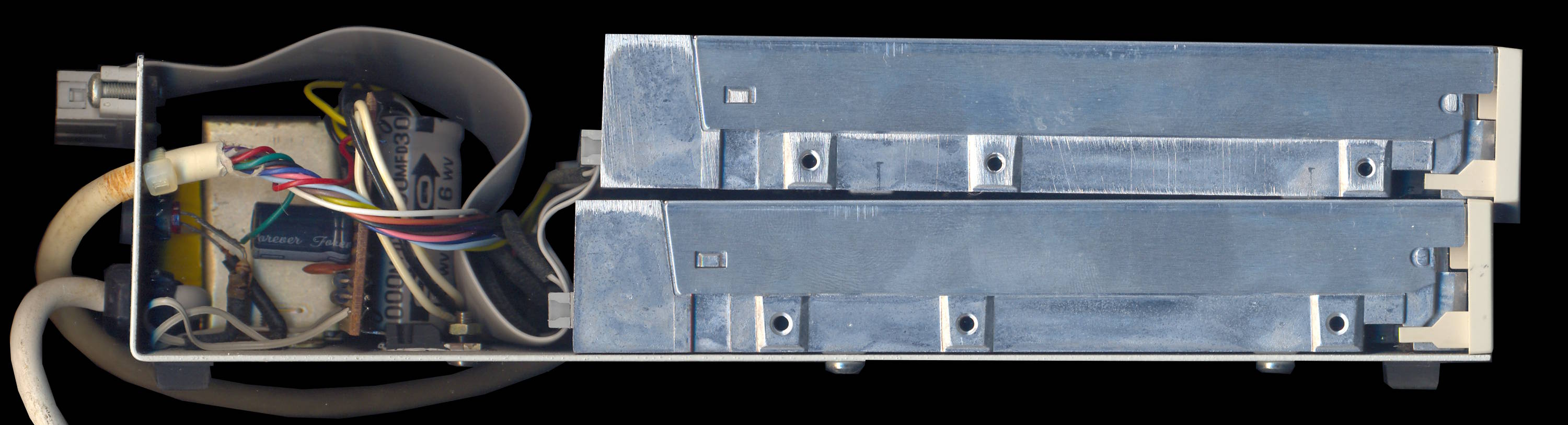
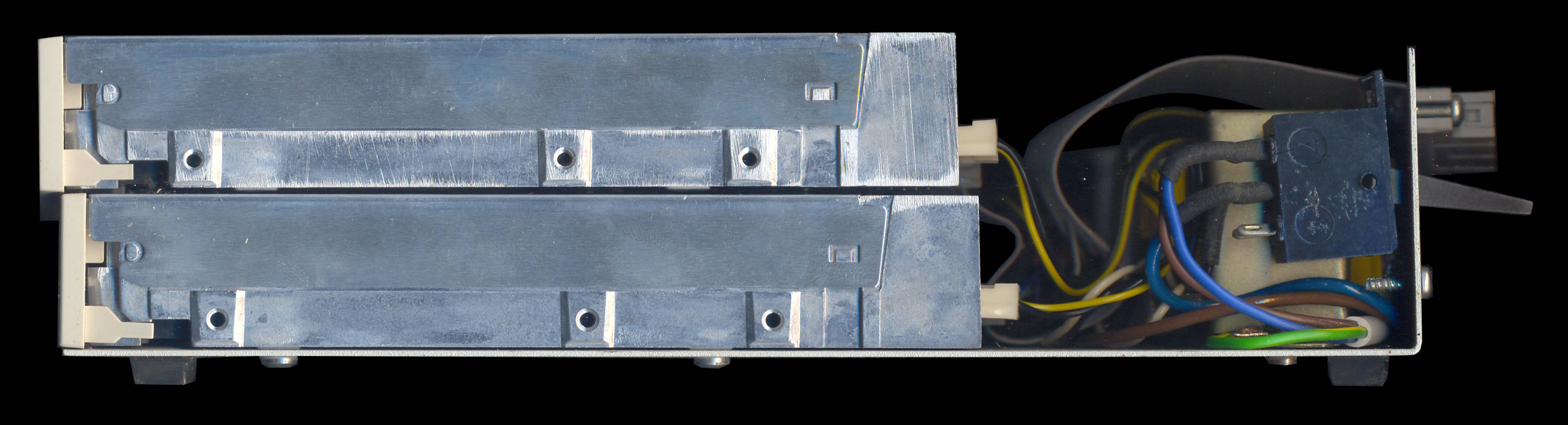
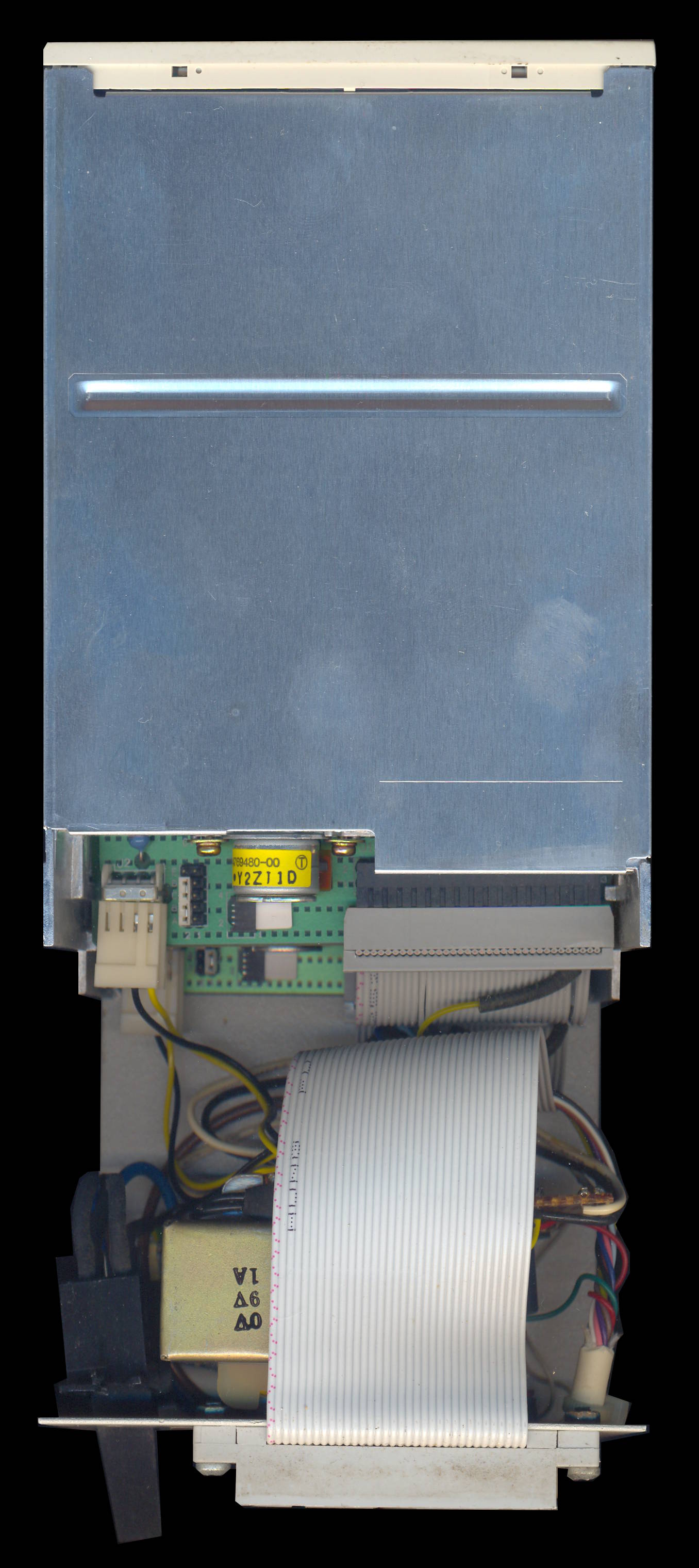
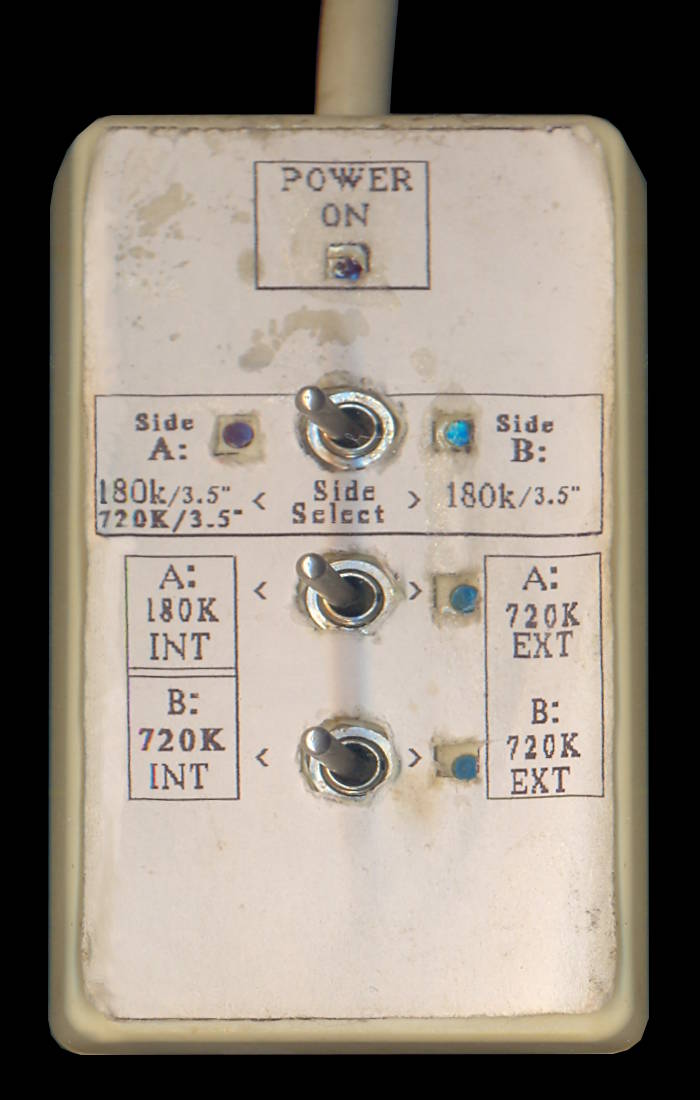
Datatwin 8 is an expansion peripheral manufactured by Pinboard Computers for the Amstrad PCW 8000 series that adds two external 3.5" disk drives.
It features a control setup that allows selecting between internal or external units and choosing their capacity, either 180 KB or 720 KB.
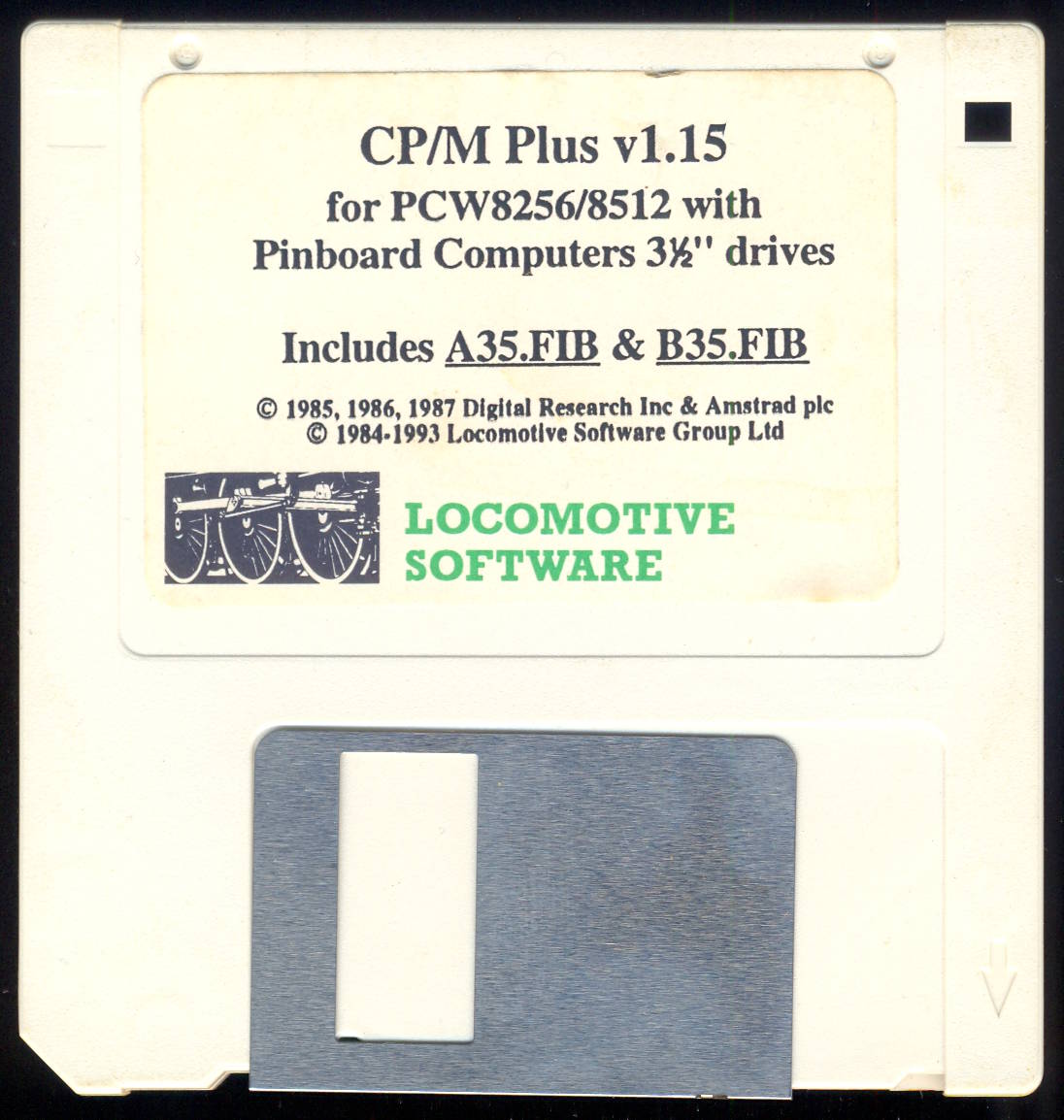
It includes a 3.5" 720 KB system disk containing CP/M 1.15 alongside the corresponding drivers required to run the external drives.
Launched on the British market between **1989 and 1990** by the specialized firm Pinboard Computers, the DataTwin 8 system established itself as one of the most sophisticated and complete professional-grade secondary storage solutions for the Amstrad PCW 8256 and PCW 8512 computers. The peripheral answered an urgent market need of the time: the native 3-inch floppy disks (Maxell standard) distributed by Amstrad had extremely high acquisition costs, scarce distribution, and a limited physical capacity (180 KB per side on the PCW 8256). The DataTwin 8 solved this barrier by integrating a dual Double Density (DS/DD) 3.5-inch disk drive inside an independent external metal chassis with its own control logic.
Unlike conventional external expansions that drew electrical power directly from the computer's bus, Pinboard Computers integrated a **Built-in Regulated Power Supply (PSU)** into the DataTwin 8 chassis as standard. This design decision was crucial to guarantee long-term reliability, avoiding overloading the voltage lines of the PCW's internal analog monitor board, which was prone to suffering fatal voltage drops under the heavy concurrent power draw of mechanical motors. Interconnection was made via a ribbon cable to the PCW's 50-pin lateral expansion bus, offering a rear pass-through connector to daisy-chain additional devices without occupying the line exclusively.
The Pinboard interface logic board managed the redirection of electronic signals to bypass the native hardware limitations imposed by the Amstrad PCW motherboard design:
- The µPD765A Disk Controller: The PCW motherboard implements the **NEC µPD765A** FDC chip (or equivalent). Although this IC has internal registers and native electrical support to independently control up to 4 physical floppy drives, Amstrad strictly wired the tracks only for Unit 0 (Drive A, internal 3-inch) and Unit 1 (Drive B). The logic board of the DataTwin 8 dynamically intercepted the unit selection logical lines (
/DS0 and /DS1) and motor activation lines (/MOTOR_ON) of the Z80 bus to stably map the two 3.5-inch drives.
- Modified TEAC FD-235HF Disk Drives: Pinboard Computers bundled **TEAC FD-235HF** 3.5" mechanics as standard. These units were configured using specific chassis jumpers to respond synchronously as DS0 or DS1, adapting the PC standard towards the Amstrad architecture.
- Resolving the READY Signal Conflict: The Amstrad PCW architecture does not recognize the standard disk change signal (Disk Change - Pin 34 of the modern Shugart/PC standard). Instead, the operating system requires the presence of an analog confirmation signal of optimal revolutions (
READY - Pin 4) to validate sector reading. The integrated electronics of the Pinboard controller board incorporated discrete logical TTL gates designed to synthesize, simulate, and redirect the READY signal from the 3.5" mechanics to the correct pins required by the BIOS to prevent constant hangs and read errors (Read Error).
- Variant with Remote Wired Selection Control Box: The premium model (originally marketed for £185.00) included a small external wired switching box dedicated to the desk workspace. This physical remote switch allowed the user to alternate in real-time the logical identity and boot priority (Drive A/B) as well as the format capacity (180 KB simulation or 720 KB native) of the external units without manipulating rear mechanical jumpers.
To enable the operating system to manage the new 3.5-inch floppy disks (featuring a formatted net capacity of 720 KB in Double Density), the DataTwin 8 relied on a profound logical reconfiguration of the system software:
- Modifying Disk Parameter Blocks (DPB): The hardware kit was supplied with a system utility disk containing the CP/M Plus v1.15 firmware version, customized directly under license from Locomotive Software for Pinboard Computers. Upon loading these specific drivers during cold boot, the system altered the logical Disk Parameter Blocks (DPB) vectors in RAM. This taught the operating system the exact layout of the 3.5" sector allocation map (512-byte physical sectors, 9 sectors per track, and double-sided, double-track geometry).
- Potential in Desktop Publishing and Office Automation: With the drivers running, both DataTwin 8 drives were mapped transparently as integrated native logical units. This drastically expanded the contiguous storage space available on the machine, allowing users for the first time to work fluidly and professionally with massive graphic files (such as those from the MicroDesign 2 or OCP Advanced Art Studio suites) or with immense business databases that were physically impossible to store on the original 180 KB 3-inch floppy disks.