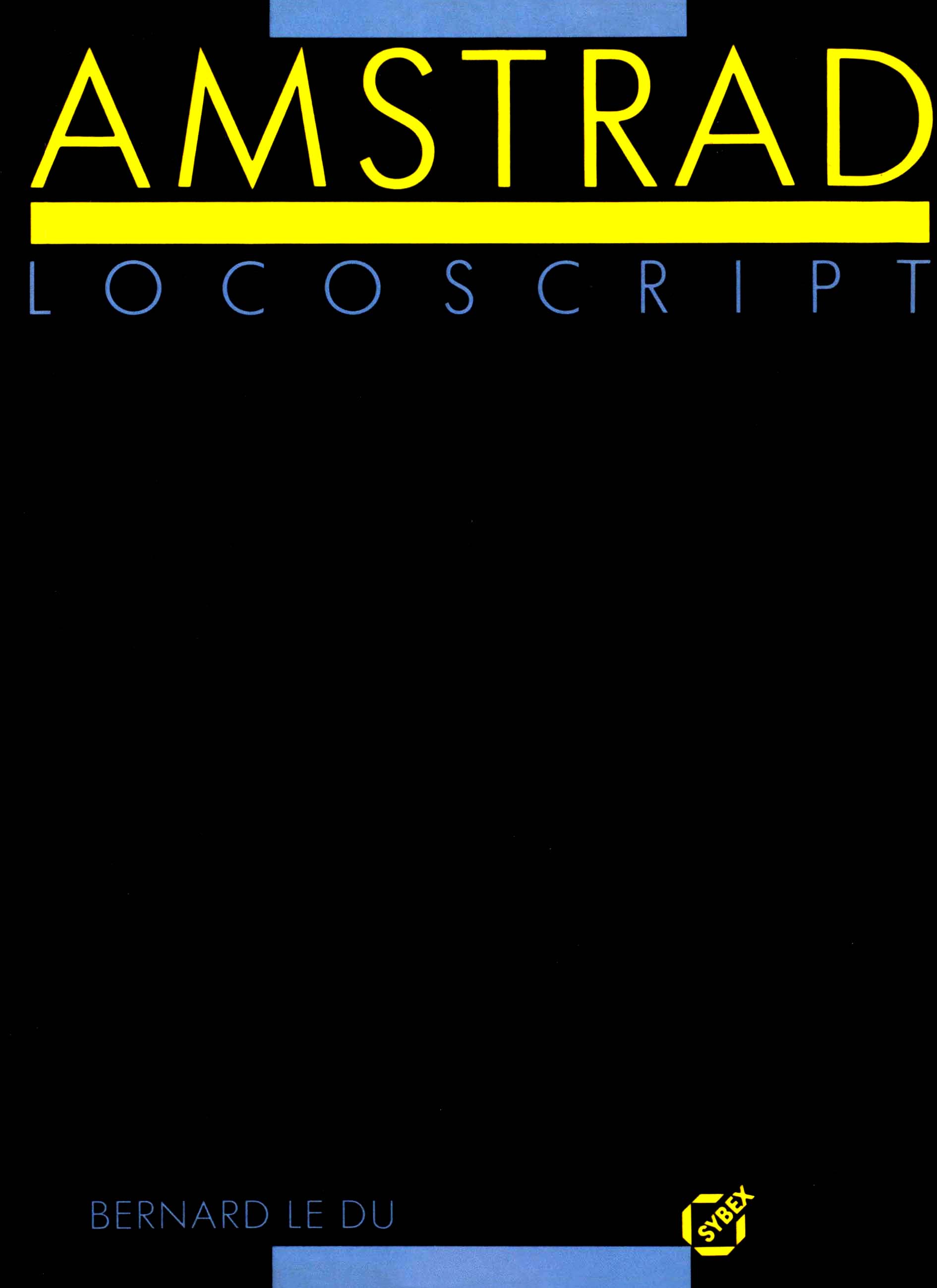
TECHNICAL DATA

The launch of the Amstrad PCW in France represented a revolution in the home and professional office automation market of the mid-1980s. Unlike other microcomputers of the time, which were positioned as entertainment centers, the PCW emerged as a pure work tool, ready to use under the "Plug and Work" concept. In this digital transition scenario, Bernard Le Du's book, published by the prestigious firm Sybex, quickly became the indispensable guide for those who needed to master the machine without facing the technical coldness of the original user manuals supplied by Amstrad.
TEACHING METHODOLOGY: Bernard Le Du, a fundamental author in French computing literature, structured this work with an eminently practical approach. The manual does not just list functions; it teaches the reader how to apply them in real workflows. The book's narrative accompanies the user from the physical act of inserting the system floppy disk into the 3-inch drive to the management of complex documents, demystifying the use of hardware and allowing a much smoother learning curve for secretaries, writers, and small business owners of the time.
MASTERING LOCOSCRIPT 1: The central pillar of this volume is the exhaustive analysis of LocoScript, the native word processor from Locomotive Software. Le Du pays special attention to explaining the hierarchy of file "Groups," a storage feature that often caused confusion among newcomers to the CP/M system. Through clear examples, he details the use of function keys and combinations with the "Alt" key, allowing for layouts with bold, underline, and typographic styles that were cutting-edge for such a low-cost system in 1986.
PRINT MANAGEMENT AND PHYSICAL MEDIA: Another critical aspect addressed in the work is the utilization of the 9-pin dot matrix printer. The author offers configuration and maintenance tips that improved text readability and allowed for efficient management of continuous feed paper. This section transformed the PCW from a simple green phosphor screen into a true personal desktop publishing station capable of generating high-quality professional correspondence.
LEGACY AND PRESERVATION: Today, this Sybex manual represents an essential collector's piece for understanding the evolution of personal computing in Europe. Its direct style, original screenshots, and logical block organization capture the technological essence of an era when the Amstrad PCW dominated offices. It is, ultimately, a graphic testimony of how computing was taught when paper was still king and digital typing was taking its first and most important steps.
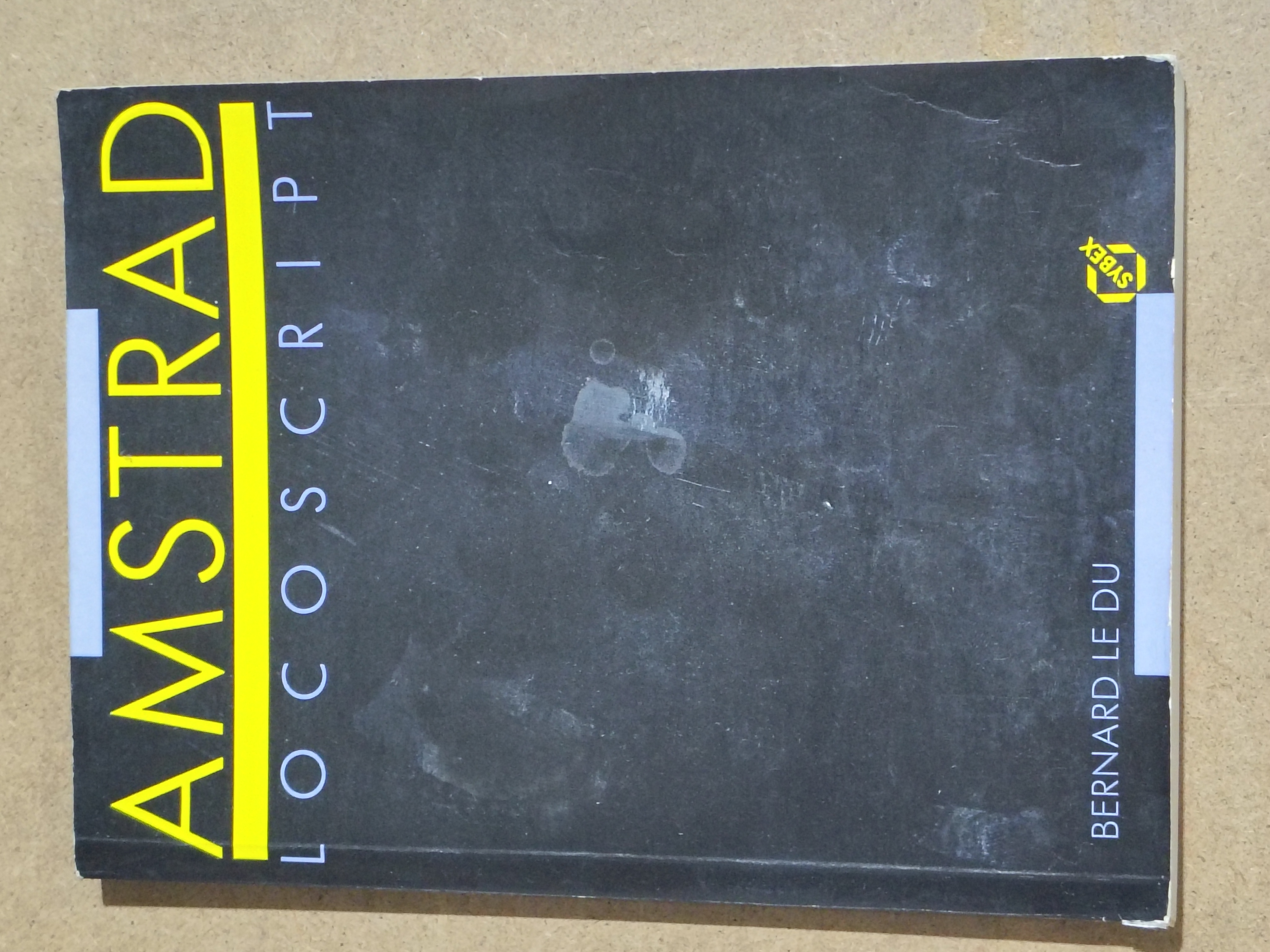 ORIGINAL FRONT COVER
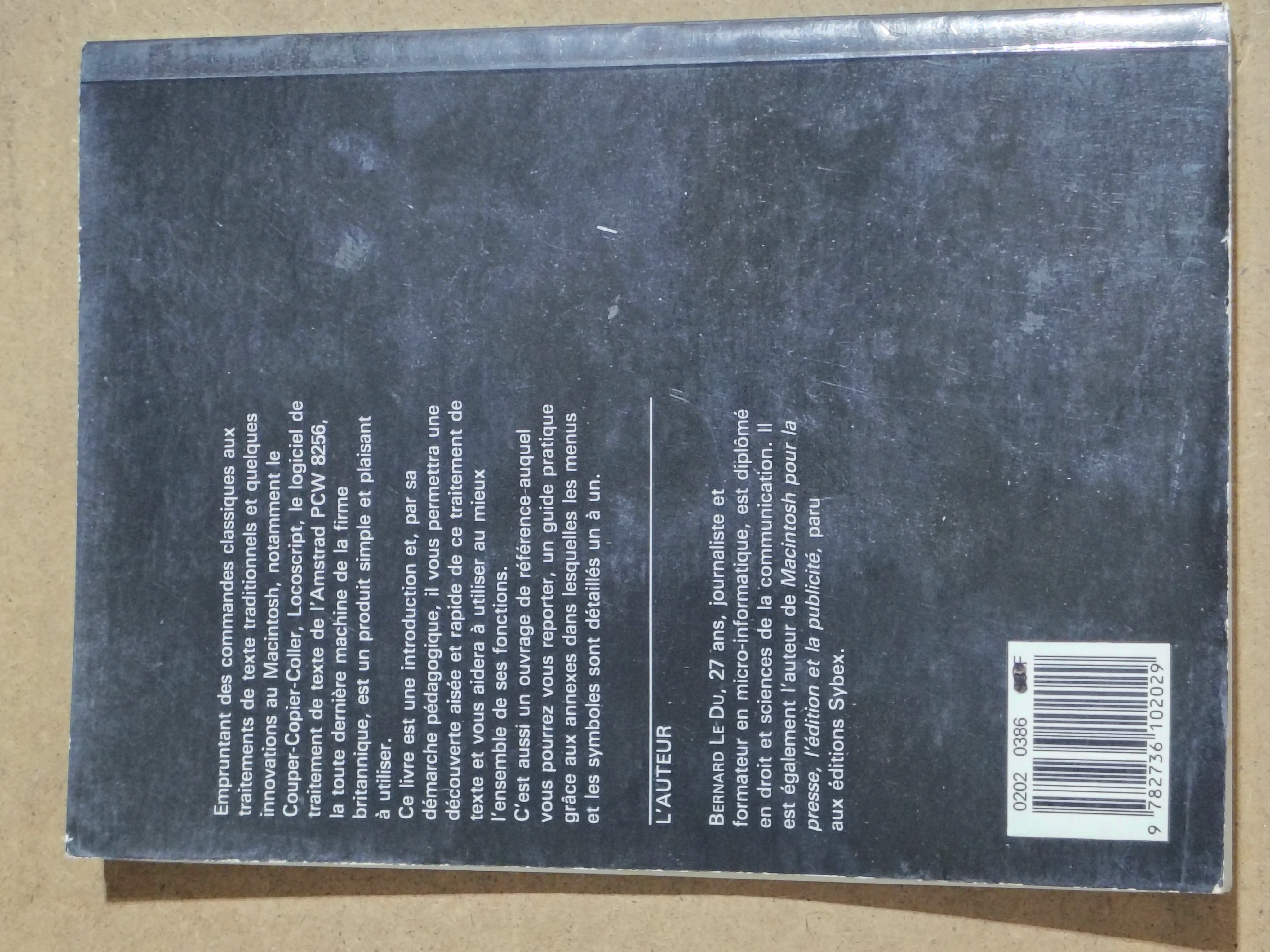 BACK COVER
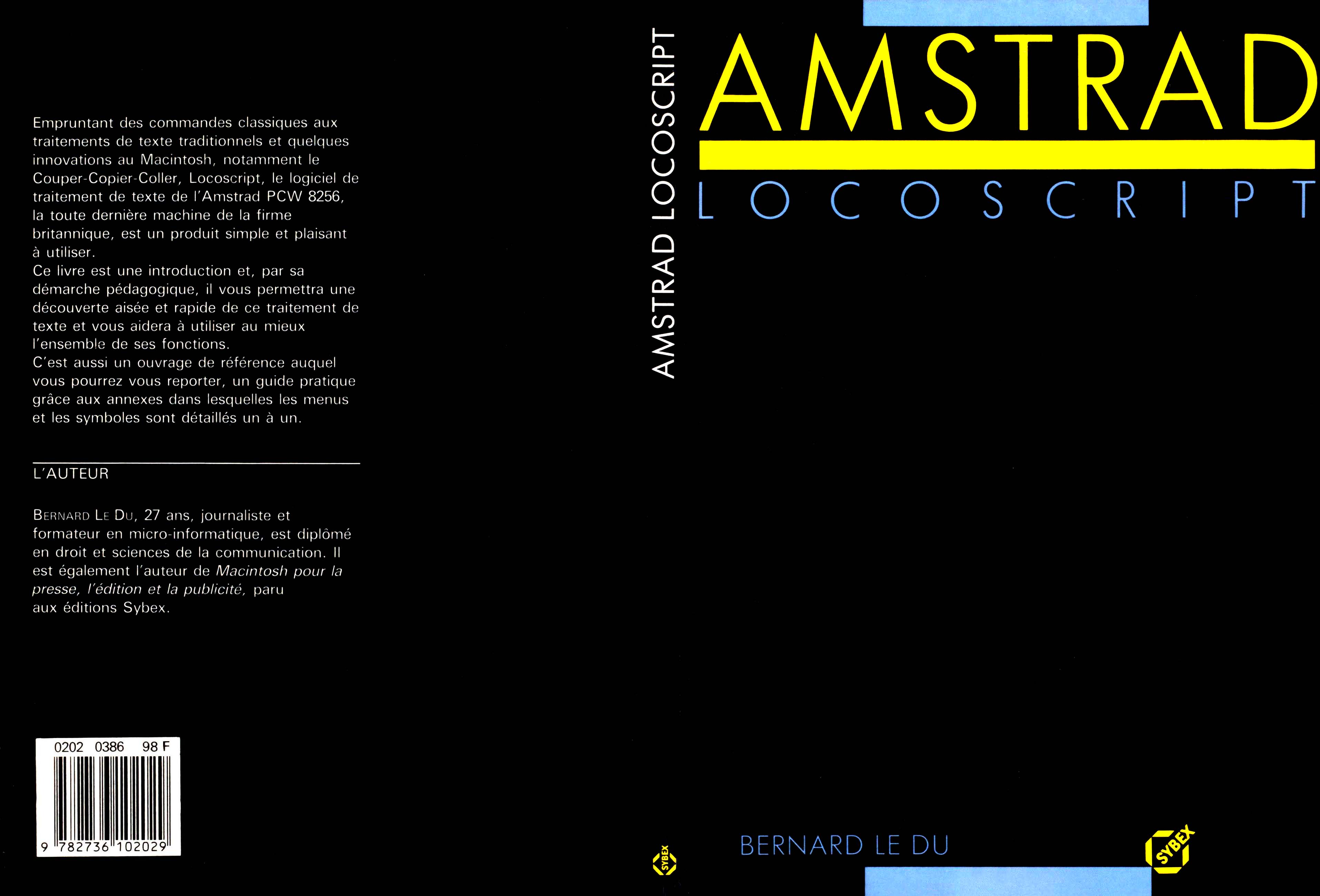
This book is bound with a color softcover, and the inner pages are printed on standard thin black and white paper. Dimensions: Height 23.90 cm x Width 15.50 cm.