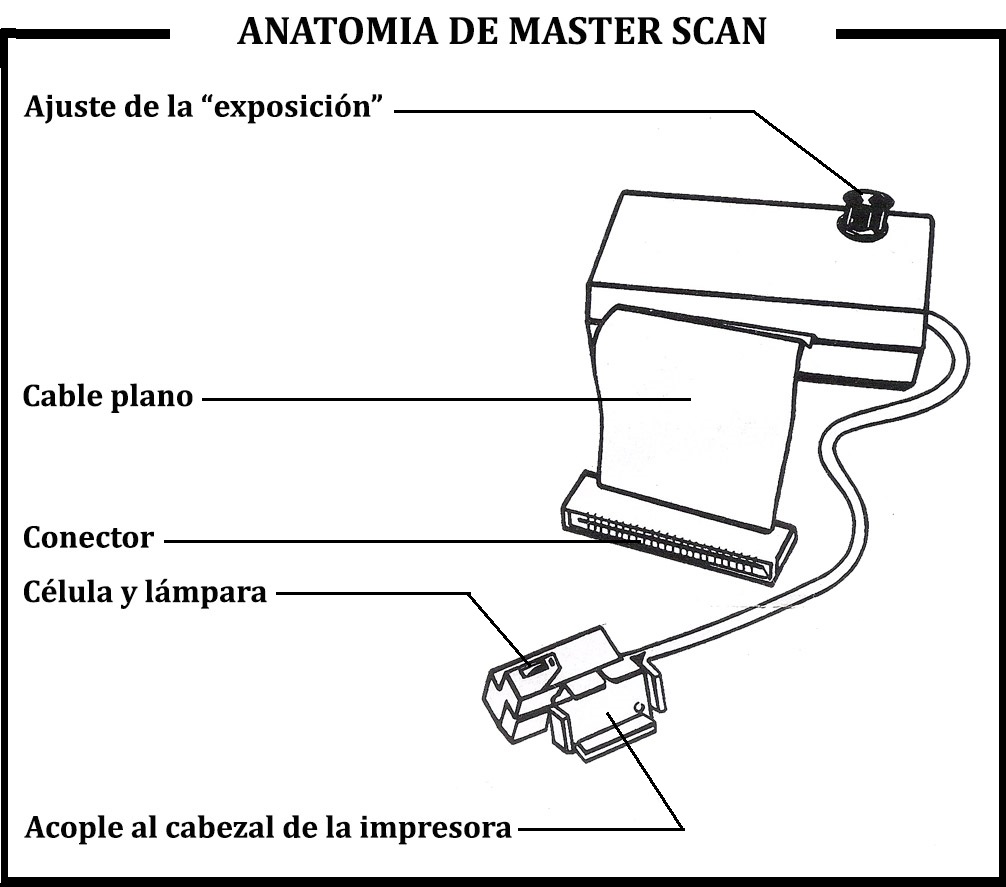
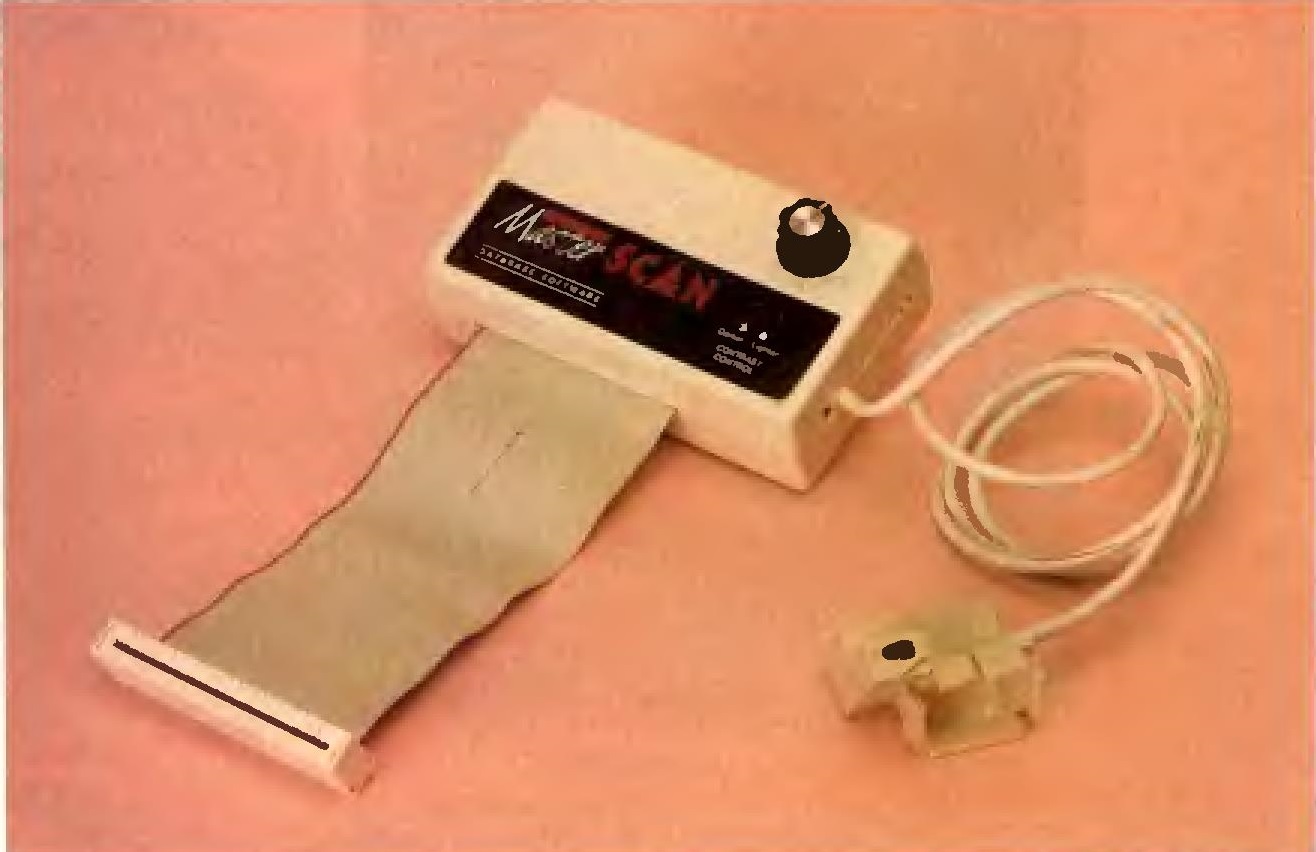
The Master-Scan stands as the definitive expansion kit for digital image rendering on the Amstrad workstation. The system comprises a high-precision optical sensor pod and a custom interface board mating directly onto the rear-mounted expansion bus connector of the computer shell. Mating or uncoupling the expansion module must be executed strictly while the computer is powered down.
en:aplicaciones:master_scan_or
¡Esta es una revisión vieja del documento!


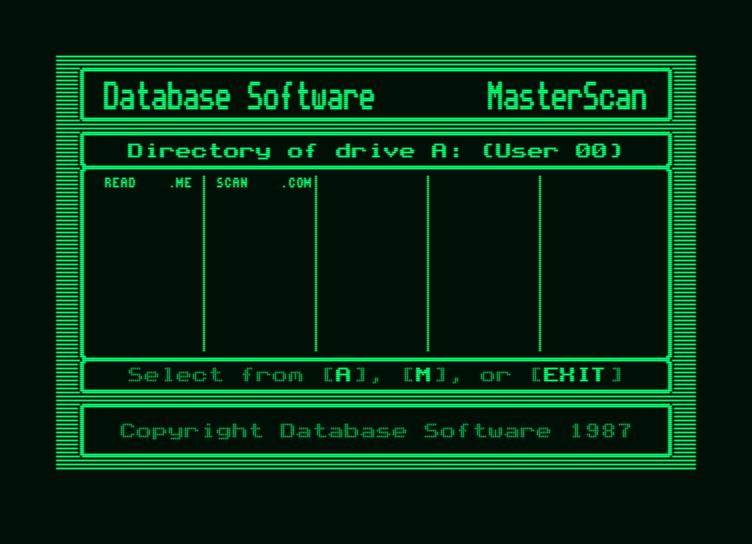
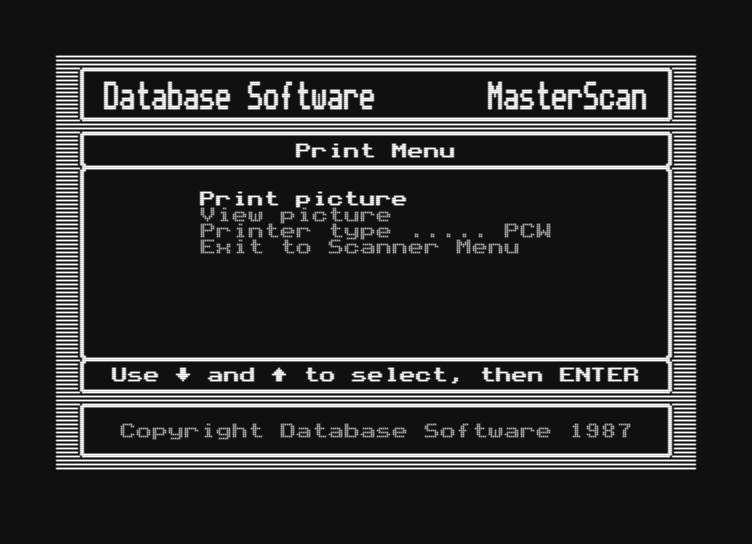



A> MASTER SCAN
Scanner OverviewInterface Array| Company | Database Software |
|---|---|
| Distributor | Database Software |
| Year | 1987 |
| Packaging | Internal and external cardboard retail box 23.30×16.50×5.50 |
| Compatibility | PCW 8256 - PCW 8512 |
| Peripherals | PCW Matrix Printer - Optical Sensor Pod |
| Boot Environment | CP/M |
| Category | Graphic Design / Digitization |
| Language | English |
| Retail Price | UK: £69.95 |
| Status | Preserved |
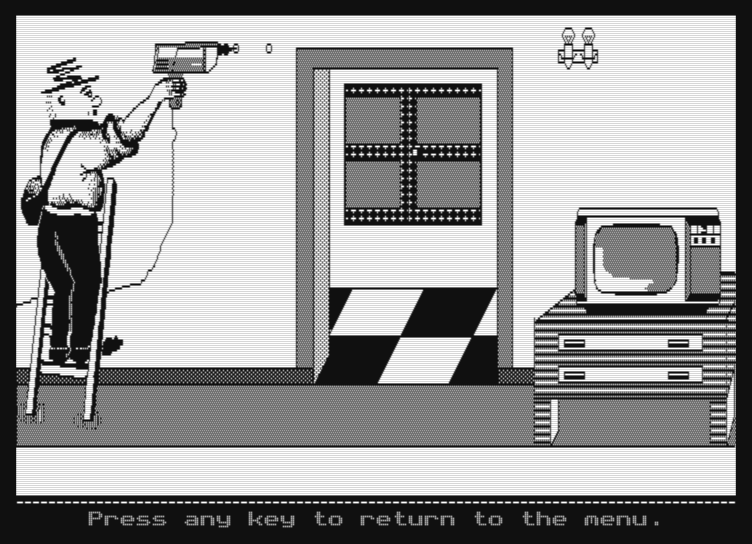
Software Screenshots
Screen 01Screen 02Screen 03Screen 04Screen 05Screen 06Screen 07Screen 08Peripheral Description
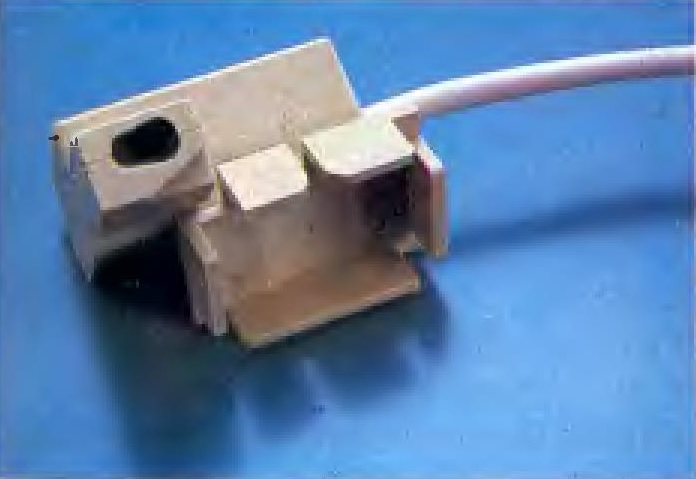
Anatomy BlueprintSensor EnclosureSensor NodeDigitized raster files output by this scanner suite are fully compatible with leading desktop publishing environments of the era, including Desktop Publisher, Fleet Street Editor Plus, and Newsdesk International.
Deploying this optical scanner requires prepping the native PCW matrix printer. First, unseat both plastic top casing shields and extract the ink ribbon cartridge block. The hardcopy schematic or target illustration to be scanned is rolled directly onto the main printer platen roller mechanism. Toggling the standard paper load lever automatically indexes the illustration document inside the tracking track. Following this step, seat the optical sensor pod bracket directly onto the moving print-head assembly carrier, rendering the hardware configuration fully prepped for digitizing operations.
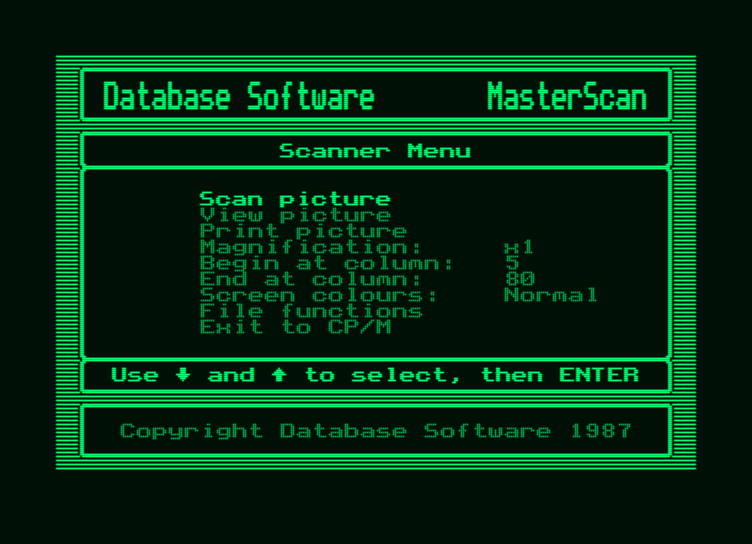
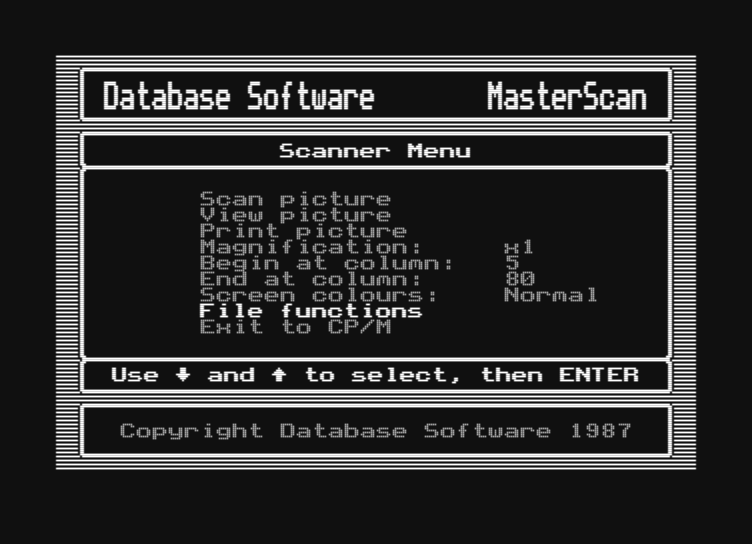
Boot the master CP/M Plus operating system environment volume. During the startup sequence, swap disks to load the custom scanner companion application volume, inputting SCAN at the terminal prompt followed by tapping ENTER or RETURN. Following brief sector buffering, the master workspace user environment initializes, displaying the following parameter hierarchy options:
- SCAN PICTURE: Triggers the raster scanning sequence, instructing the print-head assembly to trace across the illustration document.
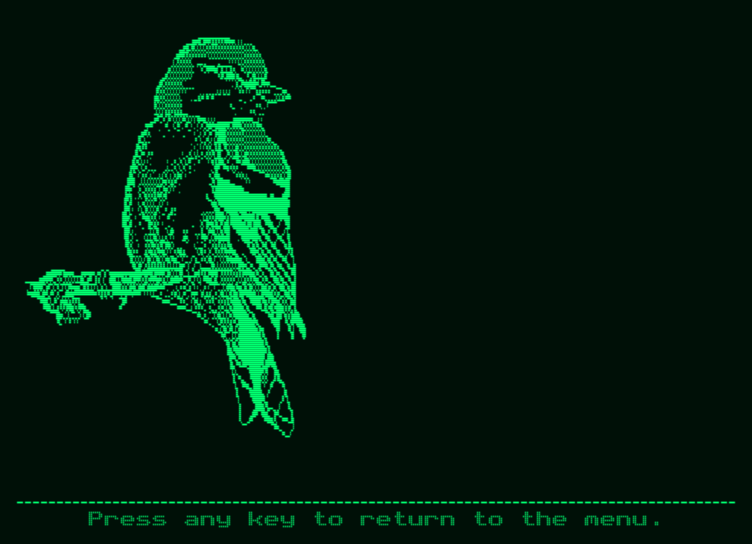
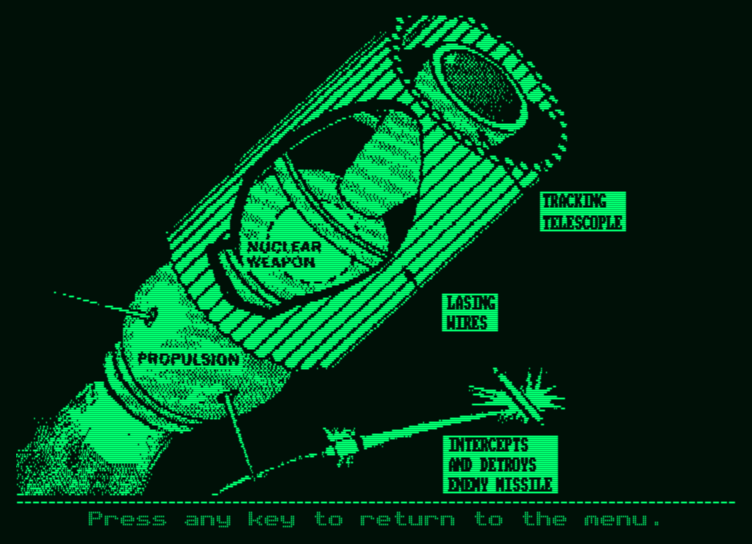
- VIEW PICTURE: Renders a live preview matrix of the uncompressed raster bitmap currently cached inside the host RAM memory banks.
- MAGNIFICATION: Invokes the digital zooming subsystem, letting designers pick among multiple scaling interpolation thresholds.
- BEGIN AT COLUMN / END AT COLUMN: Maps bounding operational limits, locking the precise horizontal boundaries where the optical photosensor tracks data.
- SCREEN COLOURS: Flips display color maps, letting users alternate terminal canvas output between normal green-lit and inverted video masks.
- FILE FUNCTIONS: Steps into the secondary sub-menu dashboard governing mass storage disk inputs and outputs.
- EXIT TO CP/M: Safely terminates the scanner environment routine and steps back out to the master operating system command shell.
While an active digitization tracking routine is processing, operators can interrupt the cycle instantly by hitting the STOP key. The application halts tracking and prompts the operator to cache or discard the current tracking buffers; hitting the K key (KEEP) commits the sector data to the memory stack, while tapping the S key (SCRAP) flushes the buffer.
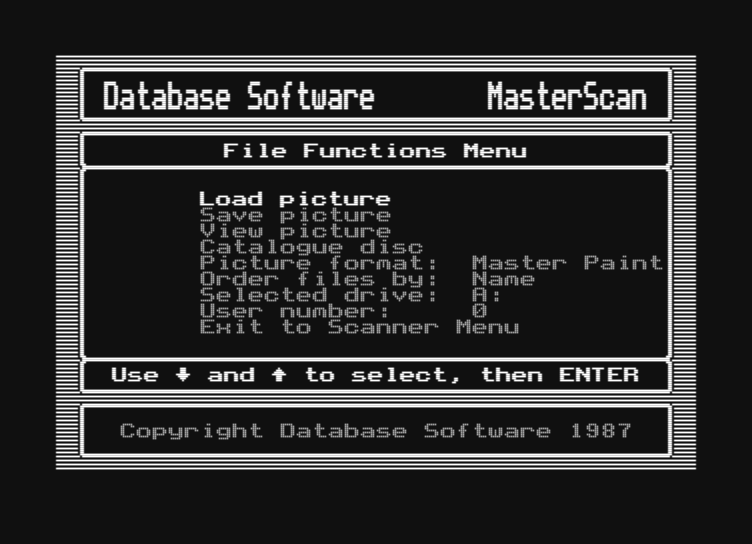
Selecting the File Functions node branches the workspace into a standalone storage dashboard, detailing the following utility parameters:
- LOAD PICTURE: References and buffers saved bitmap image matrices from storage disks into RAM.
- SAVE PICTURE: Writes current memory graphic buffers into hard storage sector blocks.
- VIEW PICTURE: Invokes a live screen preview layout of the target graphic.
- CATALOGUE DISC: Indexes and tracks directory trees across any target disk volume array (A, B, or M).
- PICTURE FORMAT: Switches structural export filters, translating the internal bitmap matrix variables into custom layout file configurations to ensure flawless imports inside the previously mentioned desktop publishing environments.
- ORDER FILES BY: Configures file sorting and labels matching the target application structures.
- SELECT DRIVE: Directs data streams to index file operations inside a specific target storage unit (A, B, or M).
- USER NUMBER: Toggles logical CP/M user space groups, accepting variables ranging from 0 to 15 matching CP/M platform specifications.
- EXIT TO SCANNER MENU: Safely escapes the storage utility dashboard to step back up into the primary system configuration menu tree.
As previously outlined, digitized documents parsed through the optical phototransistor array can be imported directly into multiple desktop publishing pipelines. The specific output export file extensions map as follows:
- Under Desktop Publisher frameworks, file variables carry the .GRF extension format.
- Under Fleet Street Editor Plus environments, files are structured under the .G matrix filter.
- Under Newsdesk International pipelines, outputs are written as pure raw bitmaps lacking a formal structural extension string.
If the designer intends to parse or edit the output assets inside the specialized Master Paint design environment, files must be written using the custom .PCP formatting mask.
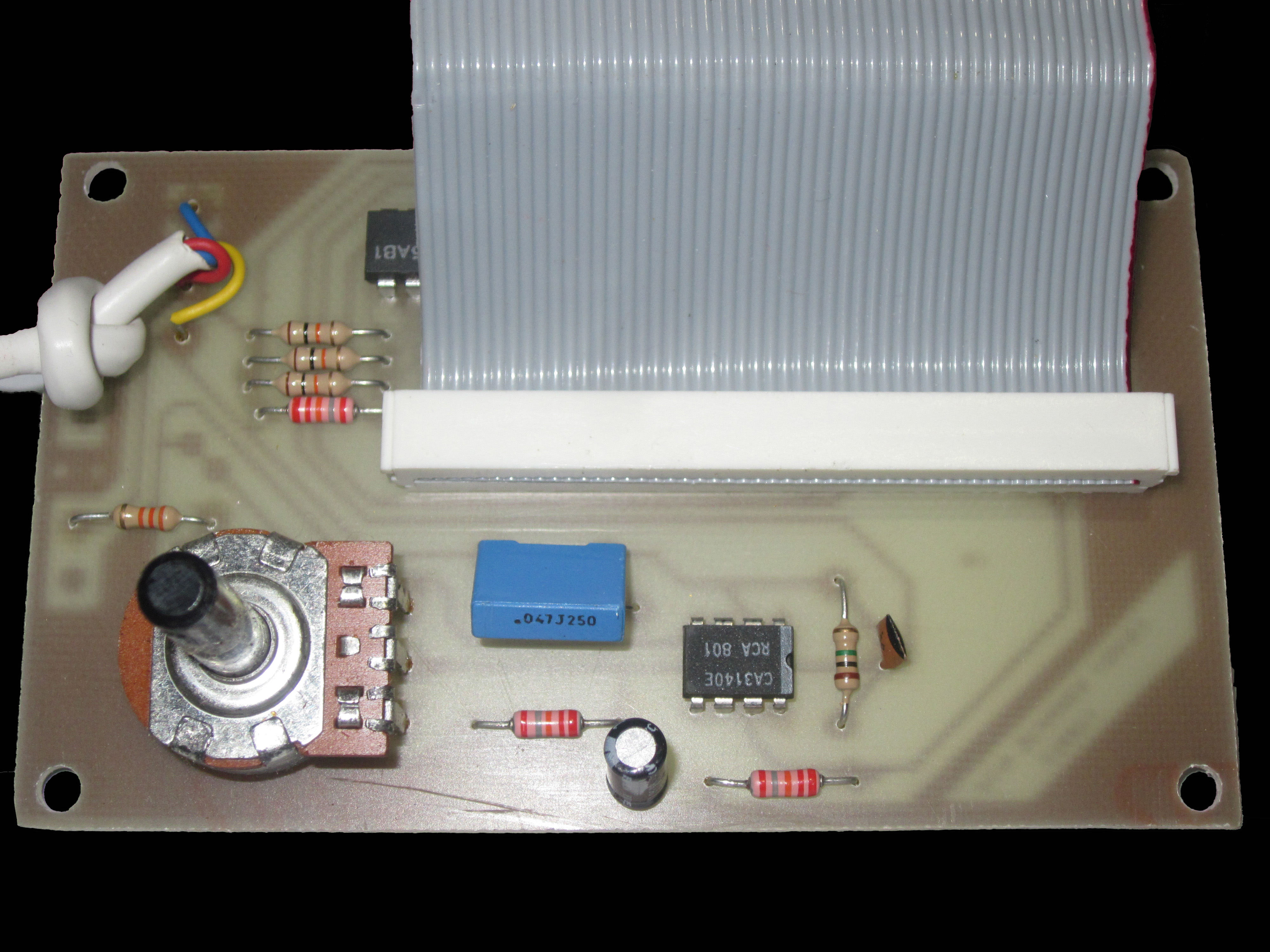
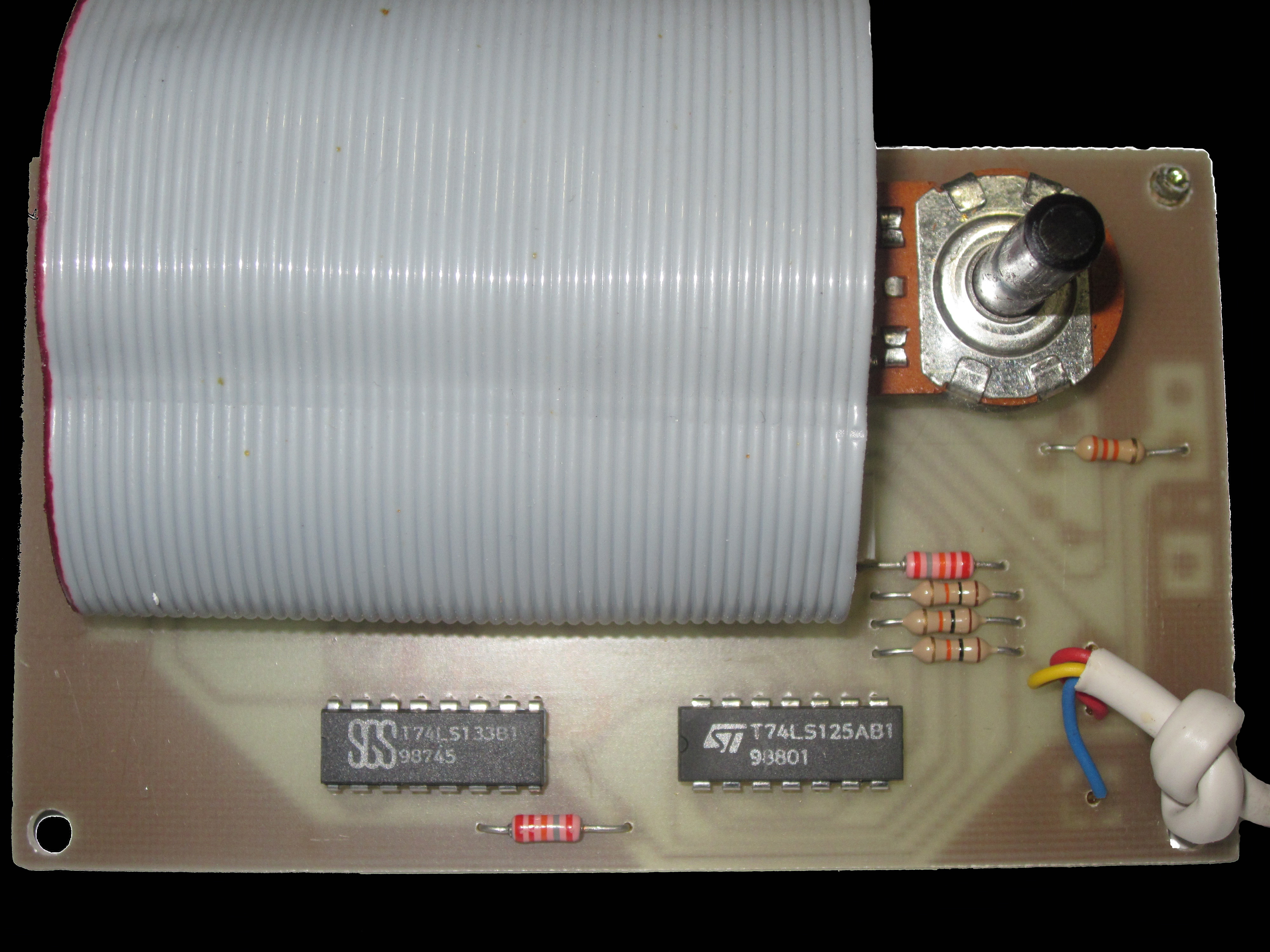
TECHNICAL NOTE: The analog potentiometer wheel embedded onto the interface casing acts as a manual sensitivity regulator for the internal optoelectronic photosensor tracking diodes. Fine-tuning this sensitivity wheel is meant to be executed dynamically while the printhead carrier is processing active scanning passes across the paper asset.
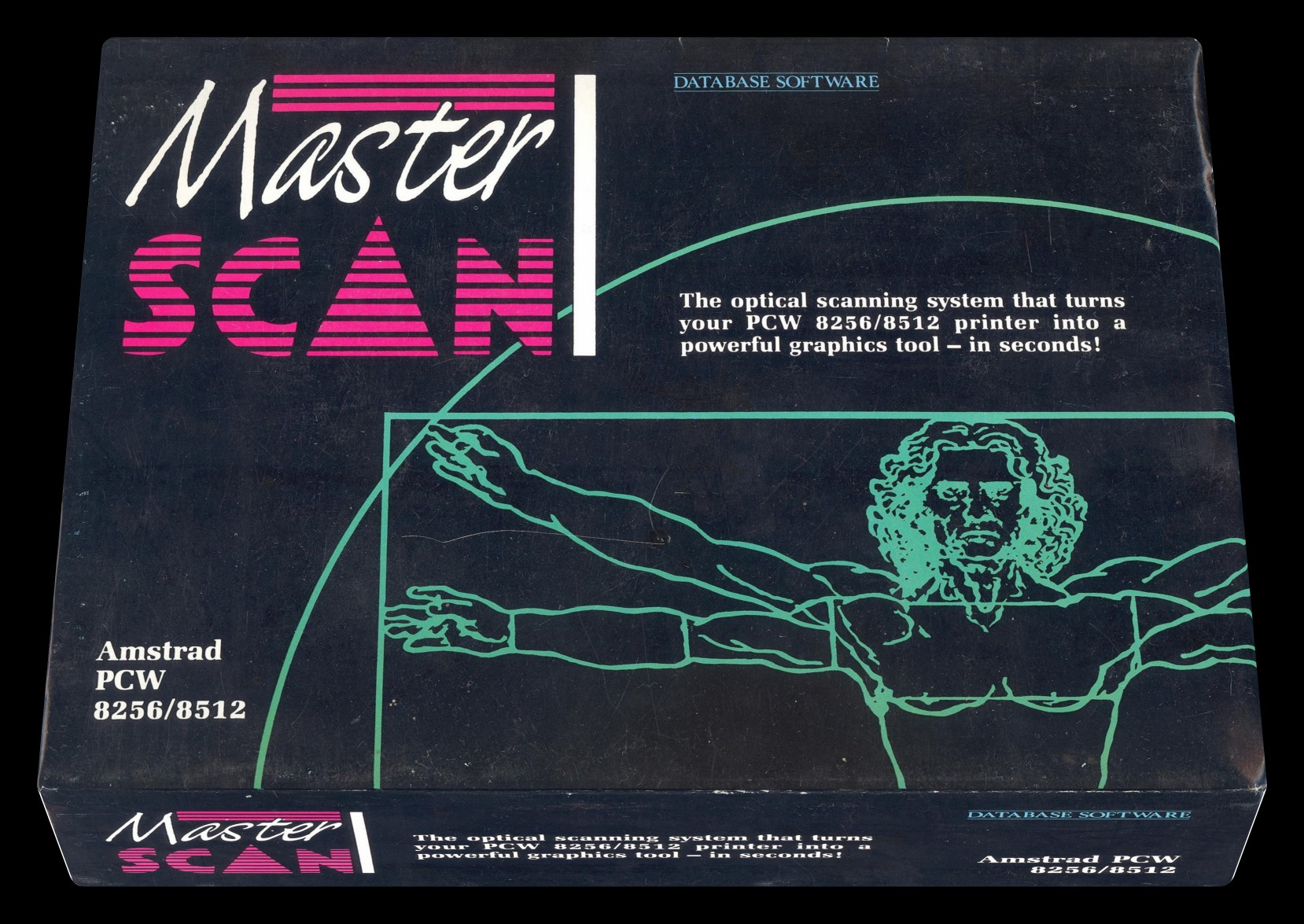
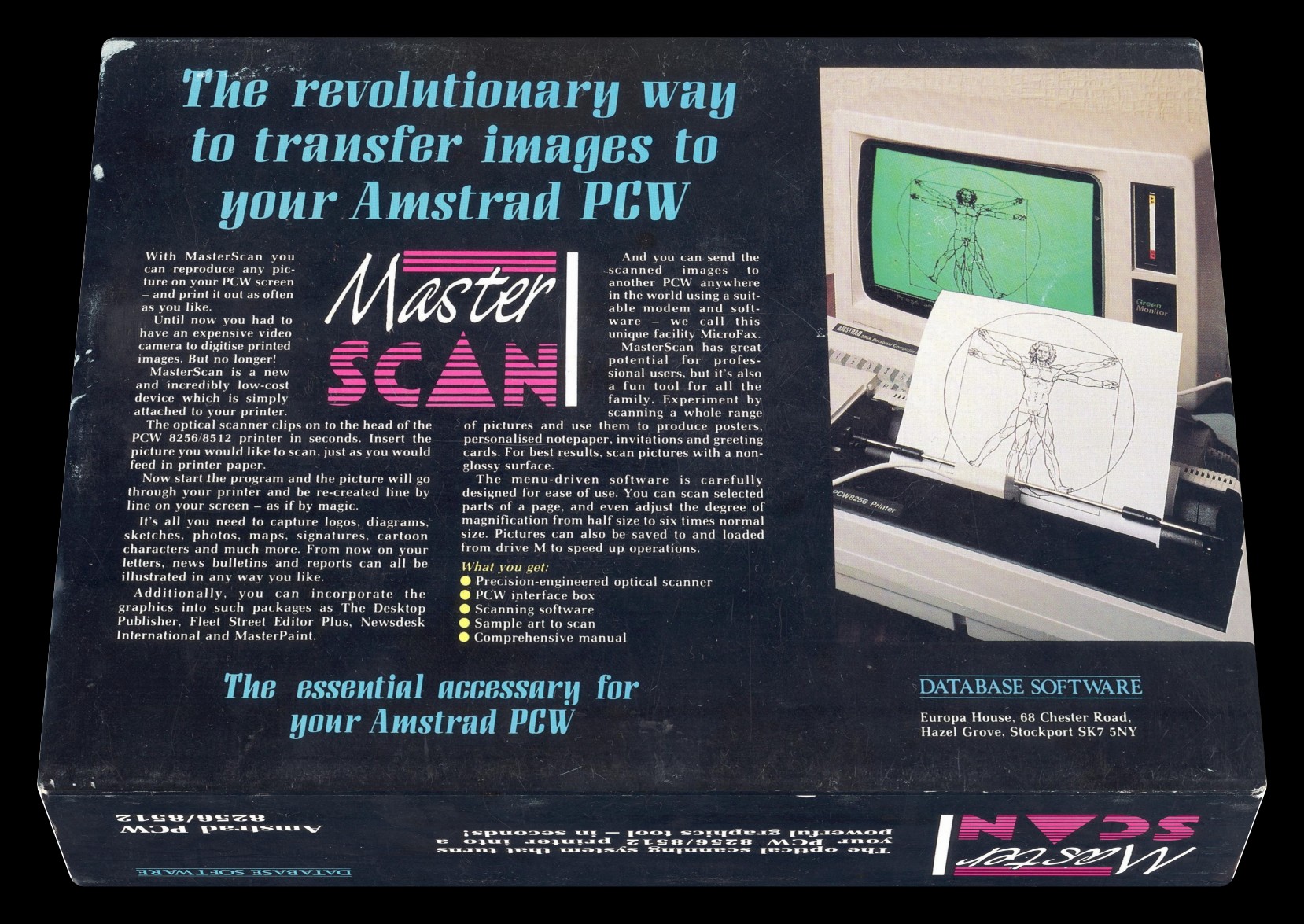
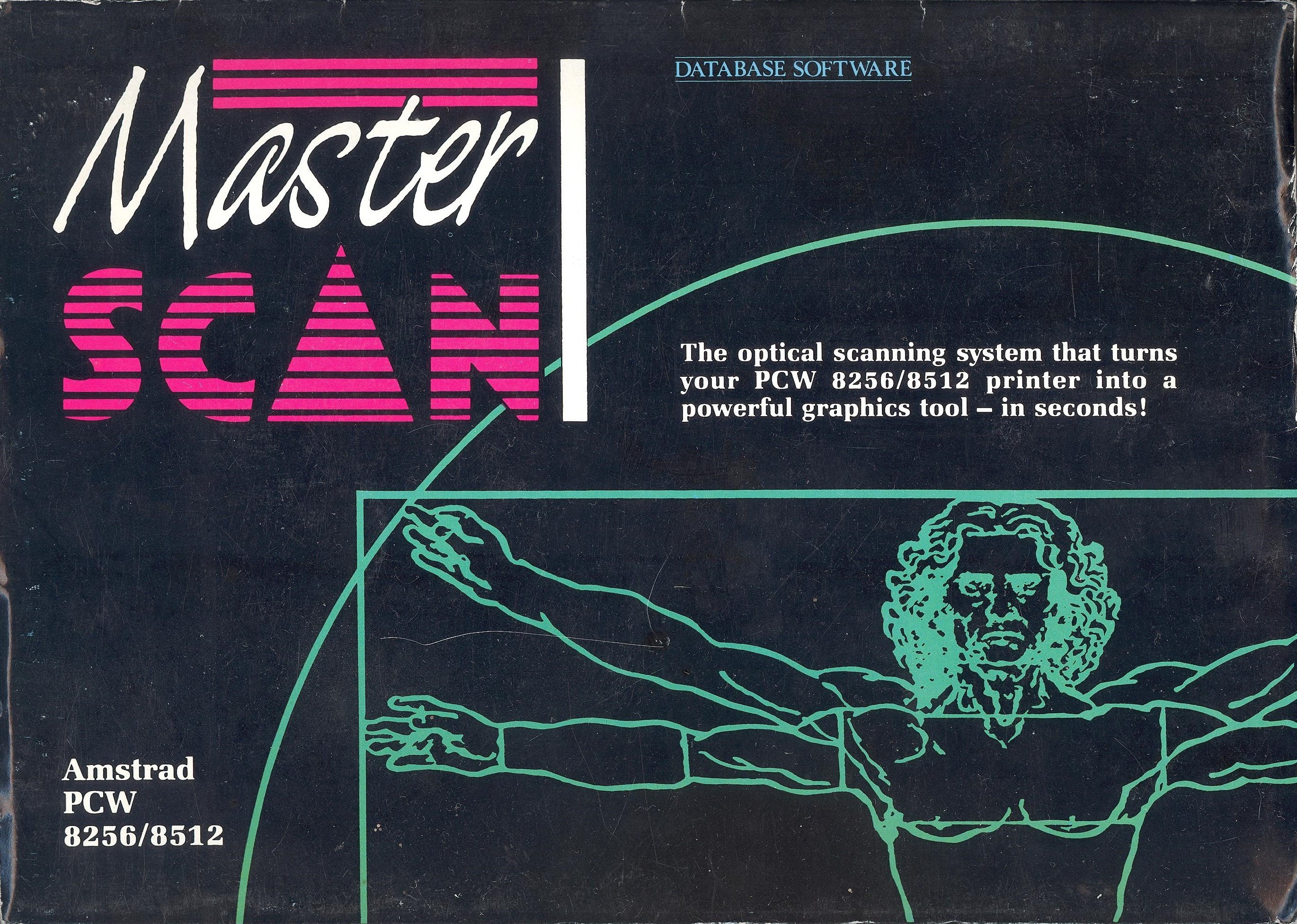
Original Retail Packaging
The pictures below document the factory retail box layers and physical protection enclosures provided out of the box.
Outer Box LidInternal Shell LayoutComplete Box ProfileRetail Cover Artwork
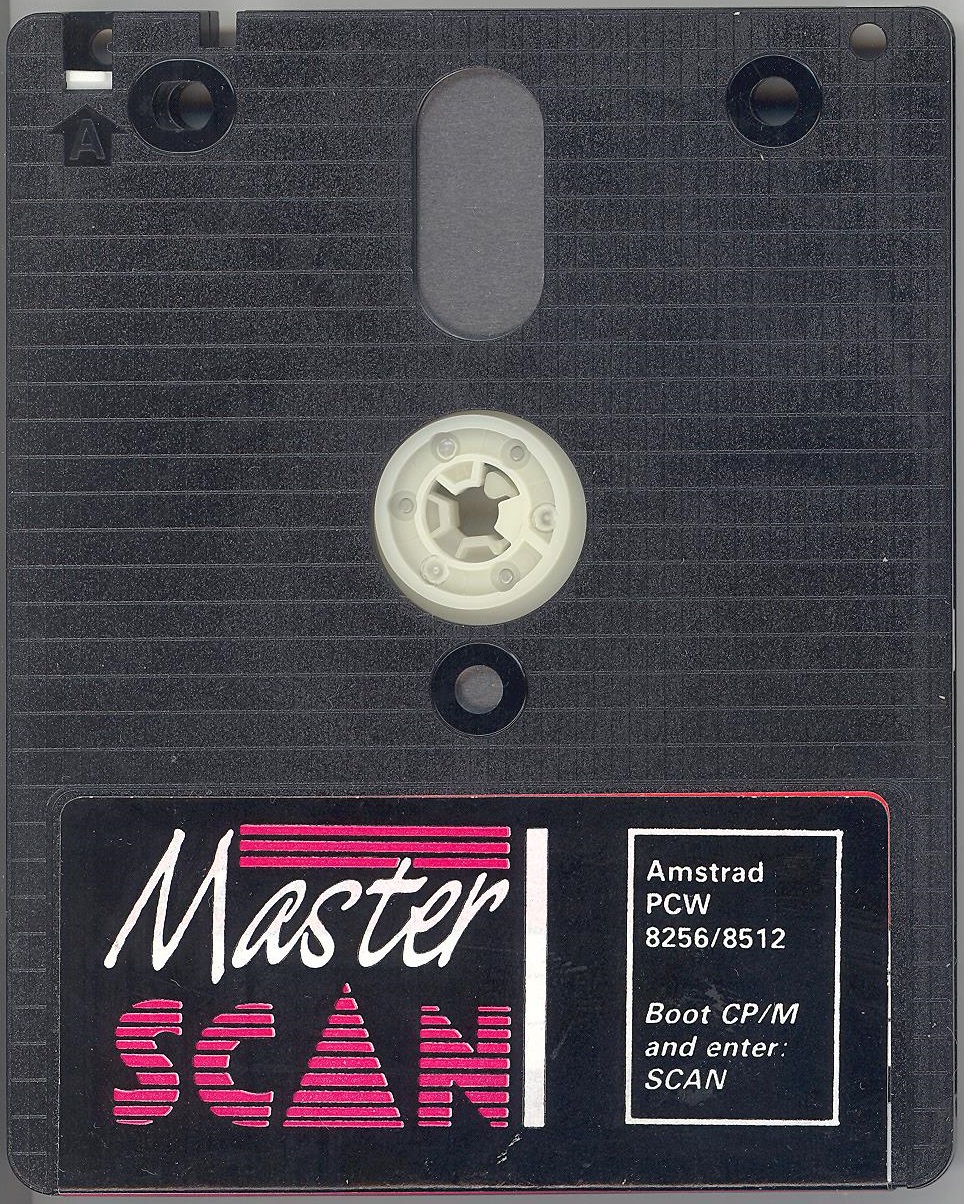
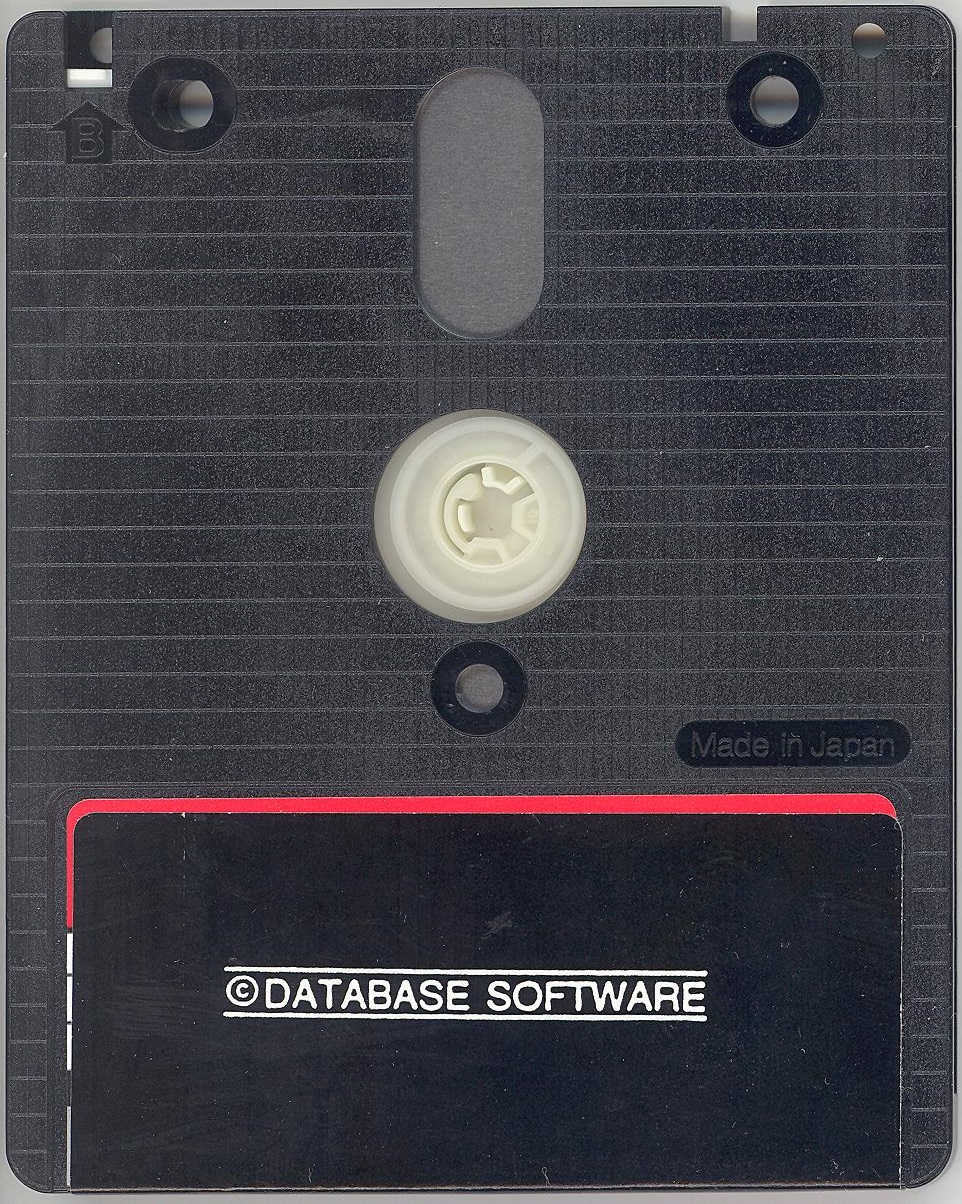
Box Front DesignBox Back SpecificationsFloppy Software Media
Original software installation and utilities disk media bundled within the factory master kit configuration.
Floppy Master LabelFloppy Disk ProfileFloppy Media ReverseInternal Hardware Components & Extras
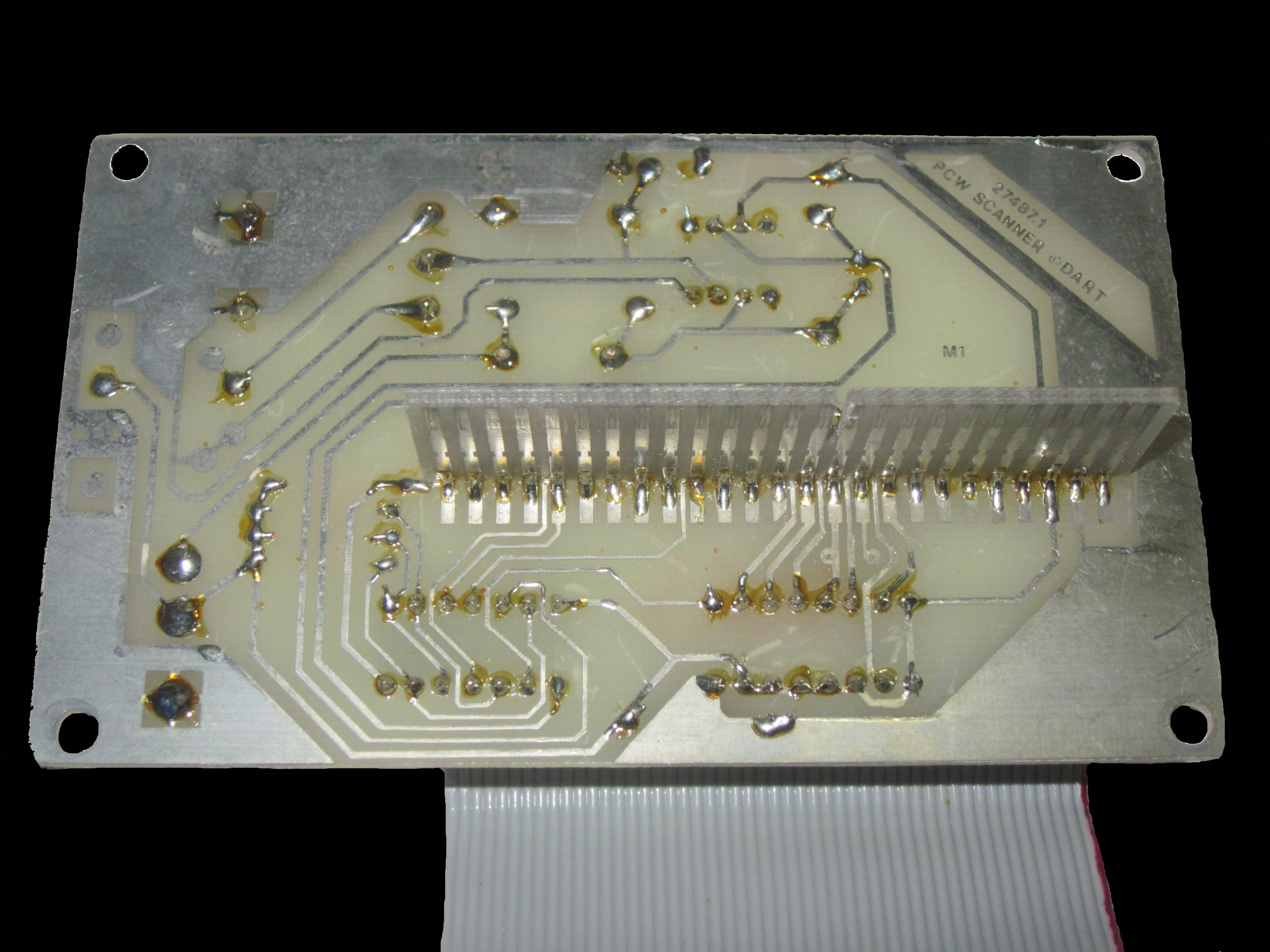
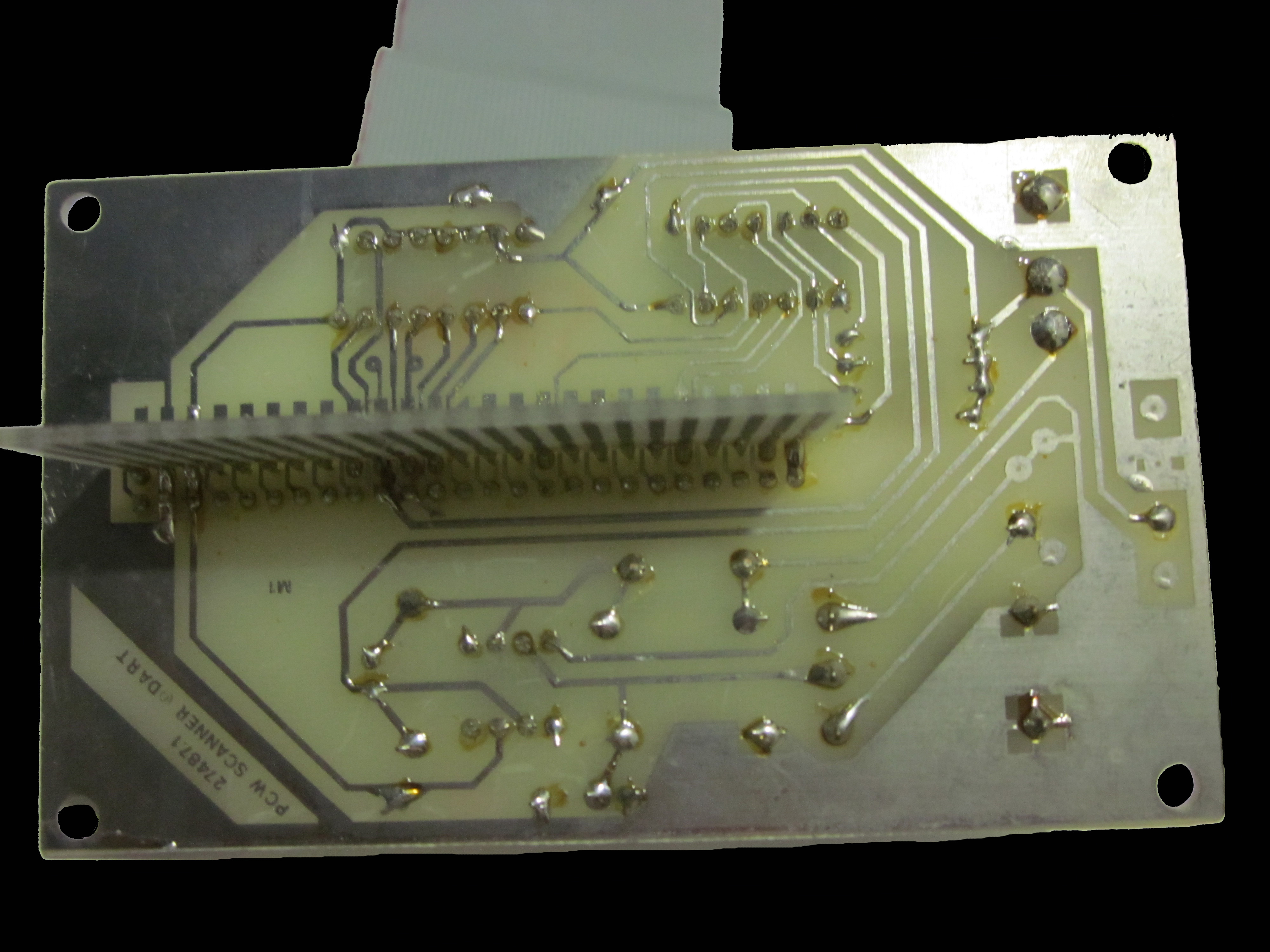
High-resolution captures detailing both surface layers of the interface adapter PCB architecture, plotting out the logic chip footprints and resistor arrays driving the signal translation tracking.
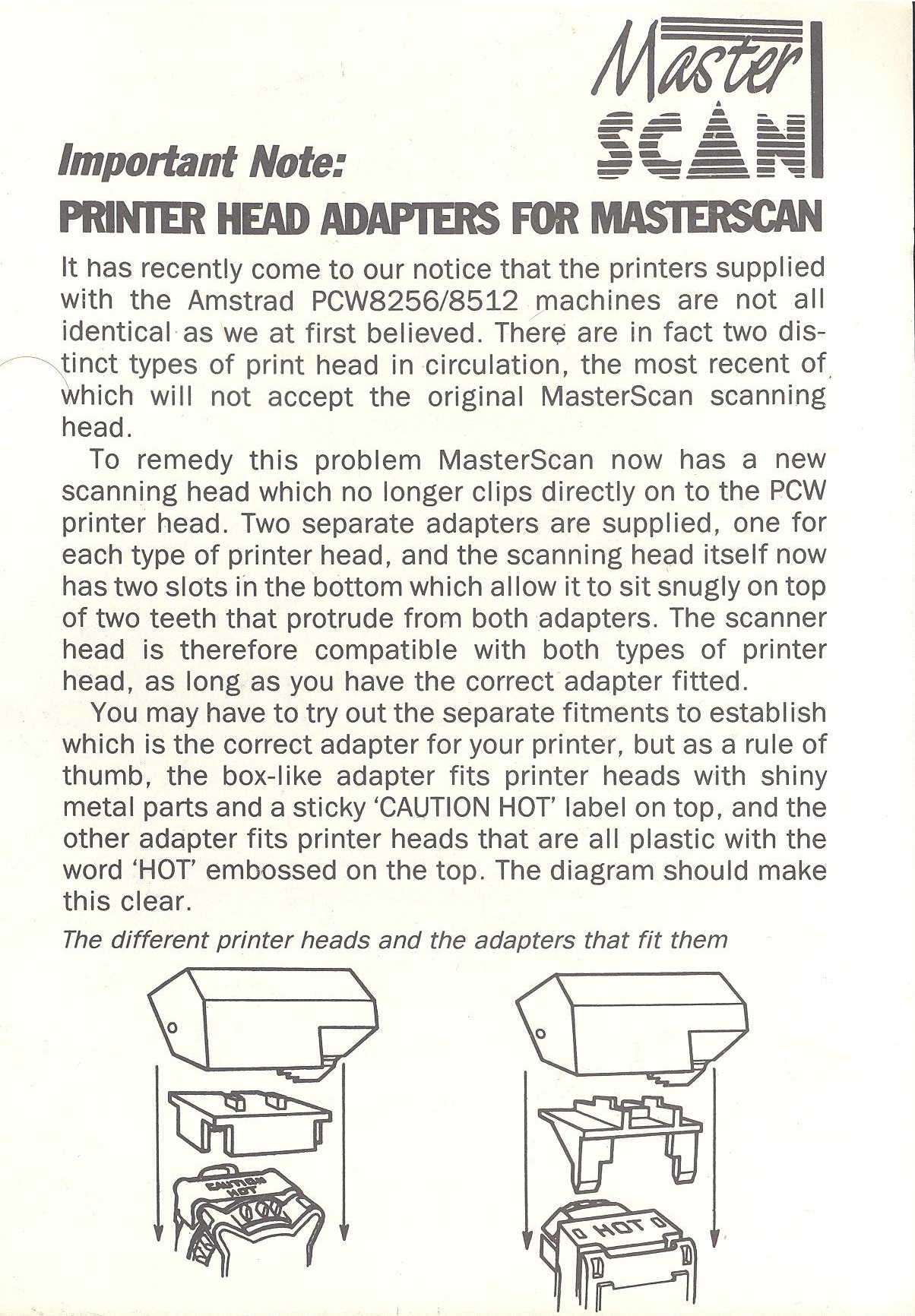
PCB Component TopPCB Solder TracksCasing Board AlignmentInterface IO BracketIncluded below are the schematic mapping instructions for adapting the scanner mounting brackets across various alternative matrix printer architectures. These are printed on a single-sided, monochrome thin cardboard sheet measuring exactly 14.70 cm in height by 10.30 cm in width.
Adapter Instruction CardVintage Advertising & Press Documentation
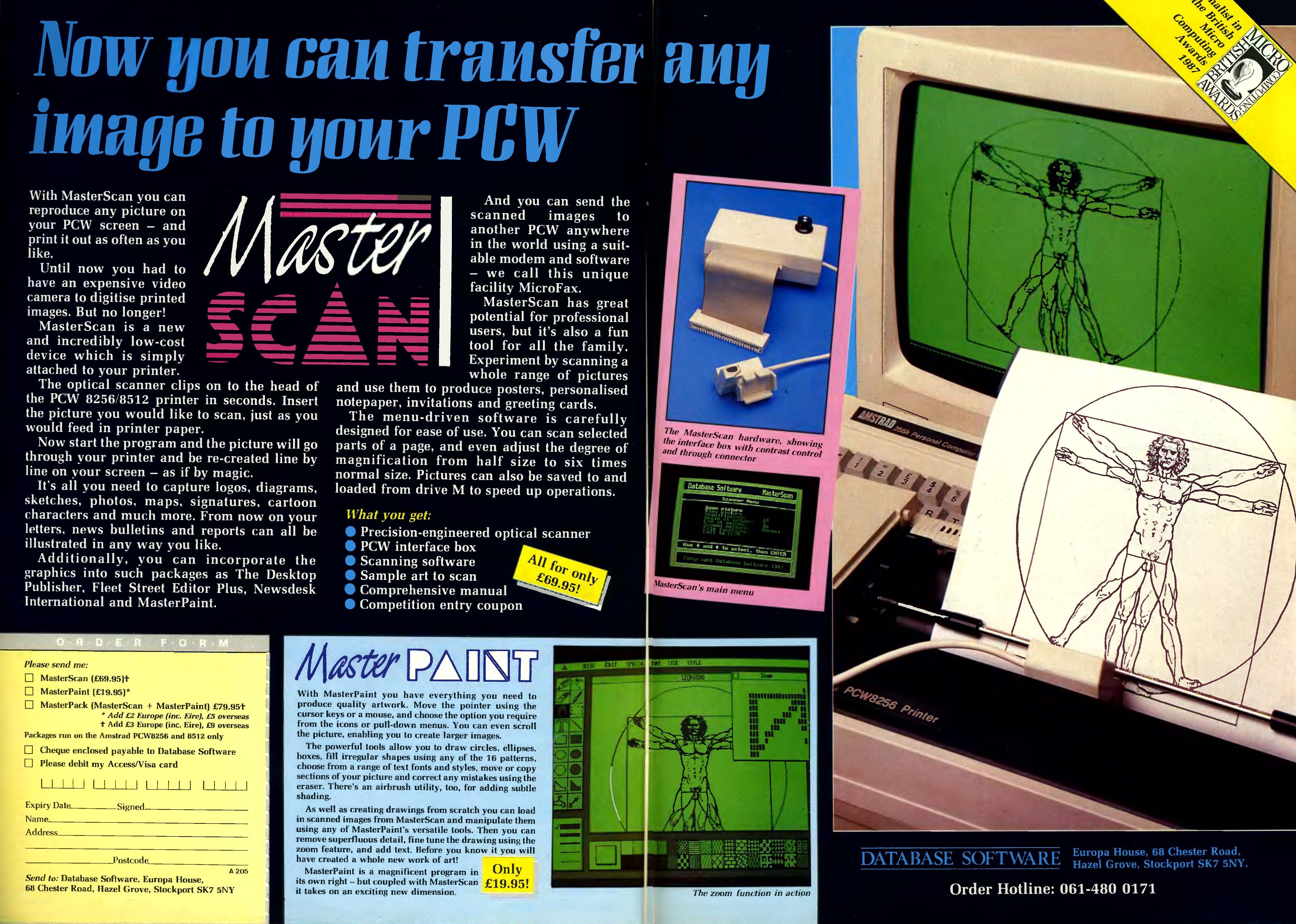
Historical marketing advertisements and product showcases running inside leading high-circulation computing magazines back in the day.
Magazine Ad 01System Download Repositories
| Format | Documentation Archive / DSK Master Image |
|---|---|
| ZIP / DSK | Master Scan Software Master Disks File |
| Master Scan Complete Technical User Manual | |
| Master Scan Mechanical Mount Instruction Sheet |
en/aplicaciones/master_scan_or.1778836931.txt.gz · Última modificación: por jesus