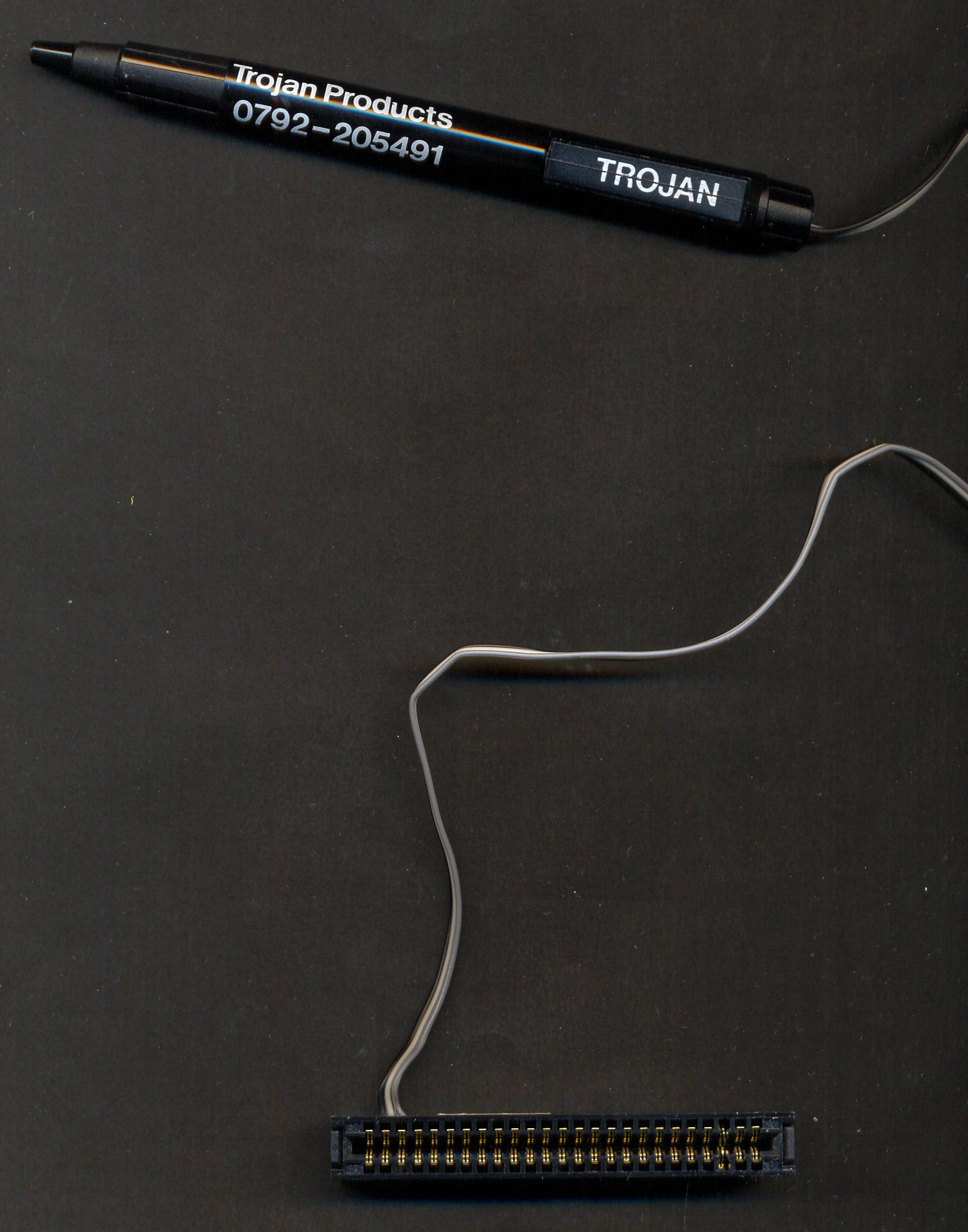
The Trojan Cadmaster Light Pen manufactured by Trojan Products is an input peripheral designed to provide the Amstrad PCW range with direct interactive drawing capabilities on its green phosphor monitor. The hardware connects via the rear expansion bus of the computer, allowing users to operate specialized computer-aided design software suites.
en:hardware:perifericos:cadmaster
A> TROJAN CADMASTER LIGHT PEN
Trojan Light Pen
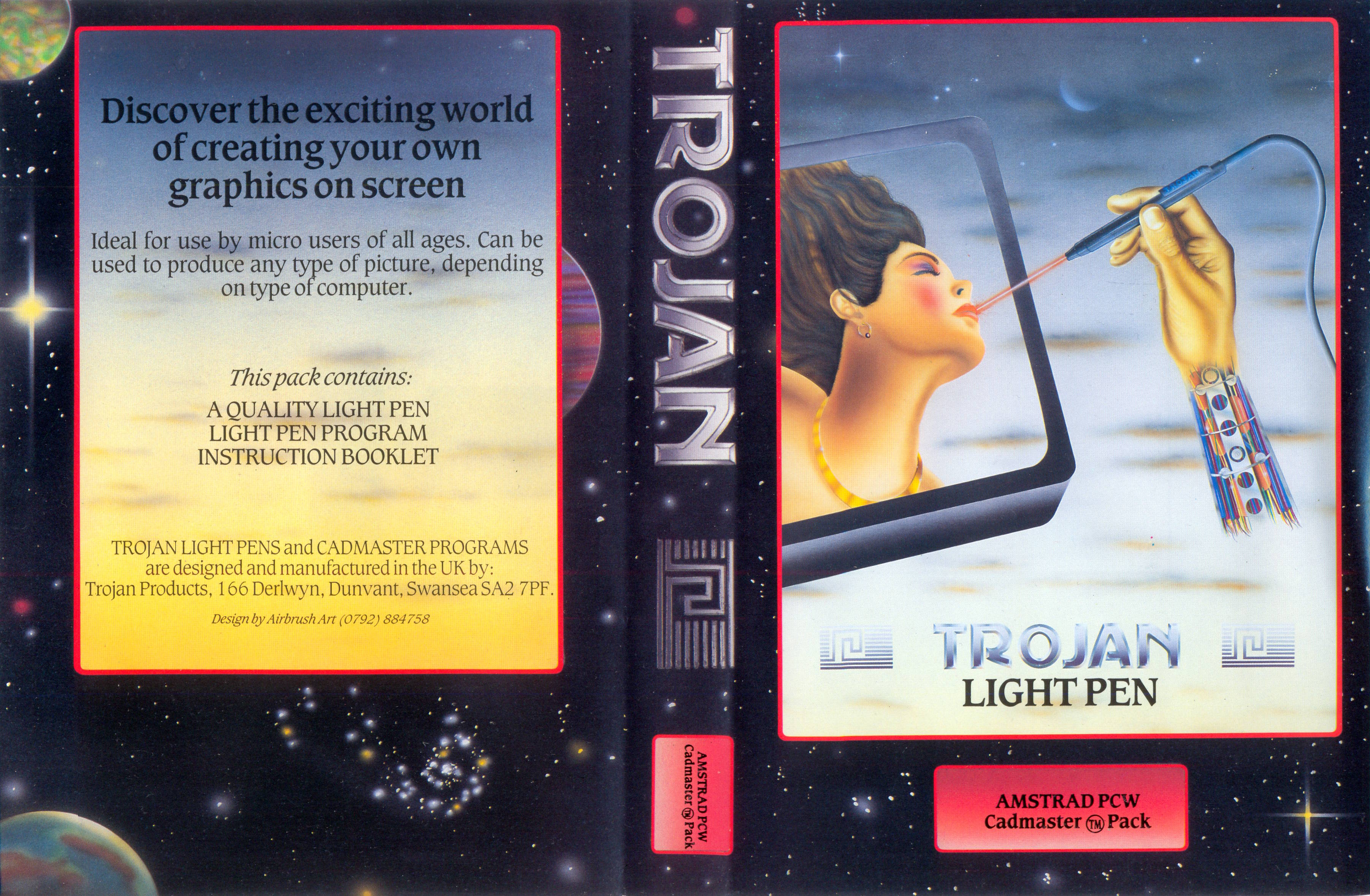
Original Artwork
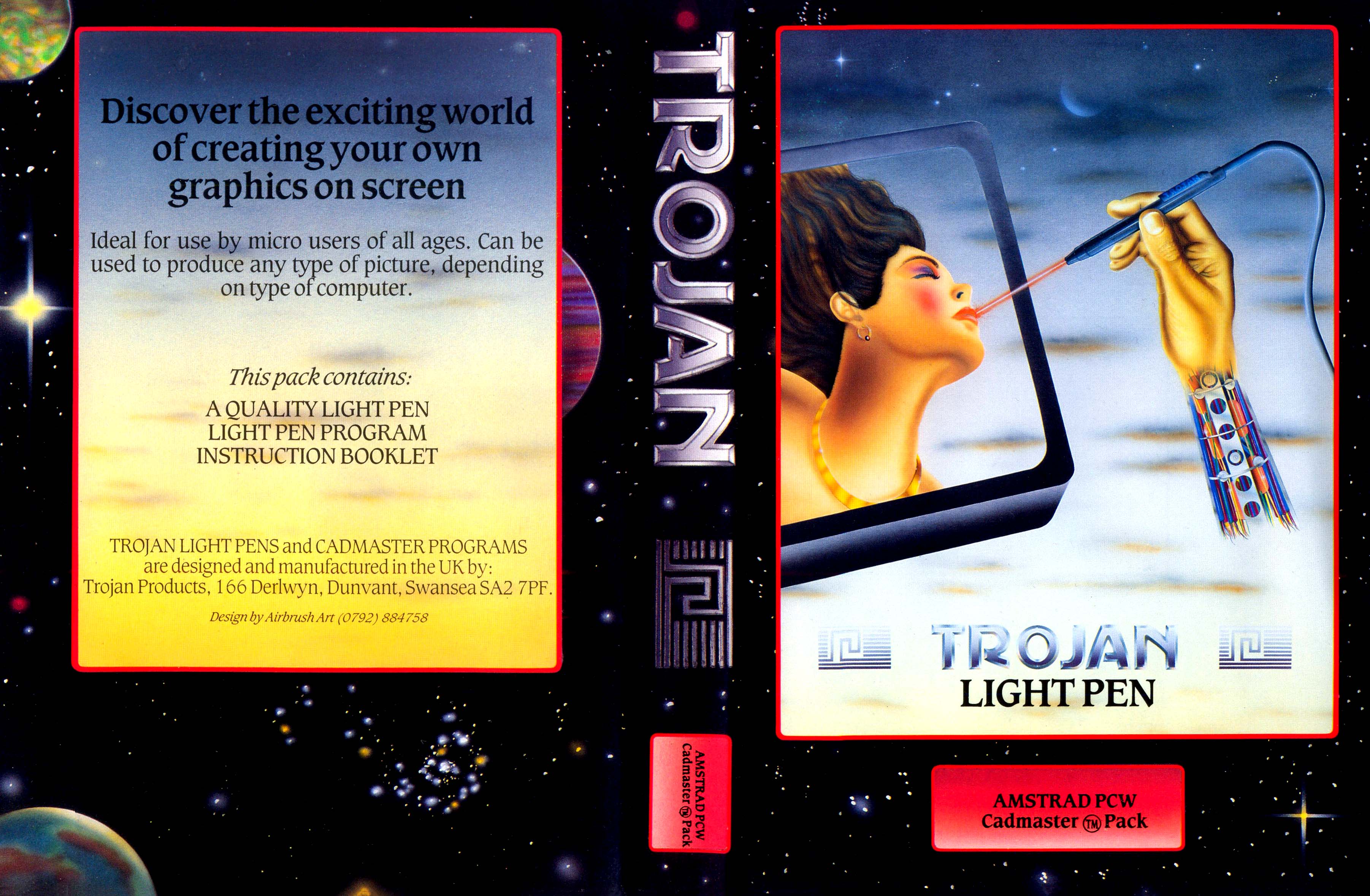
Original InlayRetouched InlayDetailed Description
The Trojan bundle commercialized for the Amstrad ecosystem was a combined hardware and software solution featuring the Cadmaster CAD environment. Unlike other generic peripherals, the included software allowed for precise control over the CRT monitor's electron beam, resolving some of the PCW's refresh rate constraints through highly optimized synchronization routines.
The Cadmaster software stands out for offering advanced typography processing for its time, enabling text entry directly on screen in a selection of 64 different sizes. Typefaces could be manipulated in real time to display in normal format, mirrored (inverse) format, or rotated at various angles to suit technical blueprints.
In addition to its native geometric design features, the system generated structured data files that could later be exported and integrated into standard PCW desktop publishing tools, such as the famous Microdesign graphic design application.
Internal Architecture & Logical Principles
The operation of the Trojan Light Pen relies on the photometric interception of the screen's raster scan. The pen features a high-speed phototransistor (or photodiode) at its tip, finely tuned to detect the persistence and wavelength of the PCW's green phosphor (P39) CRT monitor. The exact moment the electron beam passes directly in front of the lens, a sharp voltage spike is triggered by the sudden jump in luminescence.
At the hardware level, the interface unit's circuitry amplifies this analog pulse and converts it into a clean digital signal using a voltage comparator (typically based on an LM311 integrated circuit or equivalent). This digital signal triggers an interrupt or flips a status bit accessible via the Z80 CPU's Input/Output (I/O) ports assigned to the rear expansion bus.
The Amstrad PCW video controller continuously increments internal counters to draw lines and pixels across the screen. The exact millisecond the Trojan circuit detects the phosphor flash, it freezes the values of these counters. The software then reads these registers and, through mathematical calculations based on the horizontal and vertical refresh timing (the specific frame and line frequencies of the Amstrad hardware), translates this temporal timestamp into an exact X/Y coordinate within the video RAM graphics matrix.
Since the monitor's phosphor has a specific decay and fade time, the driver applies a software-based calibration algorithm to compensate for the hardware signal propagation delay, ensuring that the Cadmaster cursor appears exactly beneath the physical tip of the Trojan pointer.
Media & Disks
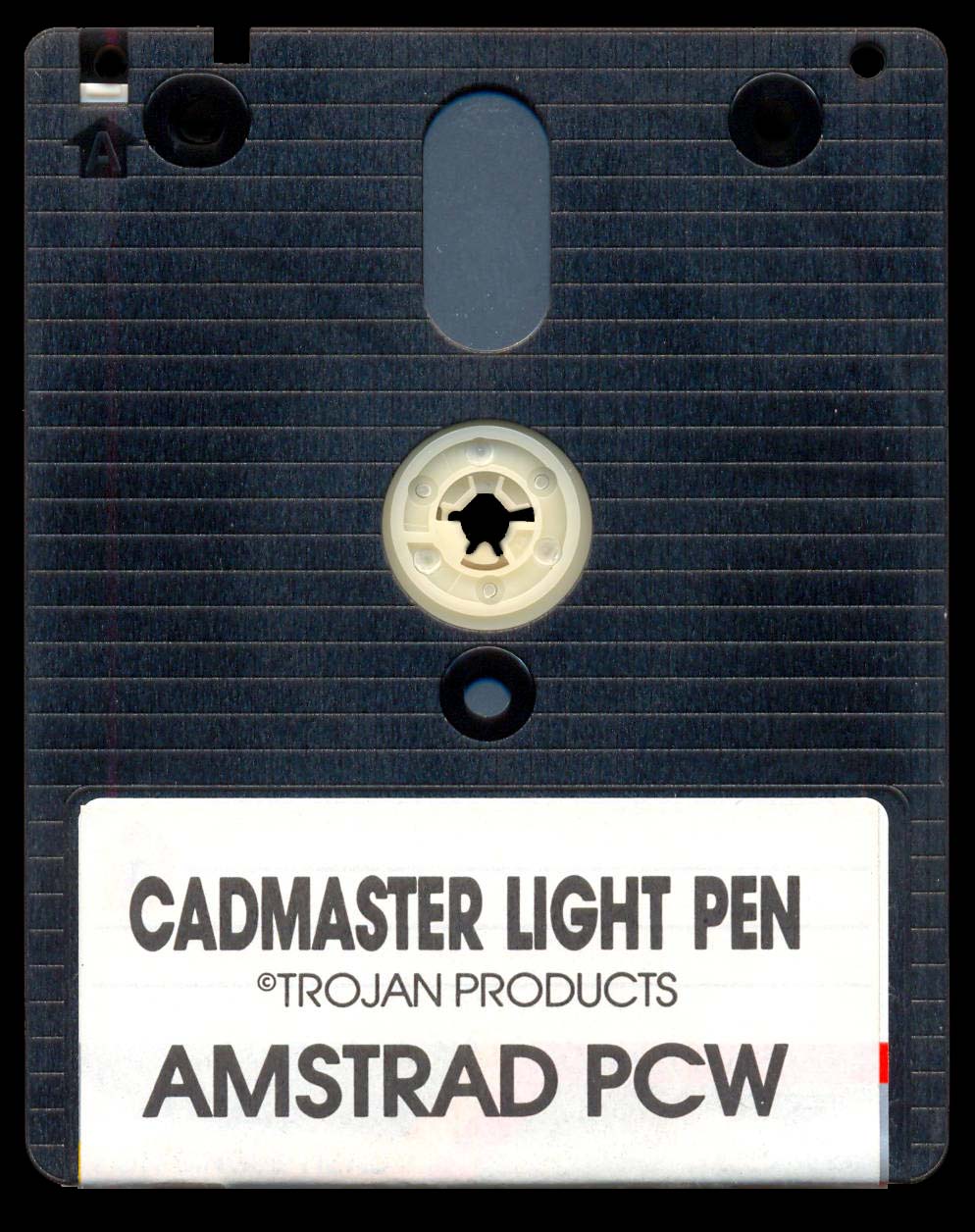
Original Disk Side A
Downloads Section
| Format | Documentation File / DSK Image |
|---|---|
| Trojan Cadmaster Light Pen Manual | |
| DSK | Trojan Cadmaster Software |
en/hardware/perifericos/cadmaster.txt · Última modificación: por jesus