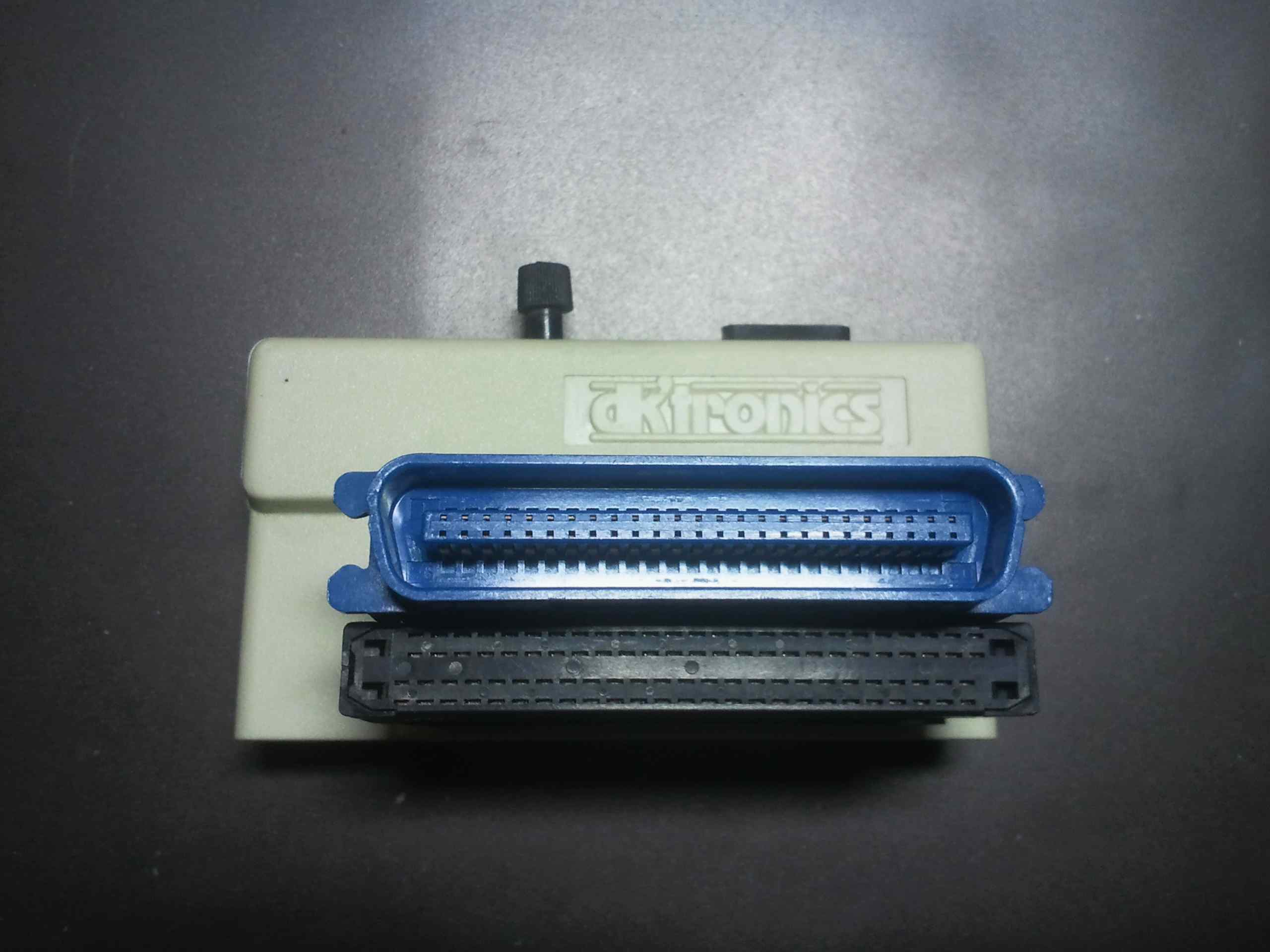
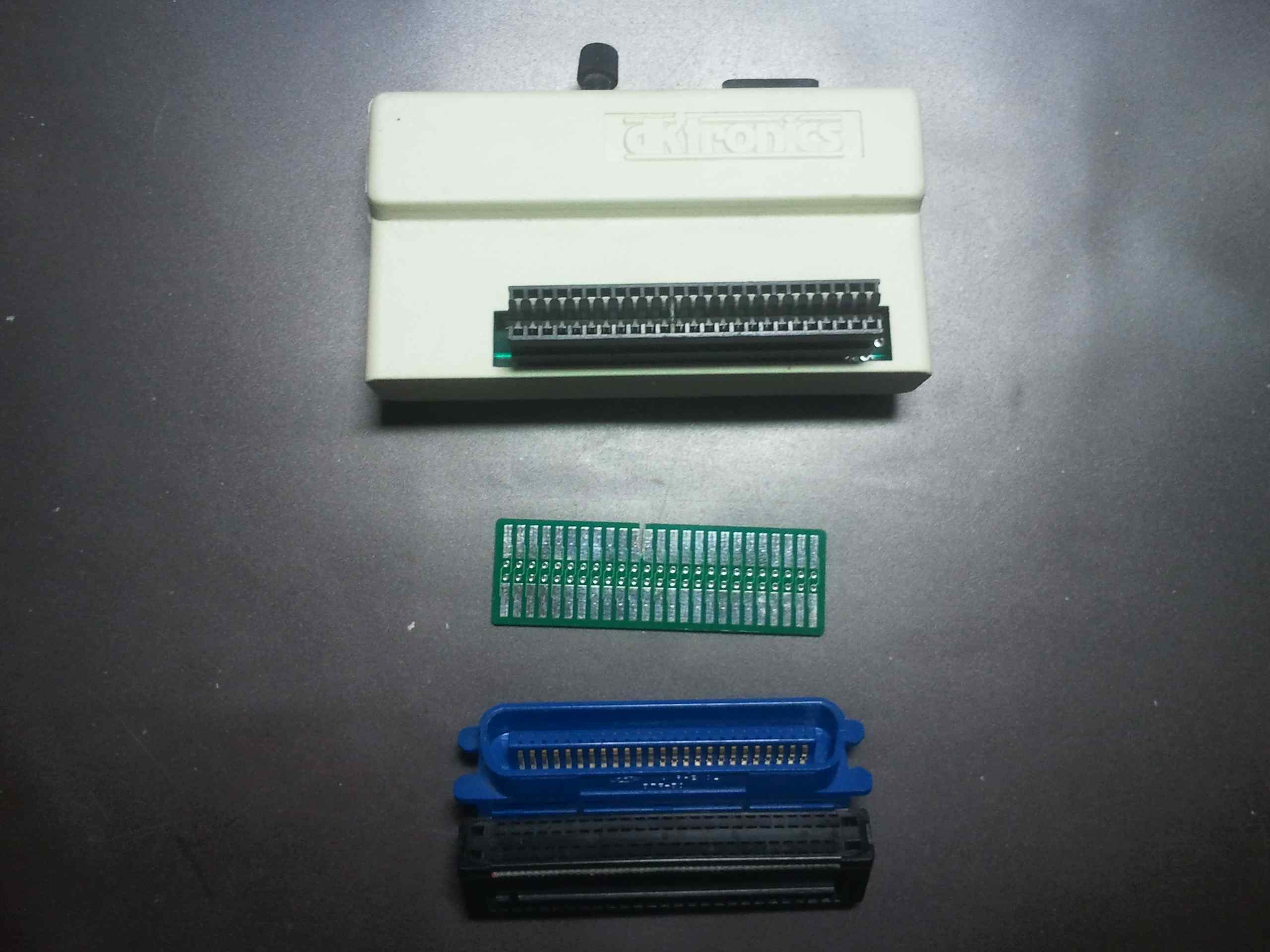
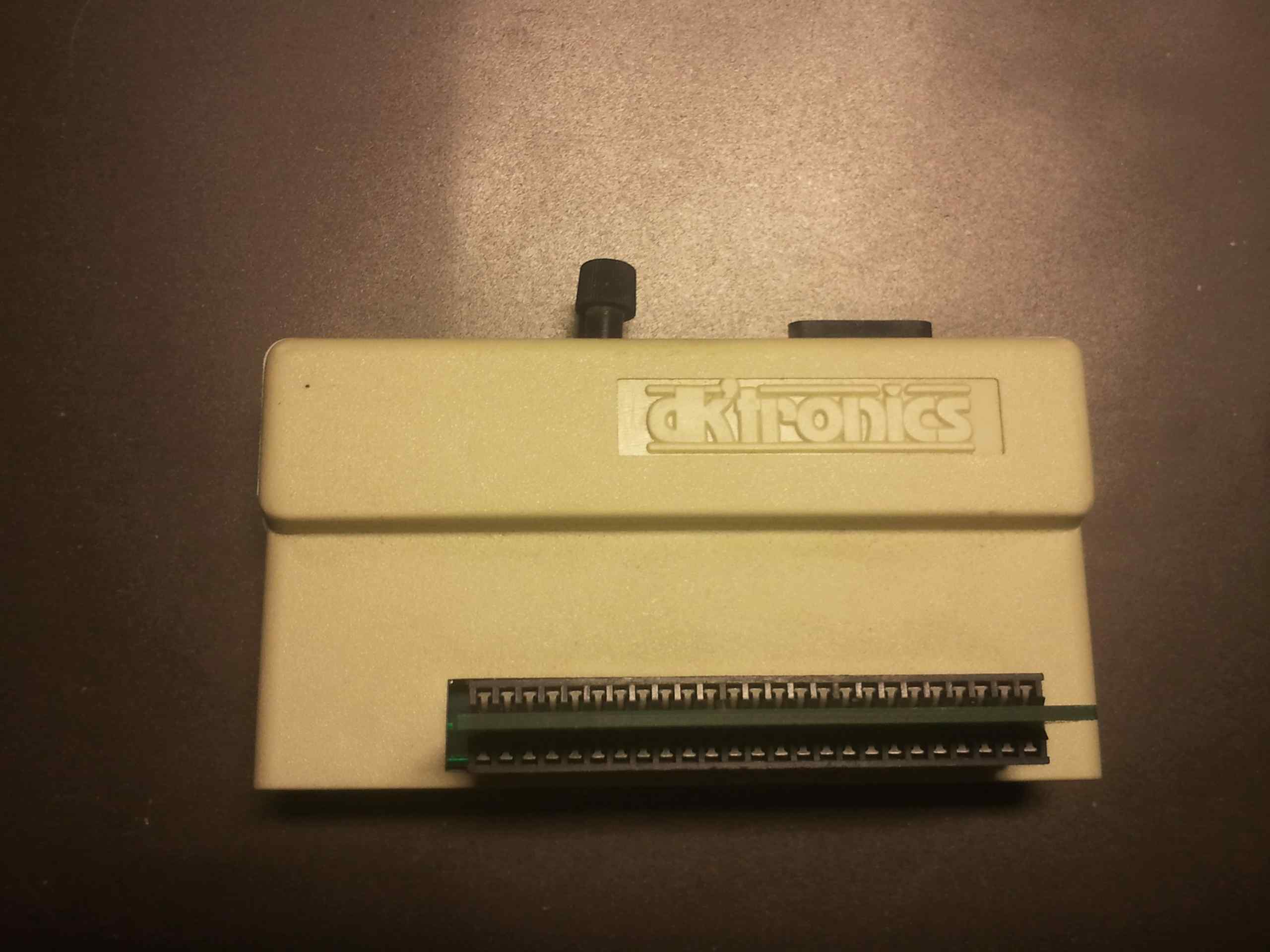
This extraordinary peripheral manufactured by DK'tronics provides the PCW ecosystem with sound capabilities and a joystick port. It was engineered to enhance audio quality across the PCW series, as these workstations lacked built-in sound hardware, while simultaneously supplying a joystick expansion for gaming by connecting directly onto the rear expansion bus slot.
en:hardware:perifericos:dksound2
A> DK'TRONICS SOUND & JOYSTICK
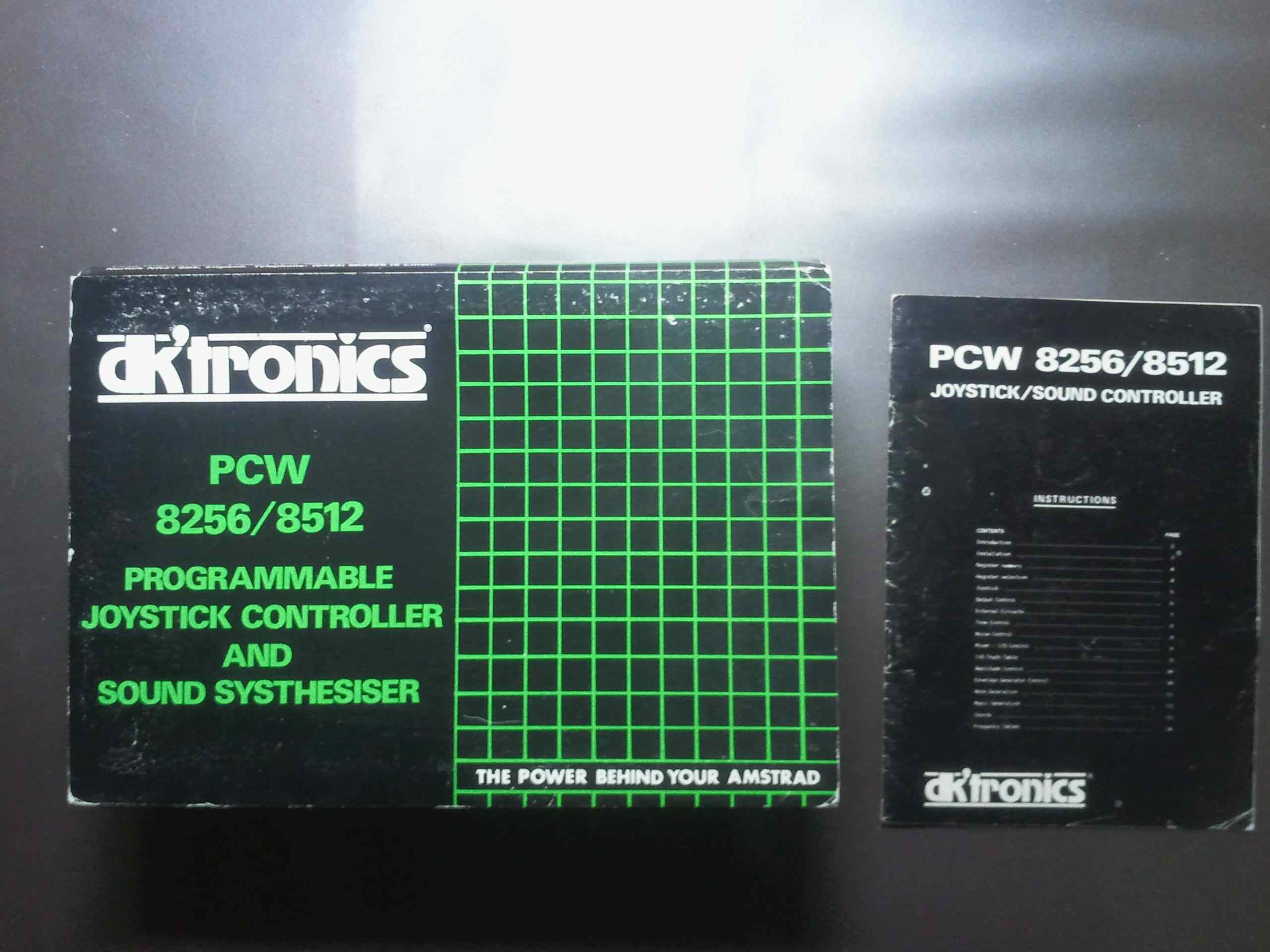
Original Packaging
PackagingDevice Images
Photo 1Photo 2Photo 3Photo 4Photo 5Technical Overview
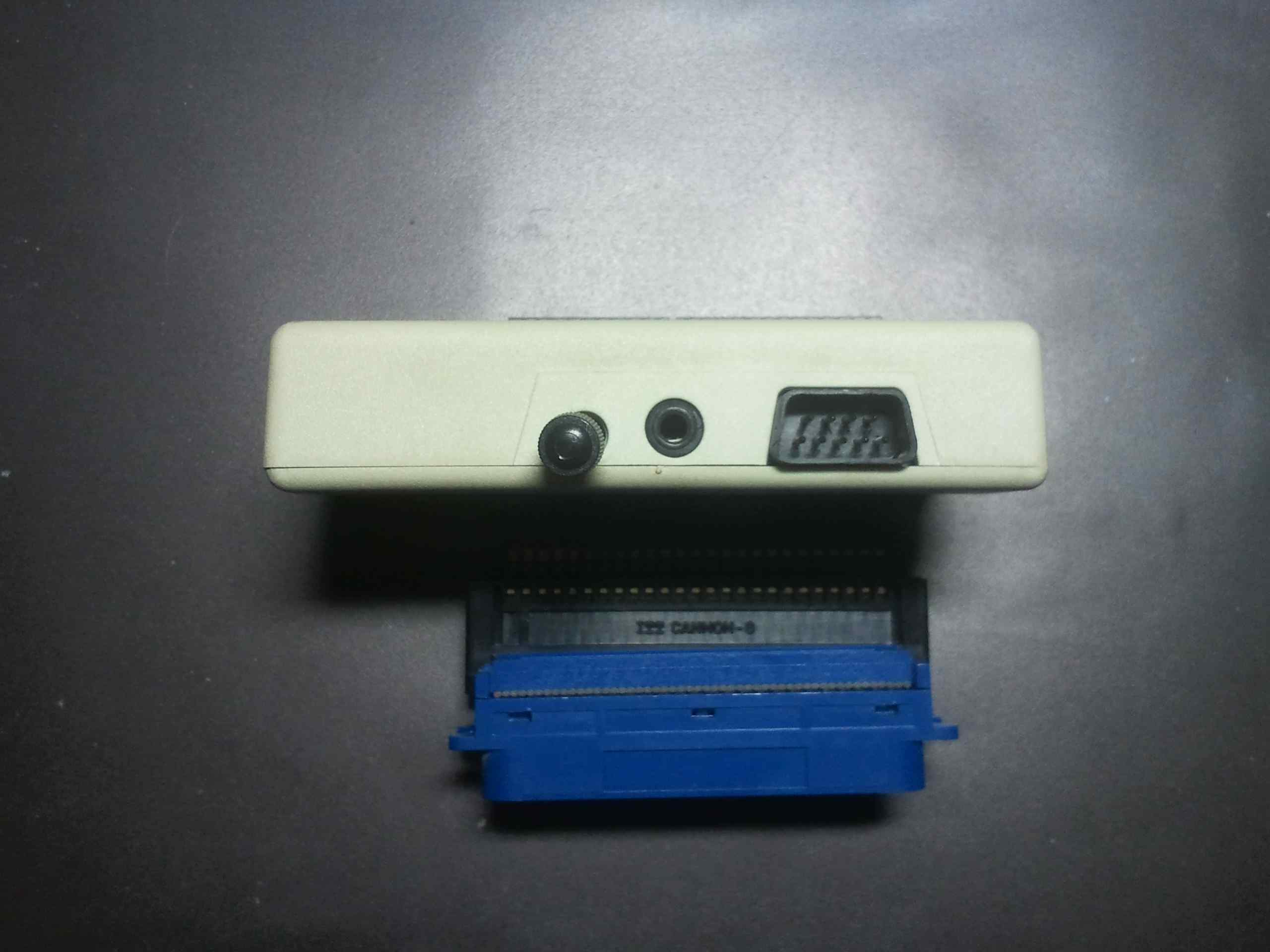
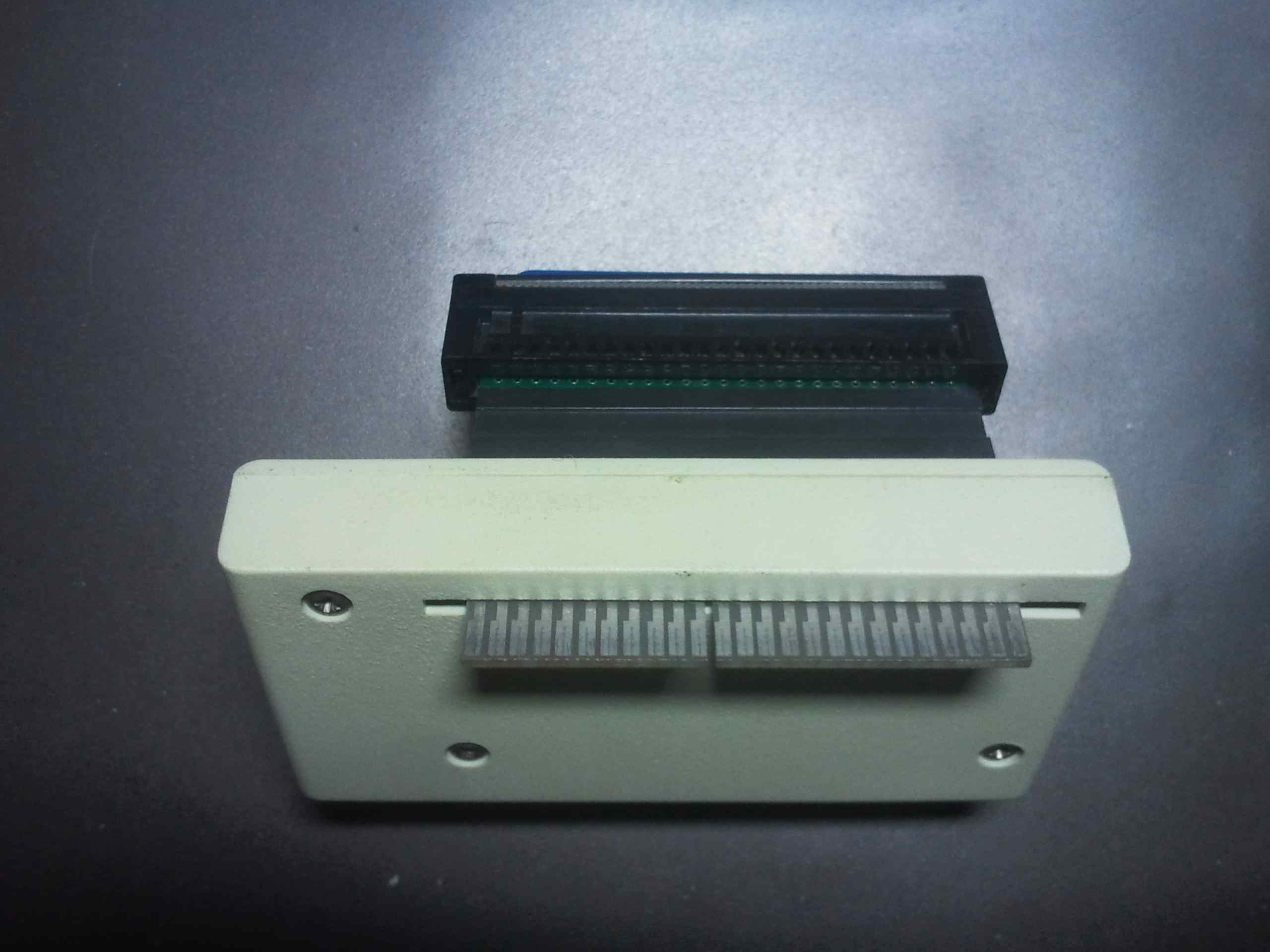
Upon purchasing this kit, users receive a retail box containing the interface adapter card, an external loudspeaker, and a companion floppy disk hosting demonstration programs. The interface module color-matches the original PCW enclosure palette, although it tends to sit slightly crooked once pushed into the expansion slot. The right side of the casing houses the physical ports for the joystick and loudspeaker, alongside an analog master volume control wheel.
Once the expansion peripheral is safely installed, the computer can be powered on to load CP/M normally. If the master volume control wheel is cranked near its maximum threshold, a faint background noise loop can be heard. This interference pattern fluctuates dynamically based on the rendering processing layout shown on the monitor screen and the step-motor activity of the floppy drive read heads. Lowering the volume index significantly dampens this background noise bleeding.
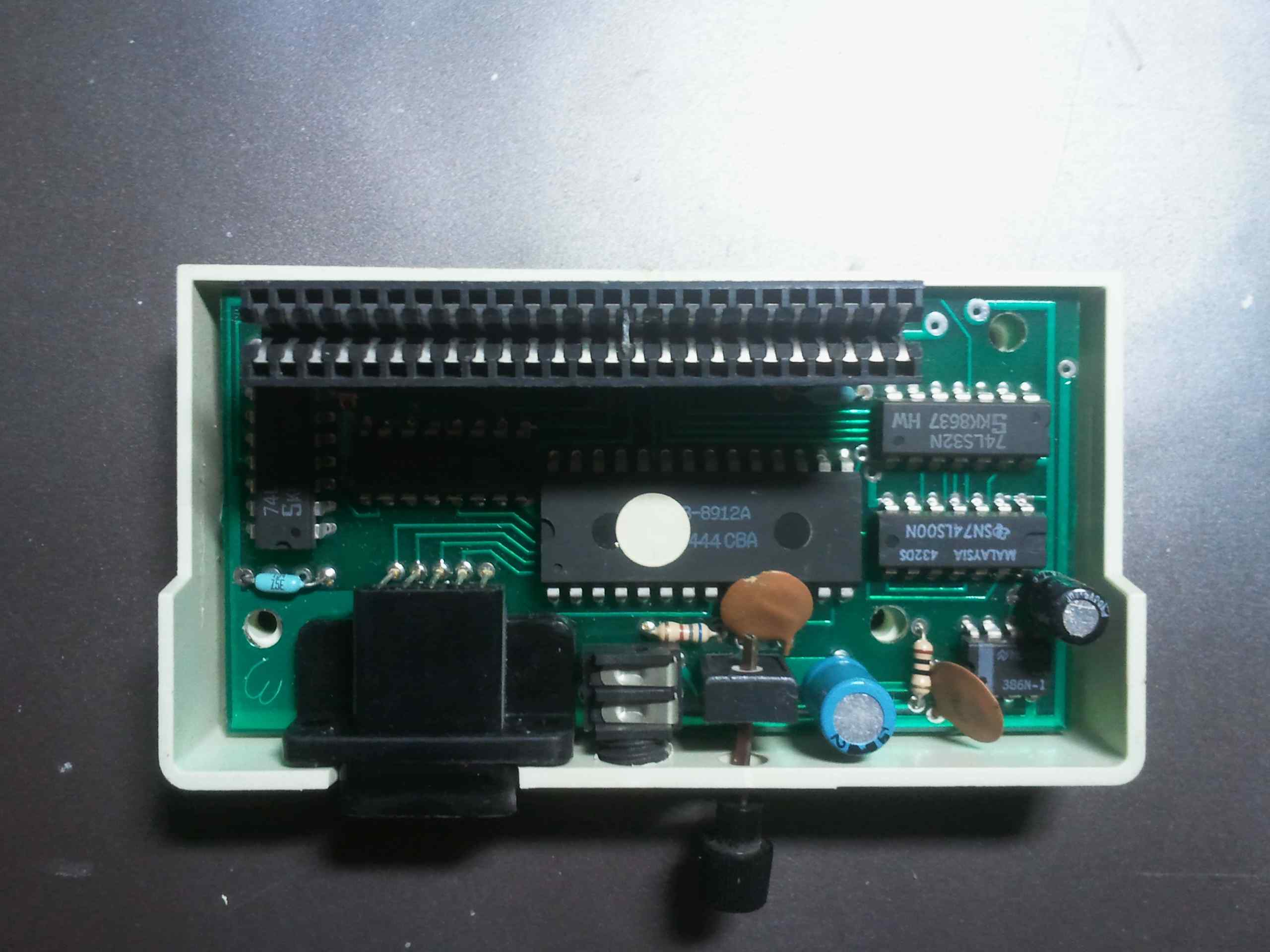
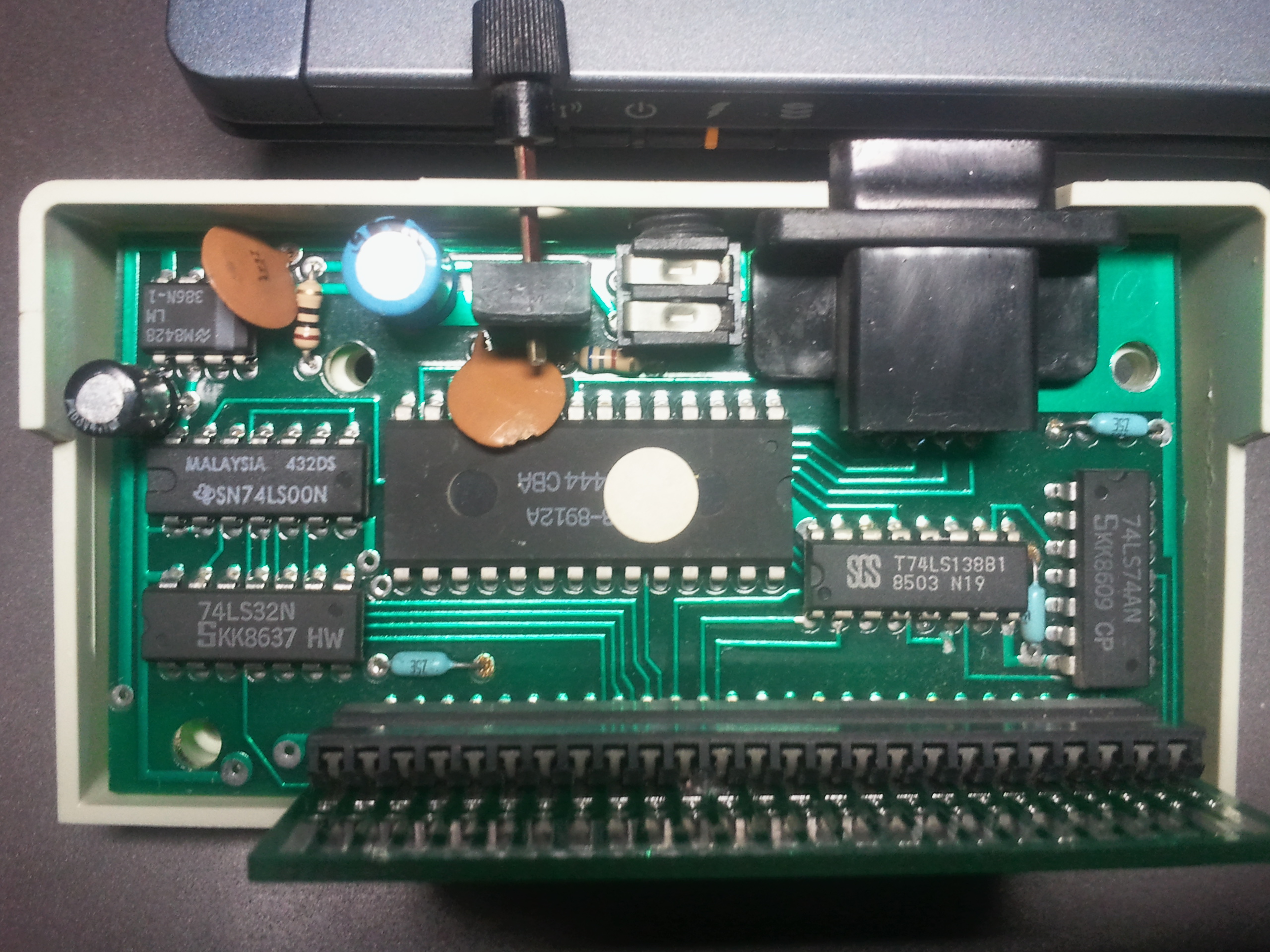
The interface board hosts the exact same programmable sound generator (PSG) chip found inside the Amstrad CPC computer series, thereby delivering nearly identical audio output specifications. Additionally, the joystick input matrix signal line is fully programmable.
The bundled companion demo volume features a dedicated utility configuration program—executable straight from CP/M—designed to map the digital inputs of the joystick. The configuration matrix process is remarkably simple, requiring the operator to hit the terminal keys whose layout actions they wish to bind to the matching directions of the physical joystick stick.
Dk'tronics confidently claimed this joystick port layout was compatible with the entire PCW gaming catalog. They based this statement on the fact that the hardware interface mapping utility operates completely independent of any game software engine routine. However, this architectural claim is not always true. Video games whose initialization sequence executes via master boot sector tracks—meaning straight upon powering up the system without initializing an OS—will refuse to parse the joystick adapter registers.
In practice, if the computer is turned off and powered back on after mapping the interface matrices, the volatile register data is completely wiped out. Similarly, triggering a hardware cold reboot via the RESET line forces the interface controller chip to drop all active key mapping arrays instantly. Consequently, joystick tracking is strictly limited to applications compiled for CP/M, BASIC, or LOGO environments. Direct-boot software master copies, such as BATMAN, do not permit the deployment of this joystick interface expansion.
Therefore, it is evident that this module is somewhat bottlenecked regarding entertainment software architectures. However, this is not the end of the story—or at least it shouldn't be, since productivity tools executed inside CP/M layers (such as dBASE II or DR DRAW) successfully allow mapping the joystick port matrices. This implementation makes maneuvering data matrices inside spreadsheet tools like MULTIPLAN or vector layouts inside DR. DRAW and DR. GRAPH exceptionally comfortable to pilot. "Serious" office applications can pull far more production value out of these hardware peripherals than it initially appears. Considering that the core target audience of the Amstrad PCW series sits inside the professional office sector, we are undeniably dealing with an expansion component of significant practical utility.
A highly interesting technical detail of this interface card lies in how it dispatches its tracking signal to the host computer: since data streams bypass the master keyboard controller chip subsystem completely, hardware key auto-repeat is instantaneous. While this trait can become tedious inside specific CP/M platforms like Multiplan, it can generally be mastered by pairing the expansion with a high-sensitivity joystick mechanism driven by a precise hand.
It represents an expansion of deep historical interest, serving as an excellent navigation aid for operating early icon-based user interfaces and, on the other hand, an essential accessory package for gamers.
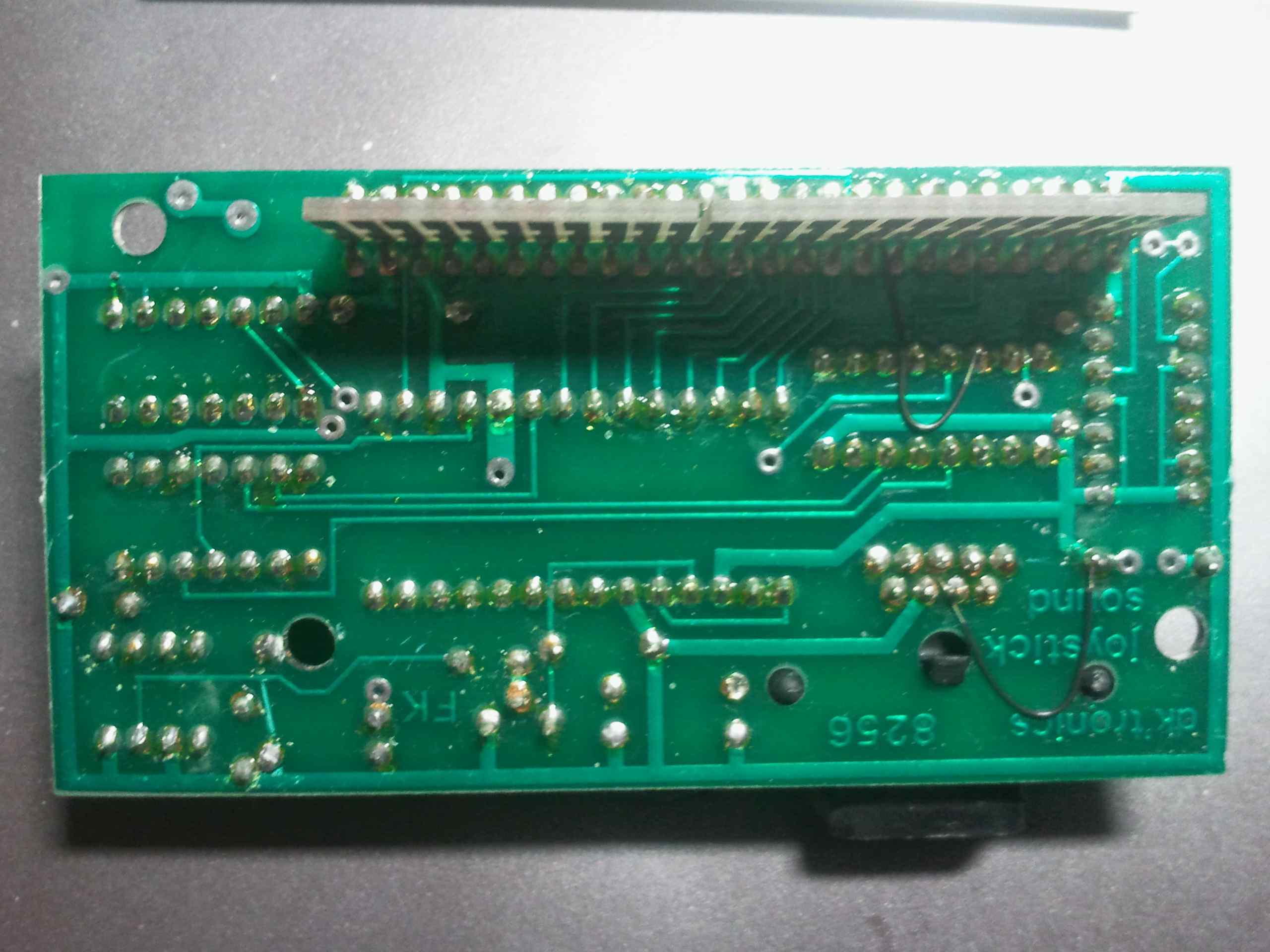
Internal Architecture Views (Extras)
PCB View 1PCB View 2PCB View 3System Download Repositories
| Format | Documentation Archive / DSK Master Image |
|---|---|
| DK'tronics Instruction Manual | |
| DSK | DK'tronics Companion Disk Master |
Related Wiki Links
en/hardware/perifericos/dksound2.txt · Última modificación: por jesus