A> FLASH DRIVE
Hardware
PCW expansion bus
Compatibility
PCW 8256 - PCW 8512
Price
UK: 1024k - £65.00 & 2048k - £95.00
Device Overview
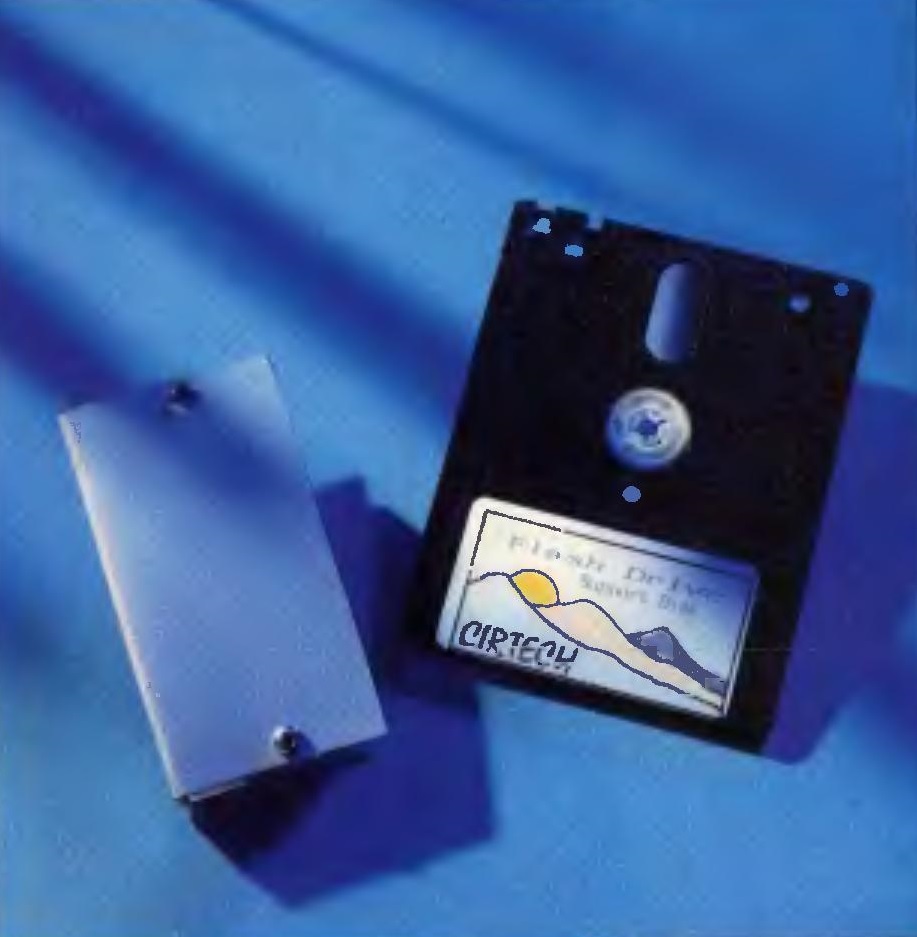 Front View
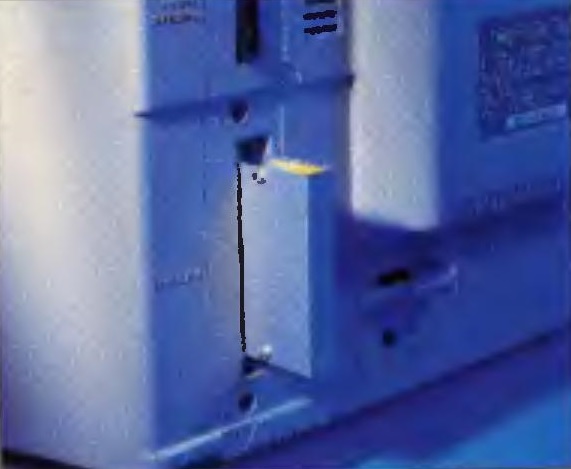 Perspective View
The Flash Disk is a family of external storage interfaces built upon Flash memory components. This upgrade module for PCW computers is no larger than a standard matchbox. In fact, the largest physical component of the entire flash layout is the custom edge connector that links straight into the rear PCW expansion port.
Cirtech stood as the pioneer enterprise to supply this outstanding hardware solution, achieving lightning-fast transfer speeds at a highly budget-friendly cost, allowing applications to boot directly from ROM structures. It was distributed in two independent hardware variations: 1024k and 2048k capacities.
The matrix of integrated mini ROM chips made this module a revolutionary storage solution for the PCW range—if "revolutionary" fits as an accurate label for a data storage peripheral that features no moving mechanical assemblies. It serves as a disk drive purely in the logic framework where parts of the active internal workstation environment recognize its memory pool as "Drive M:". ROM defines Read-Only Memory, describing the specialized trait of this raw silicon component array. These specific flash expansion cards housed either a 1024k or a 2048k chip layout.
PCB Board Layouts
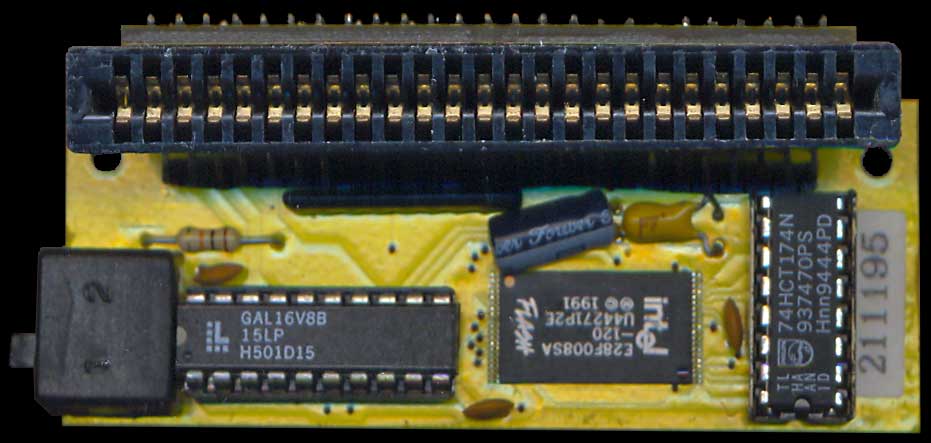 PCB Component Side
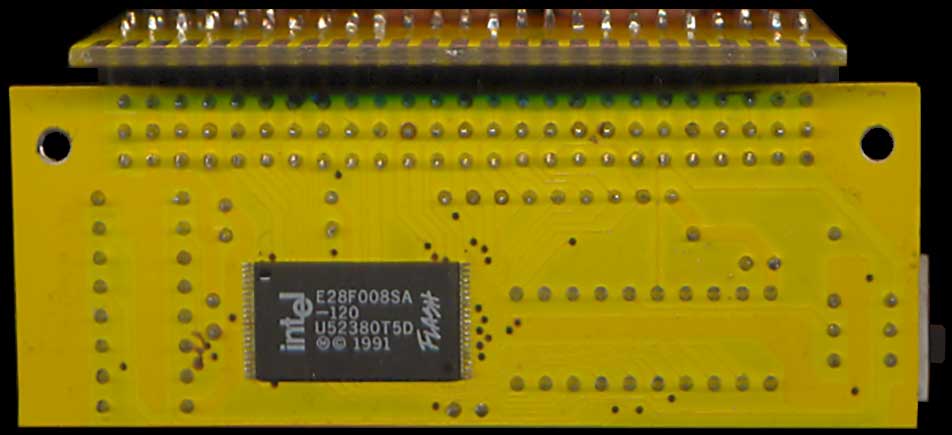 PCB Solder Side
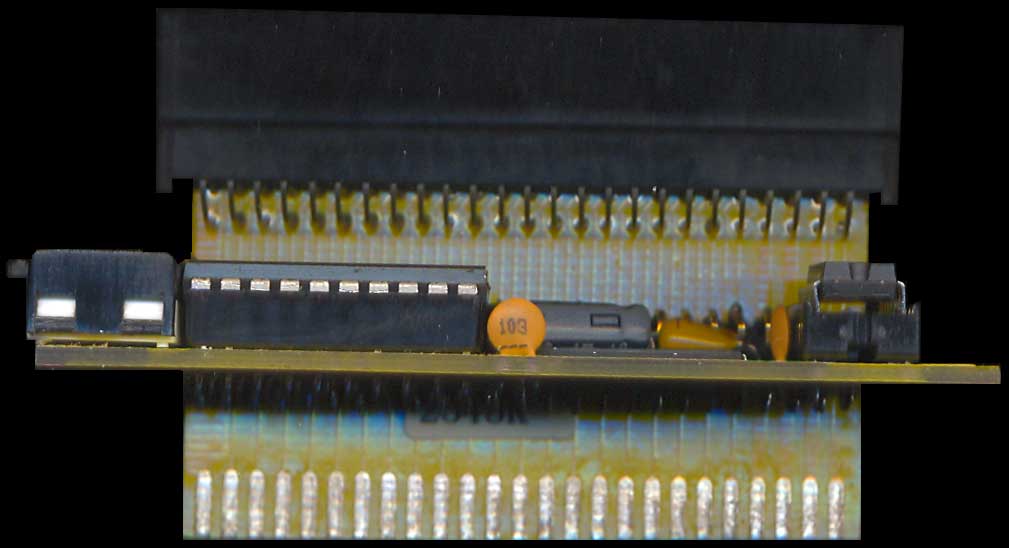 PCB Top Profile
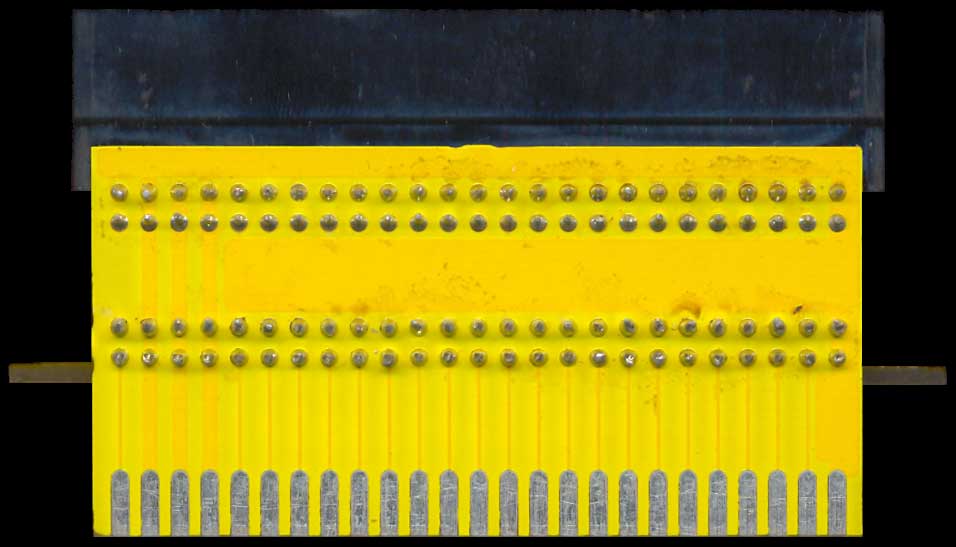 PCB Bottom Profile
To break down the core difference between standard "ROM" arrays and the more household "RAM" architectures (Random Access Memory), consider traditional domestic wall switches: electrical toggle switches. The logical "gates" built inside RAM silicon can be flipped on and off dynamically as needed, whereas ROM chips remain hardwired and permanently "stuck" into an explicitly fixed menu of on or off positions. While this comparison is not perfectly seamless here, the storage architecture of this Flash Drive can actually be reflashed and updated utilizing the bundled "support disk" volume supplied alongside the hardware kit. Therefore, a superior comparison would link it to the control switches that govern a domestic VCR setup or an electronic alarm layout: these settings are not permanent, but resetting them requires deliberate extra steps, meaning you must reprogram their active roles manually.
The embedded flash ROM layout can host raw volume data matching two separate bootable system disks simultaneously: a native LocoScript environment and a standard CP/M workspace. Once this image configuration has been written, the PCW boots up at a jaw-dropping speed—taking roughly a quarter of the time typically spent loading a physical diske volume via Drive A:. Its hardwired "stuck" switch architecture guarantees the system preserves its contents completely without drawing system power, remaining completely unaffected when you shut off the host PCW. The main structural constraint is that while you can add extra file streams to the active flash allocation, you cannot selectively alter or erase separate items without wiping the silicon clean to start over from scratch.
Consequently, Cirtech strongly advises that your master boot system setup should be thoroughly verified and benchmarked before committing its data to the flash array. It must mirror an configuration you are totally confident in and unlikely to modify soon—the operational effects for LocoScript operators are broken down inside the following console data table:
[ REQUIREMENT PROFILE - LOCOSCRIPT ]
LocoScript operators stand to gain the most from this advanced high-tech innovation for the PCW environment, simply because complex LocoScript configurations take an excessive amount of time to boot when pulled from standard floppy media. However, it demands careful planning when designing your master flash drive boot image. The master SETTINGS.STD file cannot be updated dynamically once it resides inside Drive C:, so ensure it reflects your ideal parameters beforehand—and the same rule governs the TEMPLATE.STD files destined to be duplicated onto Drive M: during system initialization. Do not place the USERSPEL spell-checking database on the flash drive memory—keep those archives stored on your active data floppy volumes instead.
For LocoFile owners, the most spectacular feature of this flash drive resides in how it manages database file structures—they can be indexed and audited straight from Drive C: (though they cannot be rewritten). This means that critical .DATA files should not be written into the ROM folder structure if they are expected to change. On the other hand, however, it unlocks immediate access loops to massive blocks of static reference materials. Inject these datasets into the structural folders, but strip away the conventional .DATA suffix—assign alternative extensions instead; LocoFile will still index them smoothly. These reference blocks will not be copied over to active RAM storage (Drive M:) during initialization, though they remain constantly accessible via ROM allocation (Drive C:).
The master flash interface natively requires LocoScript version 3.06 or higher (along with its parallel system branch, version 2.56) and the newest CP/M builds (1.15 or 2.15 depending on your specific PCW computer model). You might, as a result, require a system upgrade pack to use it. The flash drive is structurally incompatible with Flipper utility extensions, but routes smoothly with The Network configurations (provided a proper "key" file is present); the copy-protected floppy media will be prompted at boot, as Cirtech abides by this standard to prevent illegal distribution.
Regarding standard production software under CP/M environments, the general rule dictates that if a program compiles and executes under CP/M 1.15/2.15, it will operate flawlessly from the flash storage pool. Only two known exceptions disrupt this ecosystem: DiscKit (which requires a custom-modified build distributed directly by Cirtech) and the primitive core edition of Moonstone 2-in-1—note that the newest revision of 2-in-1 published by Locomotive Software operates perfectly.
Money Manager calls for minor alterations inside its primary environment parameters—the specific steps are bundled inside a "Read Me" file hosted on the flash drive companion disk. These tweaks are mandatory because Money Manager typically invokes its own unique environment mapping via a custom PROFILE.SUB file (alongside a non-standard SUBMIT.COM engine) for automated booting. The main intent of the flash drive is to allow several separate CP/M tools to coexist smoothly, and not every platform can enforce its own absolute auto-boot loop.
[ THE FLASH DRIVE ENGINE UNDER CP/M ]
The automated installation suite of the flash unit will not transfer your PROFILE.SUB or SUBMIT.COM scripts unless explicitly instructed, and the latter must mirror the standard version distributed for that exact PCW workstation build. Nevertheless, the PROFILE.SUB script can be customized freely to meet your personal production criteria. Essentially, CP/M power users can build a massive, comprehensive boot image hosting all their essential utility suites and heavy application binaries stacked together within the master ROM sector. The CP/M console initializes instantly at boot, and each distinct application loads in a matter of seconds—matching or exceeding the data rates achieved when pulling blocks from virtual RAM storage (Drive M:).
This hyper-fast binary retrieval loop might suggest that hardware networks like The Network become redundant, but that is not the case: they should simply be deployed differently. In this architectural context, the master ROM block acts like a hard disk drive; thus, with the exception of the MicroDesign 3 production family, applications can be designated as "Transient": there is no logical reason to keep them clogging up virtual RAM storage (Drive M:) when they can be called instantly from the ROM block.
Getting Started
The primary installation routine demands matching several hardware drive assignments on the host machine. For single-drive computer models (or configurations running a mixed cluster of 3" and 3.5" mechanics), you must duplicate the companion master volume data onto RAM storage (Drive M:) utilizing COPYDISC, one of the bundled system utilities. On most dual-drive Amstrad PCW workstations, the master installer resides inside Drive A:, while the structural boot images are processed and read straight from Drive B:. An indexing system tool named FCOPY then writes the selected application files from the source floppy media directly onto the flash expansion block.
As this sequence unfolds, the system will prompt a live "Remaining Space" value—which falls predictably as files are written into memory. Be careful not to exceed the raw capacity limits of the flash device (a constraint highly unlikely to affect users operating the higher-end 2Mb expansion card model). If you cross this storage threshold, the FCOPY tool simply halts its data transfer; however, the resulting boot image will remain incomplete, and you will likely need to restart the entire formatting sequence from scratch. This scenario should be avoided whenever possible, as the manual raw block copy routine is a slow process. Once your primary boot disk profile is completely written, alternative operating systems can be appended.
The installation macro does not automatically copy across a SUBMIT.COM file or a PROFILE.SUB script—if your workflow requires them, you must copy each item manually using its complete file parameter path (e.g., typing: FCOPY B:SUBMIT.COM). The legacy installer interface is not the most refined suite, invoking three separate text-driven tools and command-line parameters rather than a clean menu-driven layout.
Putting it into Production
With the physical auto-boot toggle switch set to "on", the Amstrad PCW fires up faster than you ever thought possible. You can manually launch your secondary alternative boot operating system by holding down the ALT key during the power-on sequence. If you select the primary LocoScript profile instead, you will notice the manager screen now lists an extra storage letter: Drive C:—the physical ROM volume. This directory displays not only your master LocoScript operating system layers but also your alternative CP/M system files. This will clutter up your main system document manager view; therefore, it is best to set all your CP/M environment files to "system" attribute status prior to installation (utilizing SET.COM or an equivalent file management tool), which hides them from sight unless you explicitly toggle the view to display "hidden" files.
LocoScript will strictly block any attempts to edit, save, or delete objects residing inside Drive C:, but you can copy individual file matrices out of it into other blocks using conventional methods—achieving transfer speeds that easily match virtual RAM disk performance (Drive M:).
Operating under CP/M, however, is a bit more complex. Within this environment, the flash ROM block assumes the primary role of Drive A:, while your physical floppy disk drive mechanics are remapped to Drive C:—unless you are actively deploying the custom-modified build of DiscKit provided in the Cirtech kit. This custom utility preserves the native layout naming for floppy mechanics as Drive A: and Drive B:, but the legacy disk-copy tools inside "The Network" suite will now reference them as Drive C: and Drive D:. Sounds confusing? In practice, it takes very little time to get accustomed to this remapping. Cirtech had no structural alternative in this architectural design due to the clashing, hardcoded ways LocoScript and conventional CP/M binaries recognize their native boot volumes.
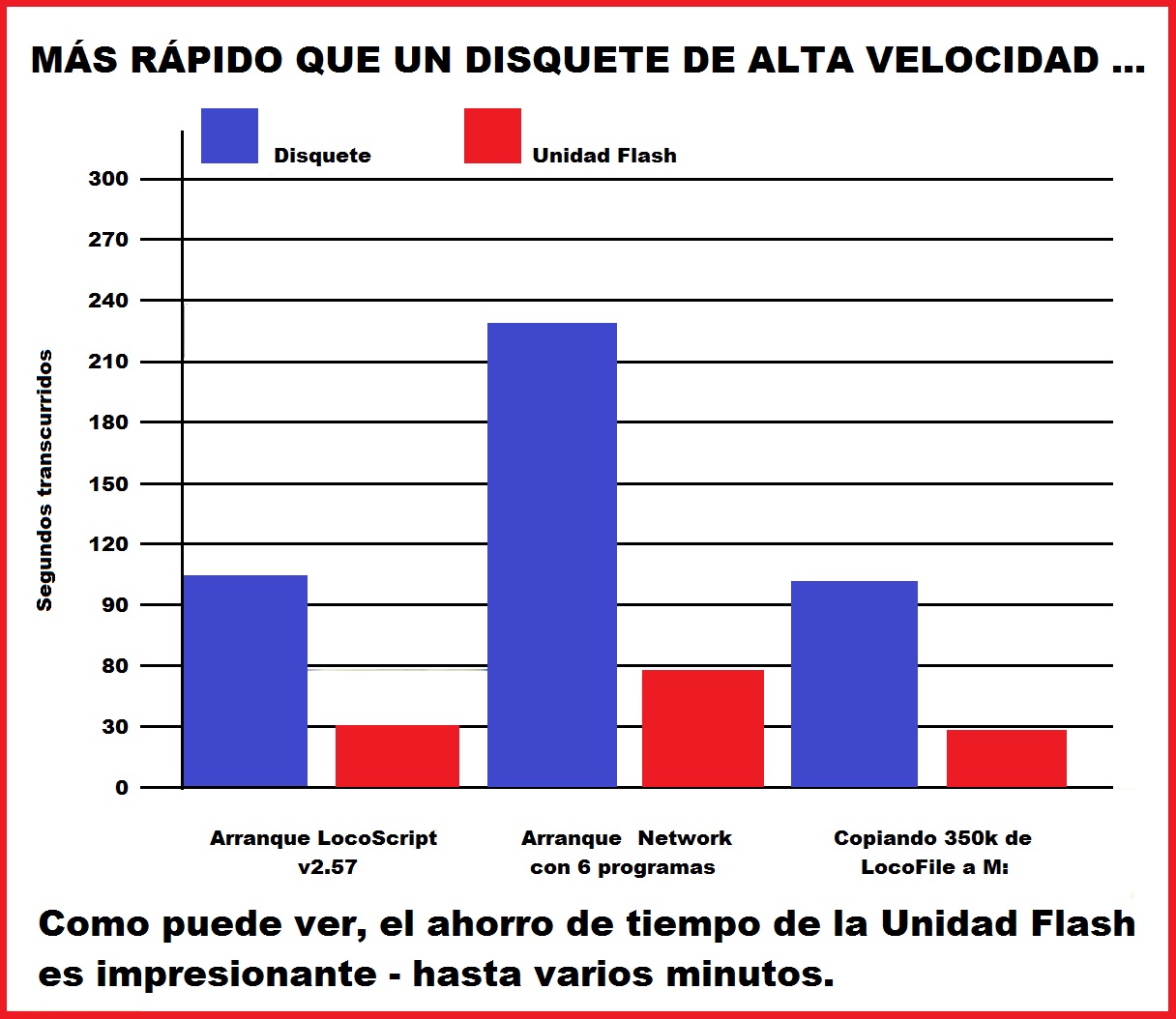 Module Connected View
Evaluating Compatibility
The inconsistent drive letter remapping and the archaic text-driven installation macros are not the only issues to consider. The loss of Flipper utility compatibility is always a shame (though less problematic in this instance, since the ROM block allows the system to reboot and recovery nearly instantly). For specific production workflows, the biggest drawback stems from the fact that Cirtech did not engineer a passthrough expansion edge connector onto the flash drive’s outer shell casing. Consequently, it cannot be mounted to a workstation that already hosts a single-ended expansion upgrade, such as conventional third-party parallel printer adapters. (Setting aside this physical daisy-chain limitation, the flash drive maintains complete electronic compatibility with any alternative hardware module designed for the PCW system.)
It would undoubtedly be a highly smart investment to acquire a dual-direction expansion bus splitter adapter—if such accessories are still obtainable on the market—because this flash drive completely modernizes the daily computing experience on the Amstrad PCW. It is guaranteed to have a profound, lasting impact on the operational speed of your workstation utilities—and all for an impressively low retail price. In fact, separate 1MB memory capacity expansion chips were sold standalone for a mere price of £30.
In summary, the flash drive is exceptionally fast when loading your core operating system, entirely eliminating the tedious mechanical read delays associated with booting from floppy media. It stands as a highly affordable peripheral considering it offers a clean, convenient, and rapid experience that introduces true fluid data responsiveness to your daily office workflows. It allows appending 1Mb or 2Mb of instant non-volatile storage, balanced only by a clunky installer software suite that lacks an integrated master menu and demands manual command line inputs to get started.