TECHNICAL DATA

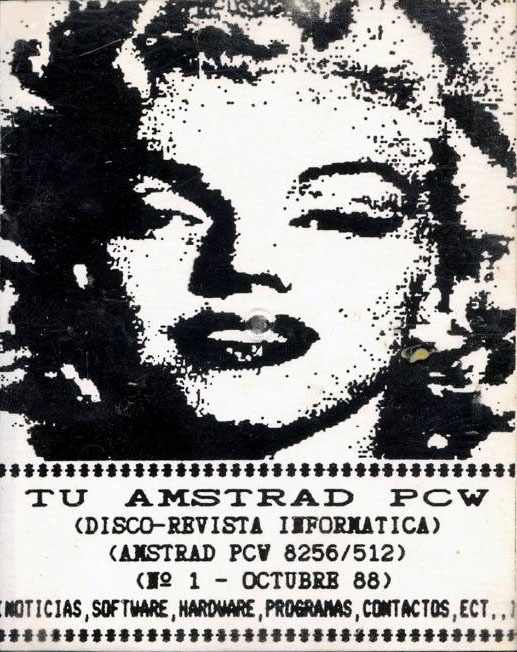
Tu Amstrad PCW is the first computer Disk-Magazine in electronic format exclusively dedicated to users of the Amstrad PCW 8256 and 8512 range. It was born in October 1988 with its first issue. Its release only consisted of two issues because, due to the low acceptance of the magazine, which depended on PCW users, its publication did not continue.
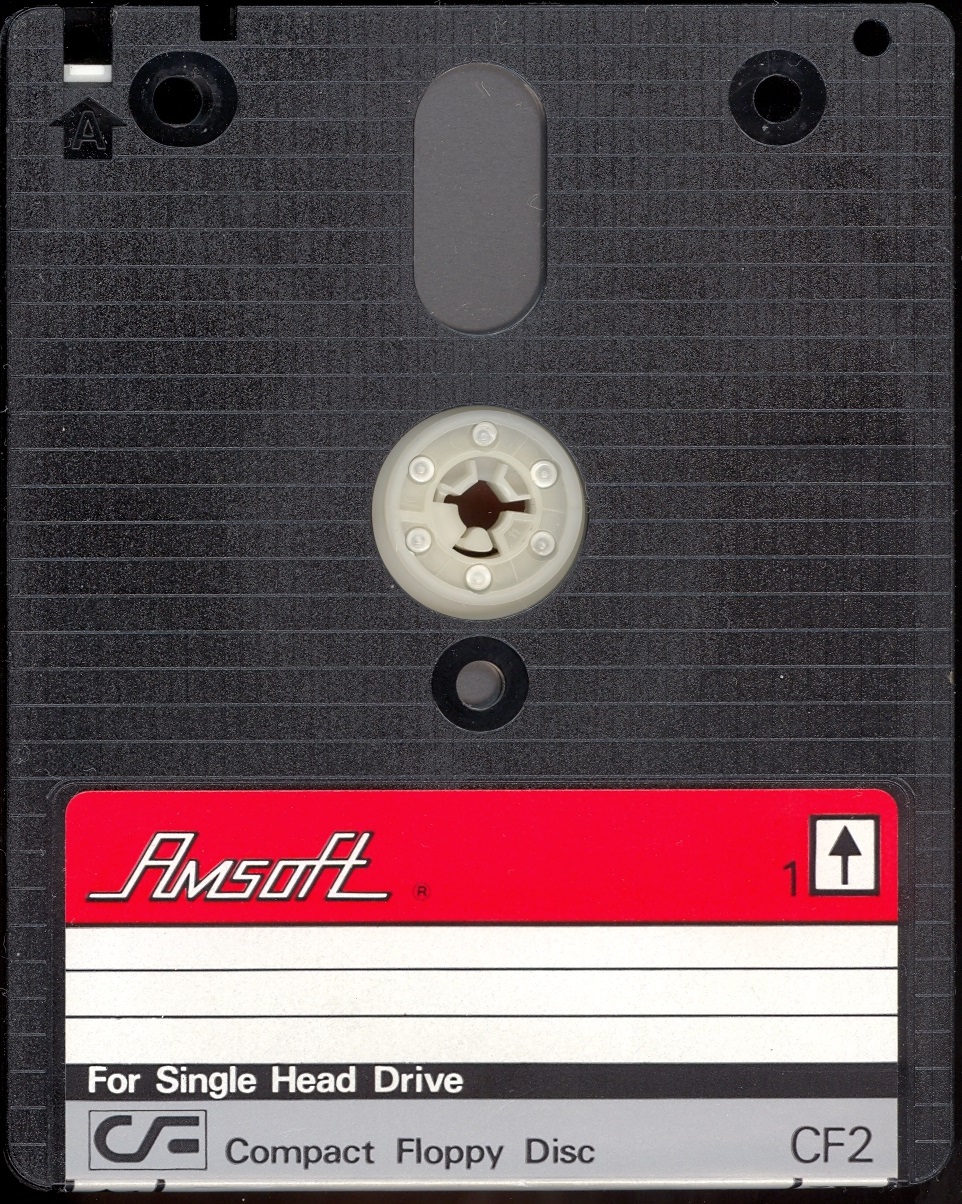
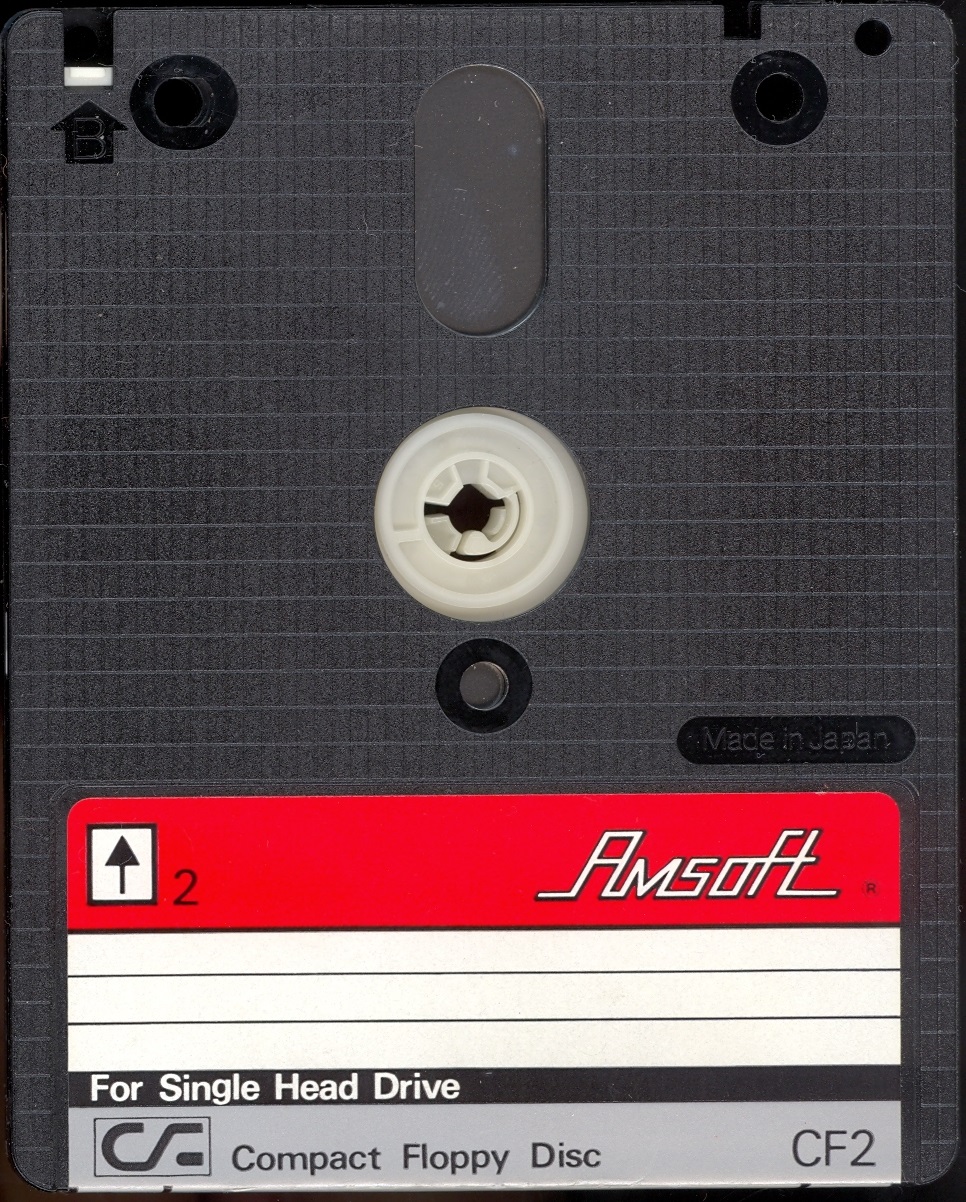
It was sold on 3" disk support, which, unlike paper magazines that ended up in the trash once read, were thought of as a format where the disk could be reformatted on both sides (A and B) at any time after reading, thus obtaining an additional disk and savings.
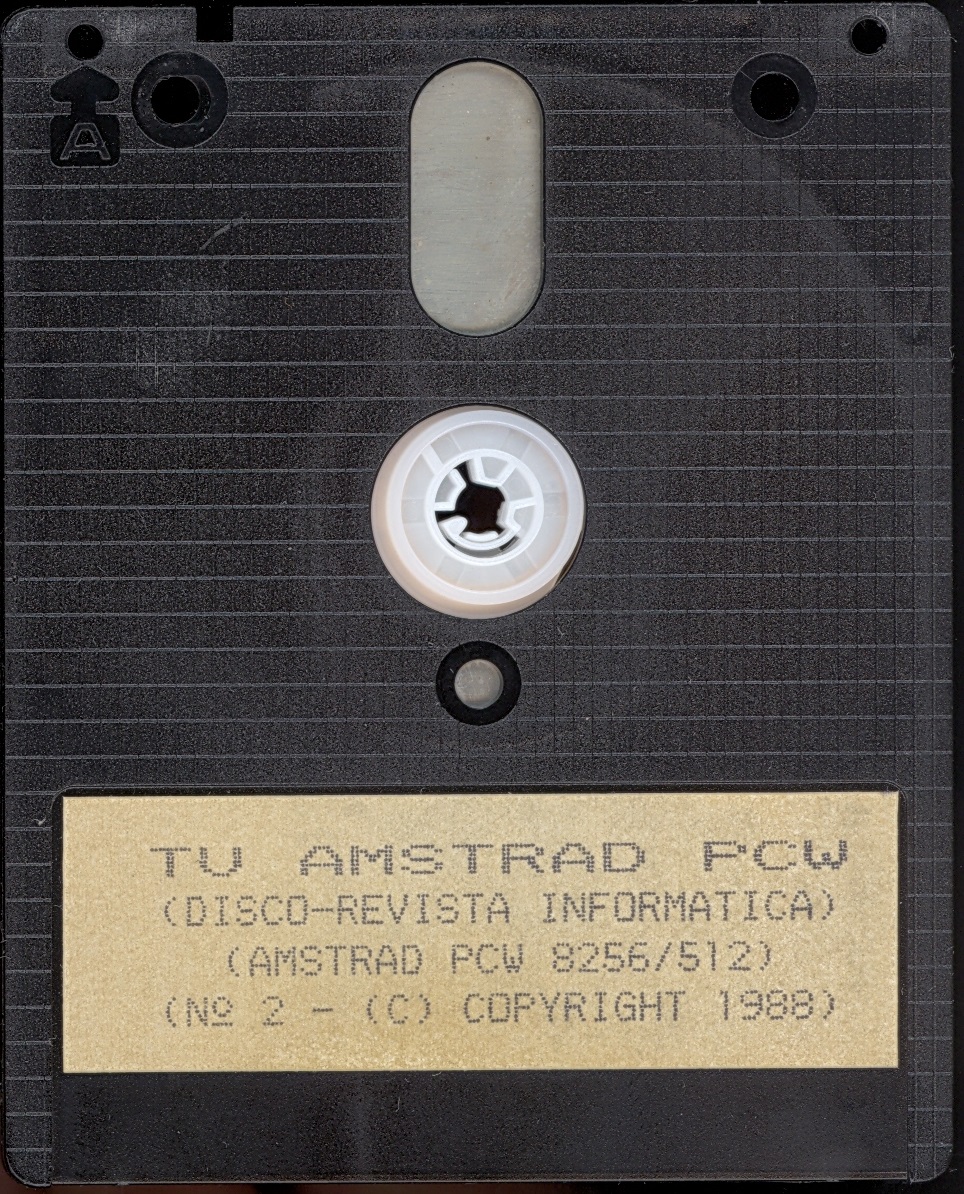
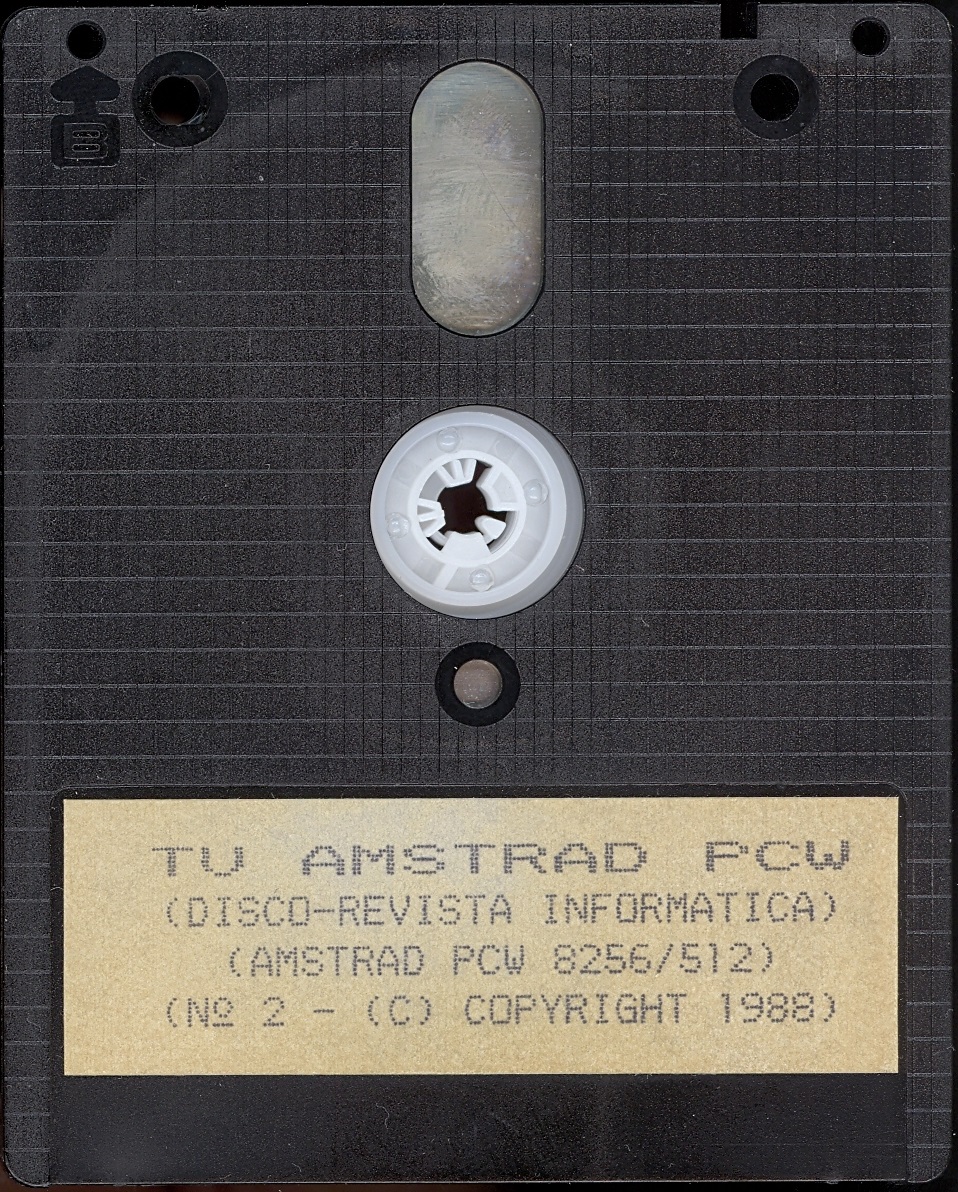
The magazine was contained on a double-sided, single-density CF2 disk recorded on both sides, which was recoverable by simply being reformatted in single or double density. The disk was compatible with the full Amstrad PCW 8256 and 8512 range. No professional software was needed for its use, only the system disk that accompanied the original computer: LocoScript, CP/M, Utilities, Logo, etc.
It was born from the tragic and unfair situation of the PCW world and with the decision to try to avoid the accumulation of ingredients that were brewing the death certificate of a great machine. The idea arose when Amstrad PCW sales were being doubled by users more than purchases.
It had a very clear objective: to create an exclusive information service for PCW users: News, Hardware, Contacts, Software, Tricks, Programs, Graphics, Services, etc. Elements that month by month allowed users to improve the knowledge and use of their computer system. They gradually offered, with the support and help of PCW users, the best service to the PCW world.
It allowed viewing and printing any article without having to type the long and fantastic programs it included, as they were already copied and debugged. They also allowed the display of photographs and graphics and, best of all, it lacked massive advertising.
It brought the novelty of a disk format that provided great advantages, previously impossible, for the PCW user in aspects such as convenience, features, and economy. It did not want to compete with the remaining printed magazines (although competition is beneficial for the computer world) because practically no one had taken care of the PCW world, which was destined to disappear. The number of PCW units was humble compared to other models.
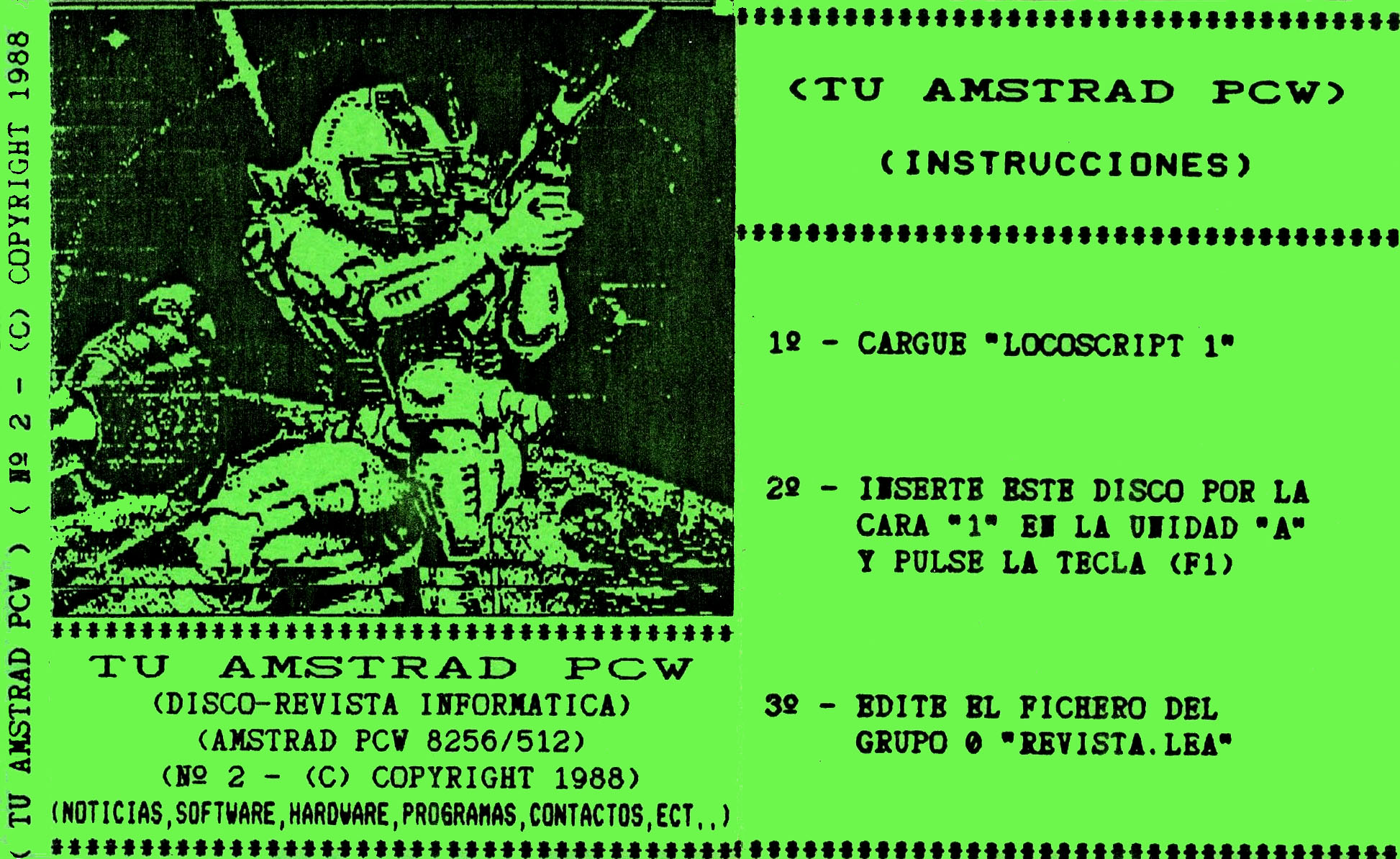
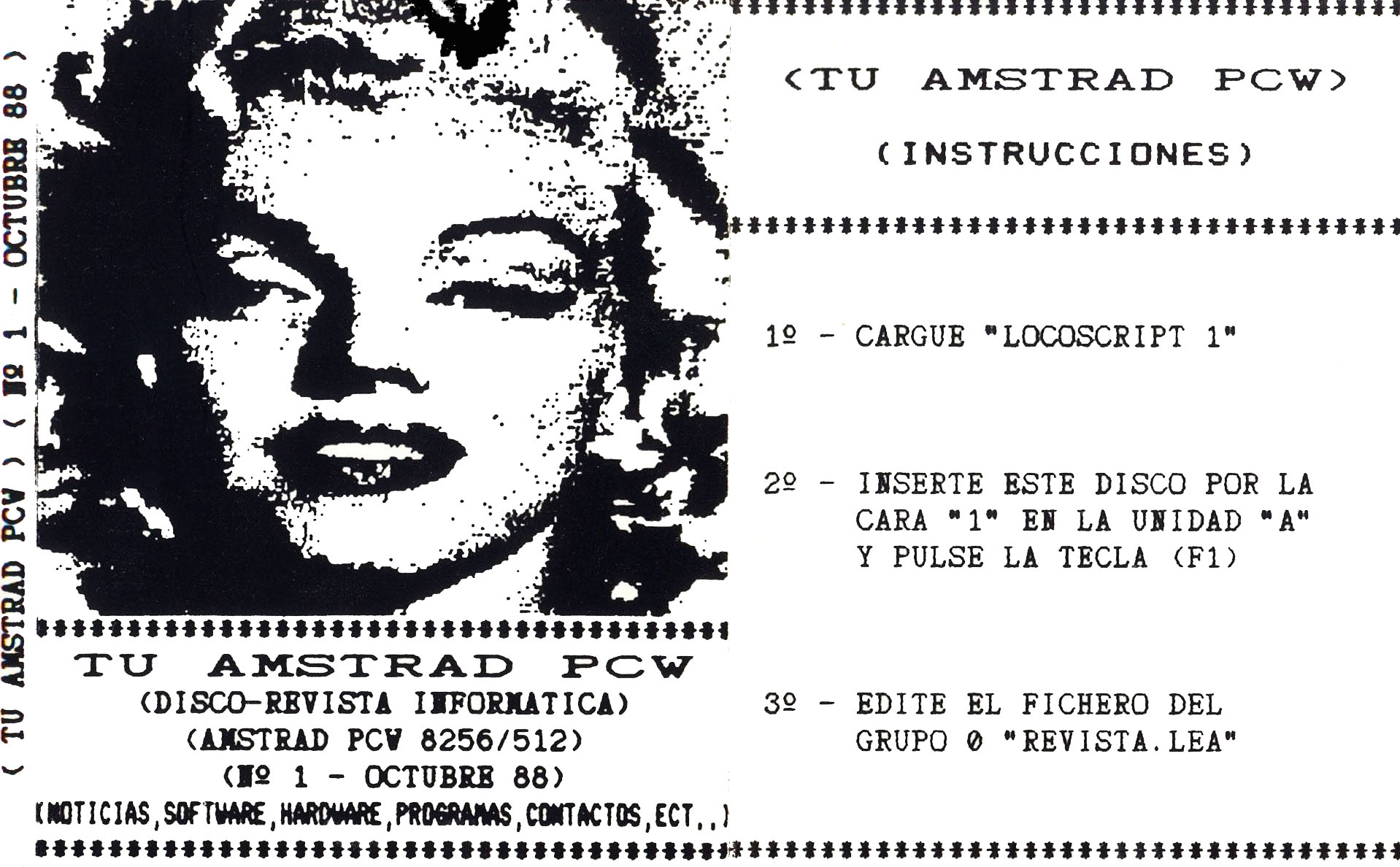
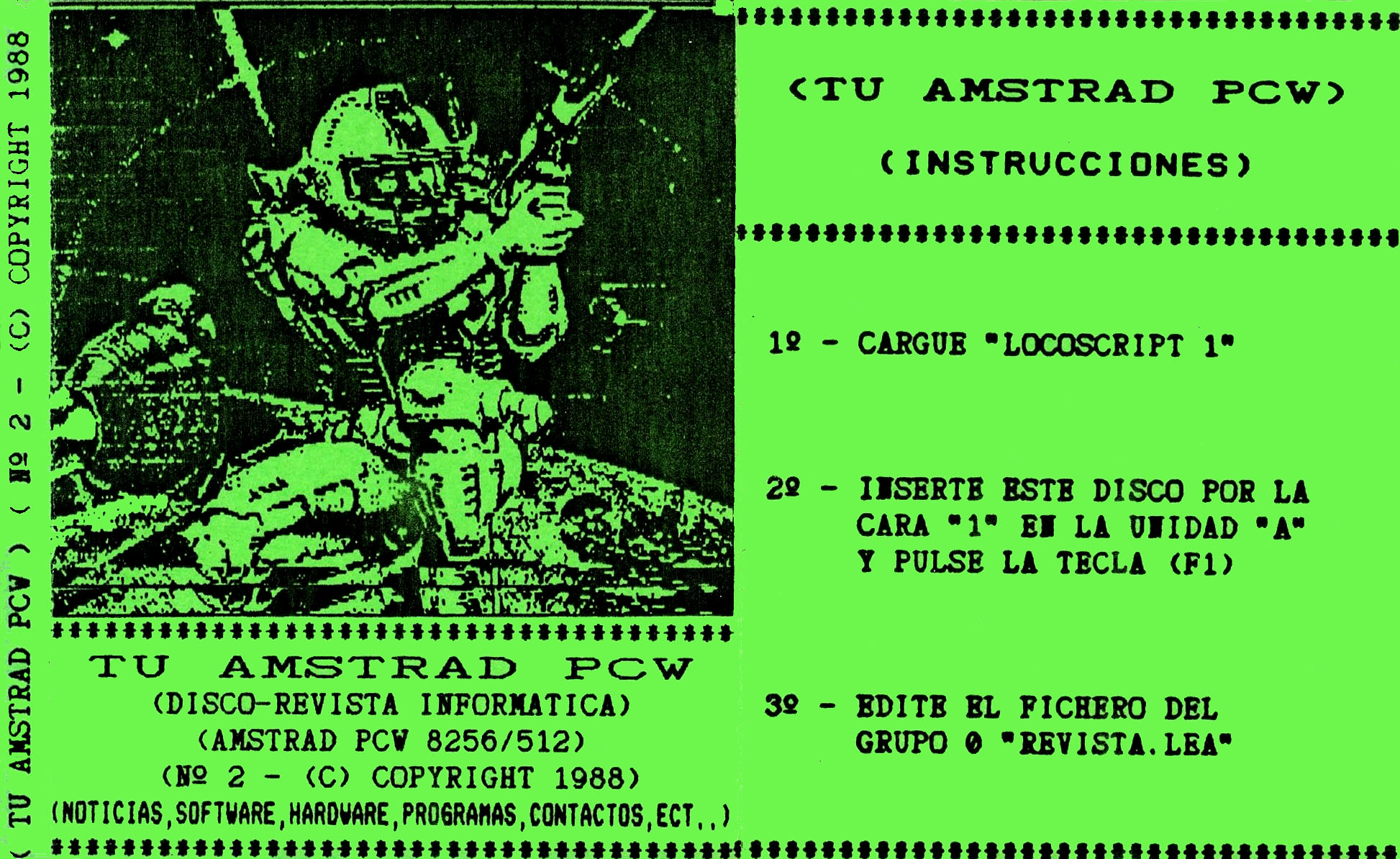
- The front cover had a measurement of 16.40 cm long by 10.10 cm high.
Side A contains the magazine itself, and Side B consists of the files with the gift programs and digitized photographs.
SIDE AIt is based on text files in LocoScript format. To view and process the information, follow these instructions:
- 1st Load the LocoScript 1 word processor (System Disk 1 (SIDE A)).
- 2nd Insert Side A into the upper drive and press (f1) to notify the program that the disk has been changed and to update the file management screen.
- 3rd Now you can see the general structure of the magazine - The different groups contain files on the various sections: editorial, instructions, news, hardware, contacts, software, services, programs, graphics, etc.
This contains the gift program files. Additionally, you will find files with the (.PIC) extension, viewable without professional software:
- Z88.PIC: Corresponds to a digitized photograph of the "Cambridge Z88" super portable computer.
- MARILIN.PIC: Corresponds to a digitized photograph of the famous star.
- PANTALLA.PIC: Corresponds to a digitized space-themed graphic design.
- DISCO.COM: Utility for compressing/decompressing files.
- CLS.COM: Compiled utility used to clear the screen.
- ROMBO.COM: Compiled file (rombo.bas) that generates a graphic.
- MULTIPLE.COM: Compiled file (multiple.bas) that generates 10 different three-dimensional graphics.
- LOTO.BAS: Mallard BASIC program that generates random combinations for the Spanish lottery.
- WESTEND.BAS: Mallard BASIC program that replaces the screen character set with a new one.
- INFOBIOS.BAS: Mallard BASIC program that informs the user about the BIOS by checking the PCW.
- ROMBO.BAS: CBasic source code that generates a graphic.
- MULTIPLE.BAS: CBasic source code that generates 10 different three-dimensional graphics.
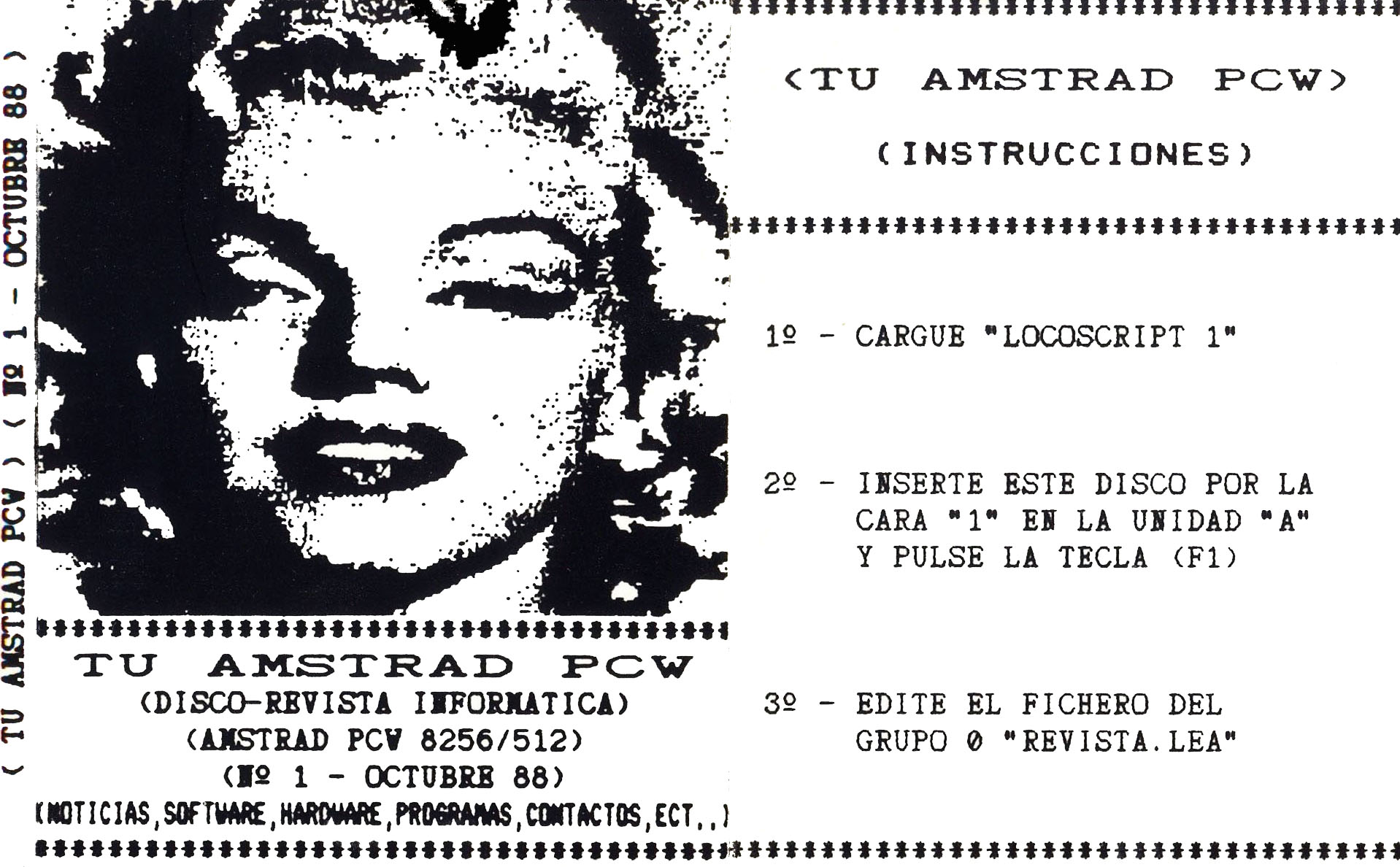
Based on LocoScript text files. Instructions:
- 1st Load the LocoScript 1 word processor.
- 2nd Insert Side A and press (f1) to update file management.
- 3rd Groups: editorial, instructions, news, hardware, contacts, software, services, programs, graphics, etc.
- PORTADA.PIC: Digitized photograph of the cover in enlarged mode.
- NUMERO7.PIC: A superb digitization of the famous robot Number 7.
- NASA.PIC: The impressive image of the NASA man in space.
- DIBUJO.BAS: Phenomenal Mallard BASIC program for drawing on screen and capturing images.
- RELOJCPM.BAS: Utility written in Mallard BASIC that allows reading the internal CP/M clock.
- FLASH.BAS: A great program written in Mallard BASIC to obtain wonderful effects for other programs.
- SERIF.BAS: Mallard BASIC program that replaces the screen character set with a new one.
- CREDITOS.BAS: A useful Mallard BASIC program that calculates bank loans.
- CONTADOR.ASM: Assembly listing of the contador.com program.
- CONTADOR.COM: Compiled program designed to count words in a given file.
- TECLAS.COM: Simple and useful compiled program that detects a keypress and returns its ASCII value.
- GRAFICOS.COM: CBasic compiled program that allows graphic design on screen.
- ACENTOS.ESP: Mini-program to obtain Spanish accents in Mallard BASIC.