en:software:juegos:3d_clock_chess_en
3-D CLOCK CHESS
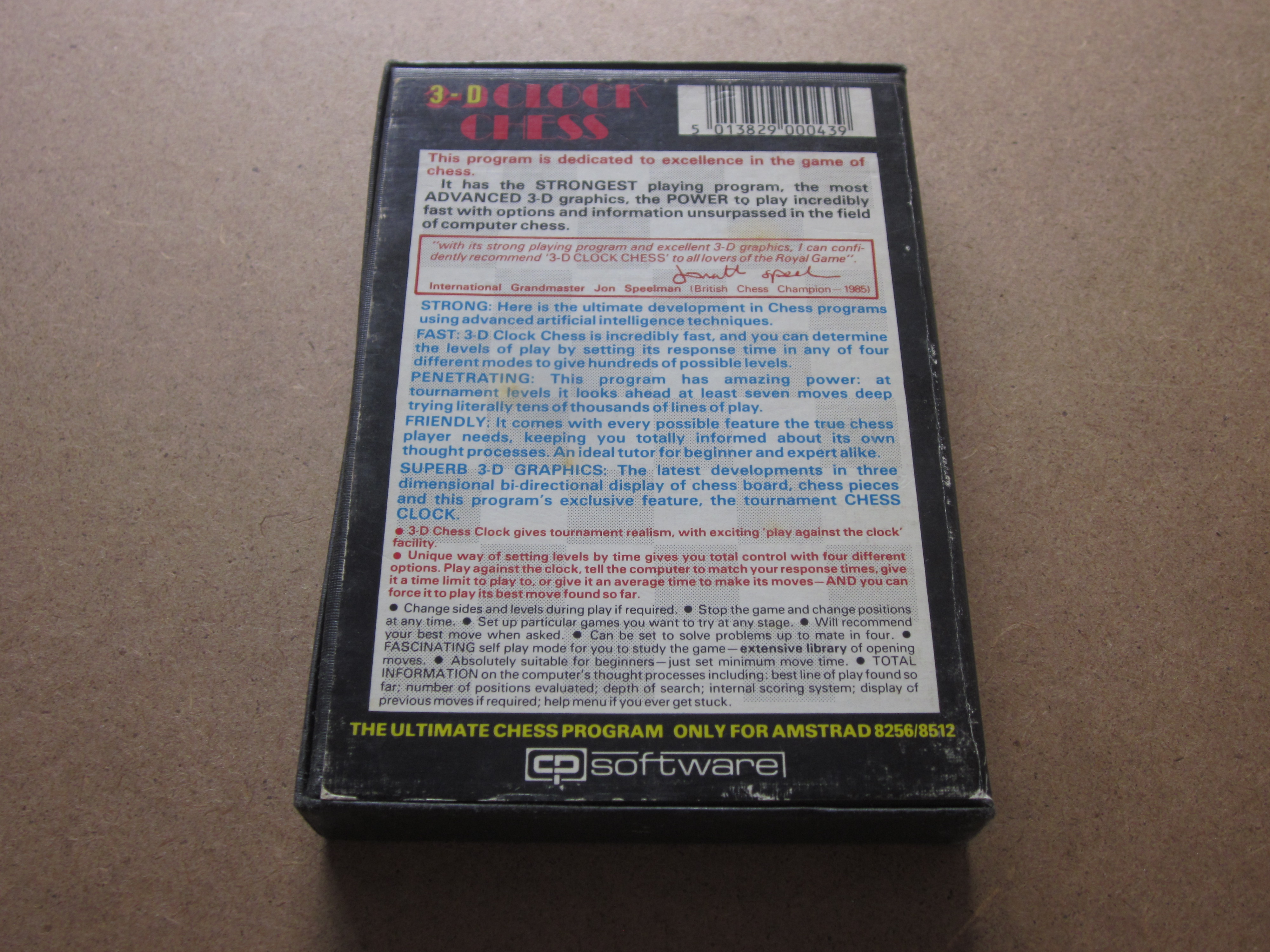
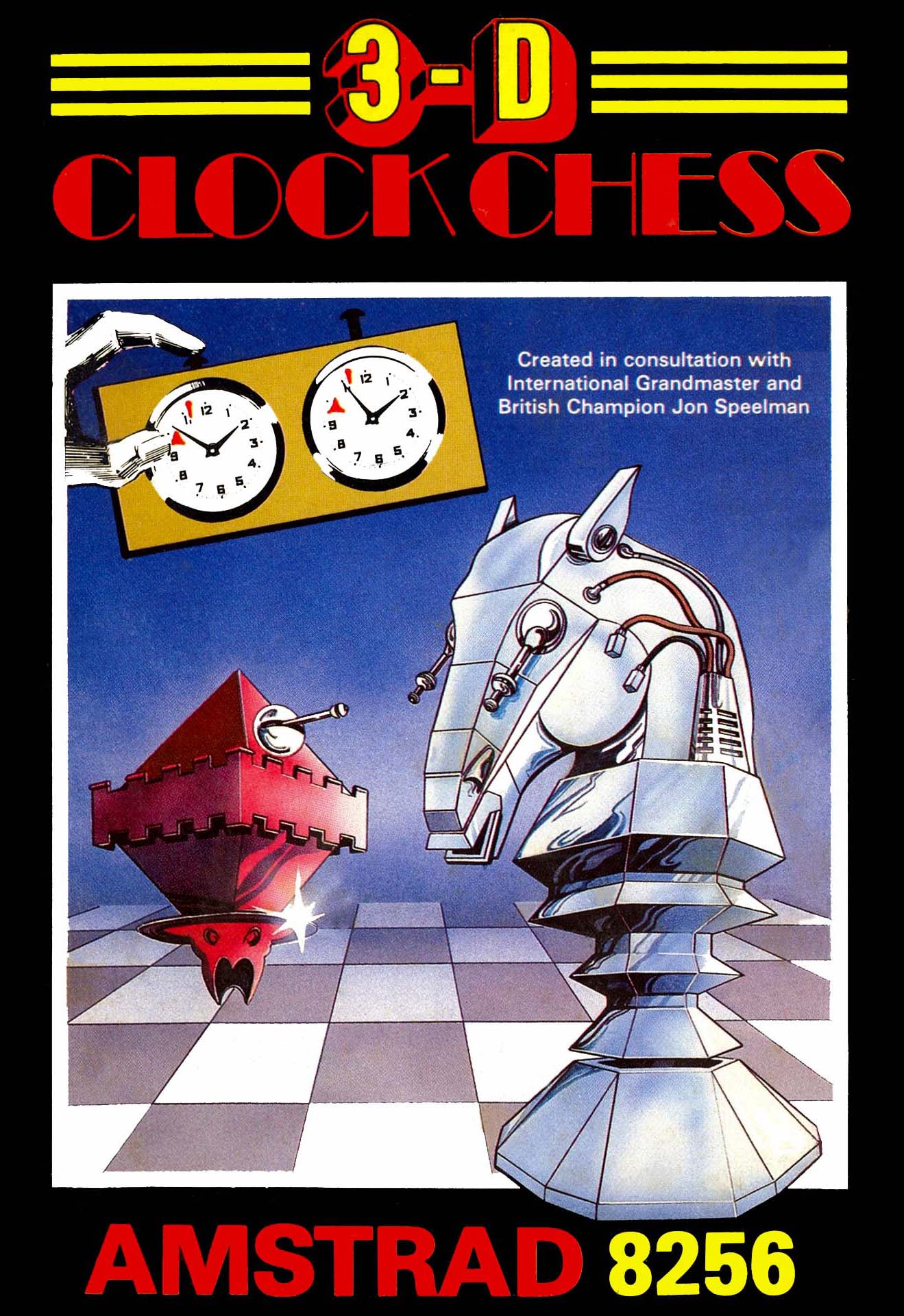
TECHNICAL DATA

Company:CP Software
Distributor:CP Software
Production team:Written by Chris Whittington BA, Cooperation: Jon Speelman and graphic creation and Realization: Gilly Ashforth
Year:1986
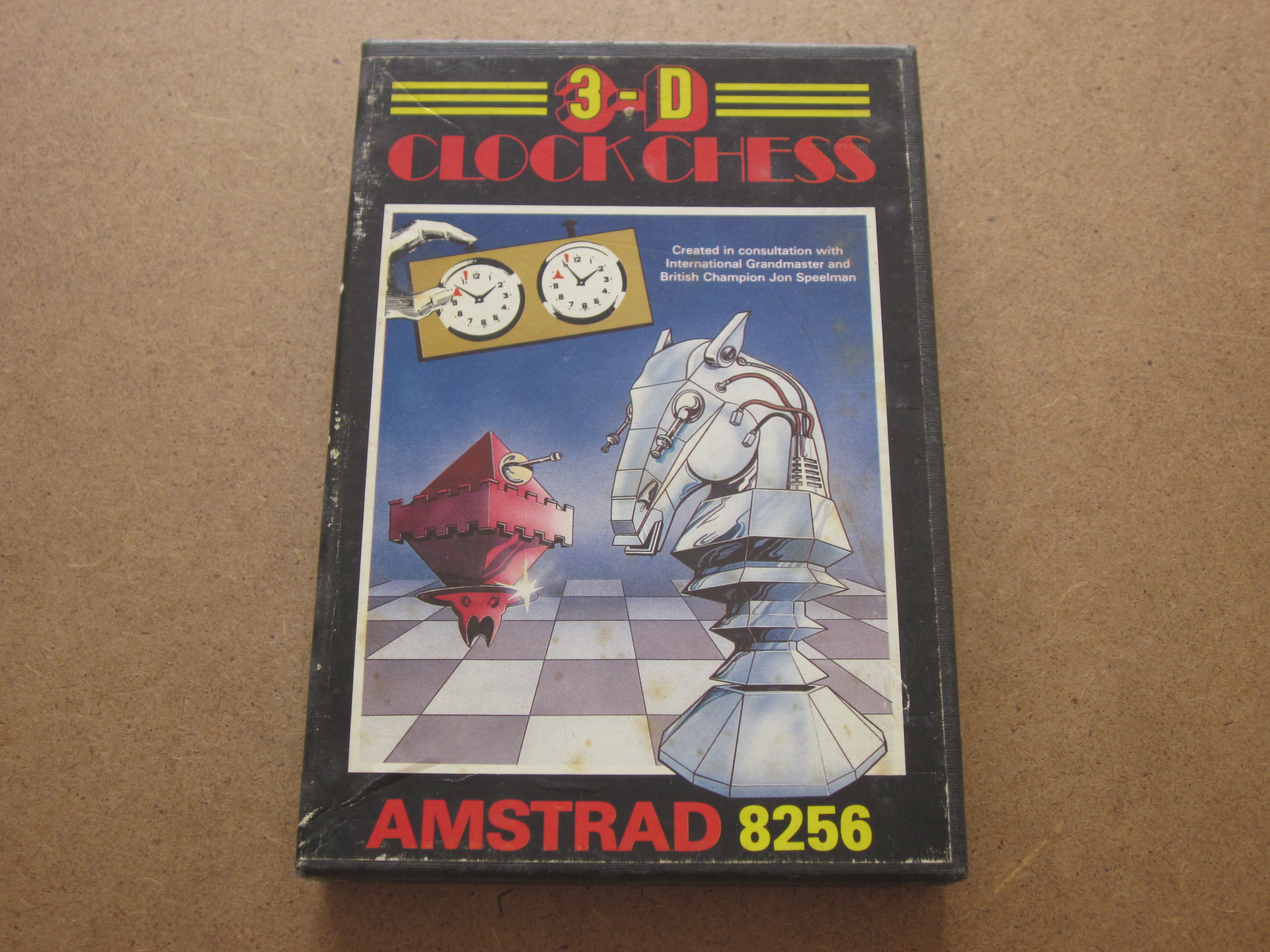
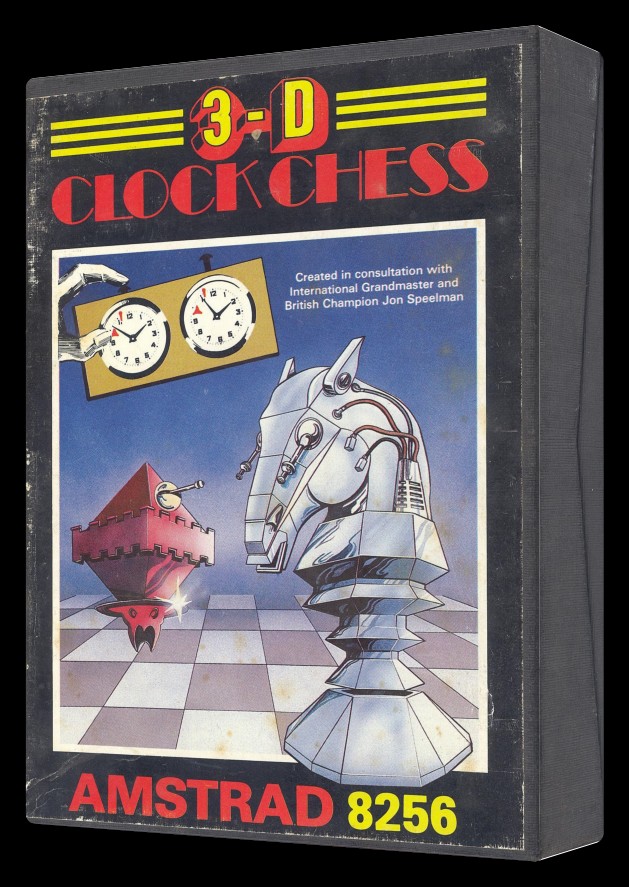
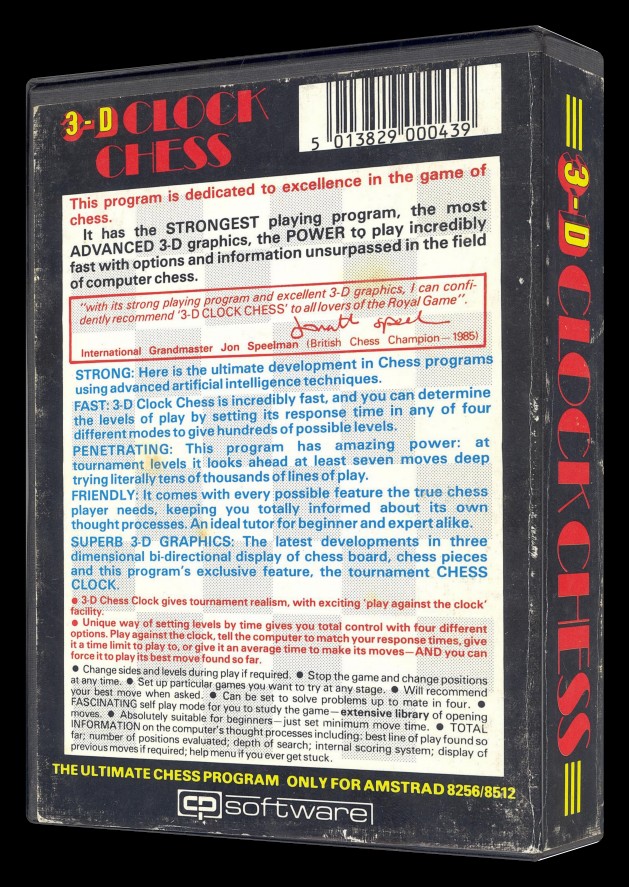
Packaging:Rigid cardboard box Width: 11.70 cm x Height: 17.00 cm x Thickness: 2.20 cm
Compatibility:PCW 8256 - PCW 8512 - PCW 9512
Peripherals:Keyboard
Loading:CP/M+
Genre:Board (3D Chess)
Language:English
Price:United Kingdom: £15.95
Screenshots
 |
 |
 |
 |
 |
 |
 |
 |
Description
A good chess program could not be missing for your PCW, powerful and simple at the same time. To load the game, you must first insert the CP/M operating system, then type "Chess" and Return.
It is one of the most popular chess games for the Amstrad PCW. It features a clock that controls the time of the moves, a three-dimensional display of the board, the possibility of playing against the computer or having it play alone, etc. It can be clearly differentiated from other chess programs, as we can create our own opening library.
This chess game provides the computer's opponent with a wide variety of options that we are going to analyze now. First of all, the game was programmed with the collaboration and advice of Jon Speelman, 1985 British Chess Champion.
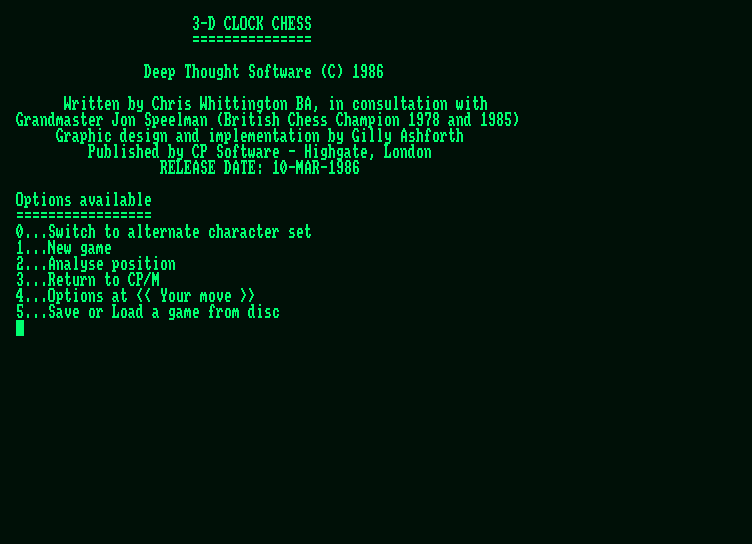
There are six options that appear at the beginning of the program: swap character set, start game, analyze a position, return to CP/M, list of options, and save or load a game from disk.
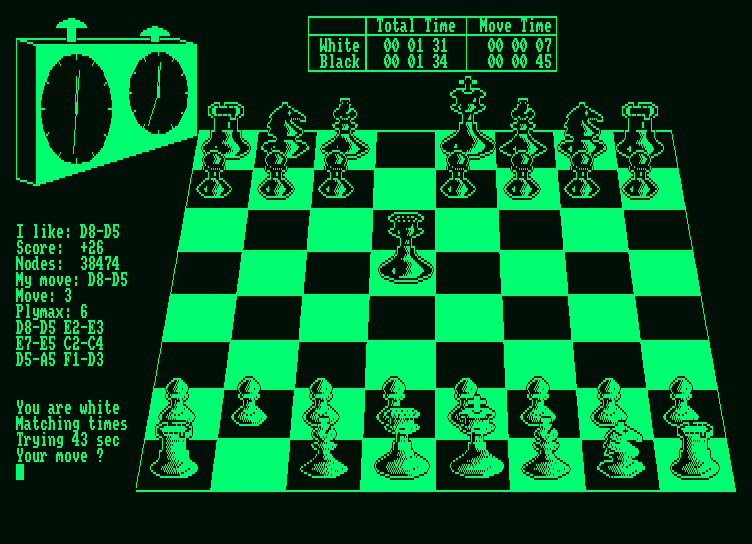
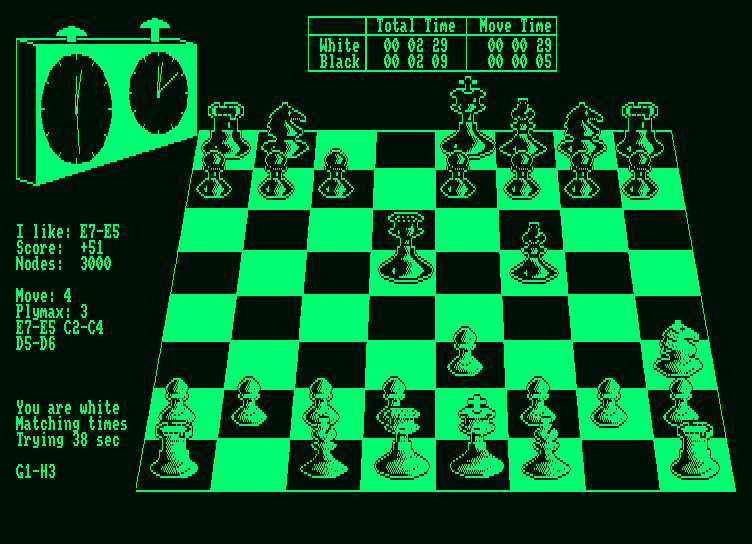
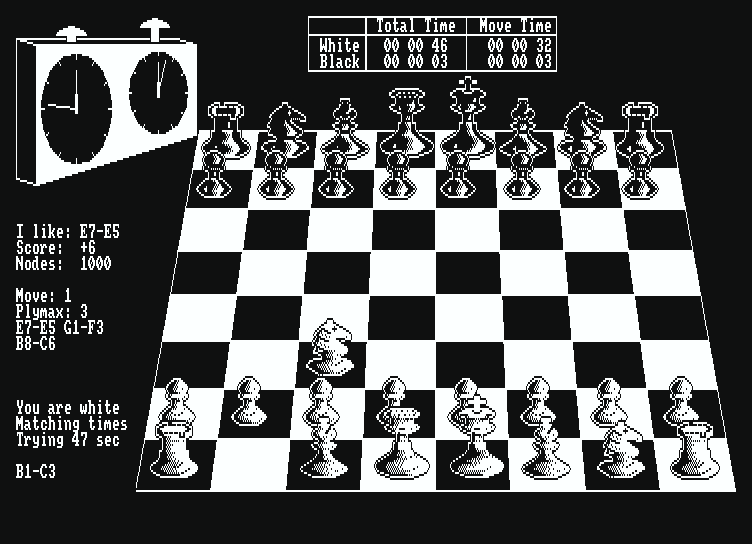
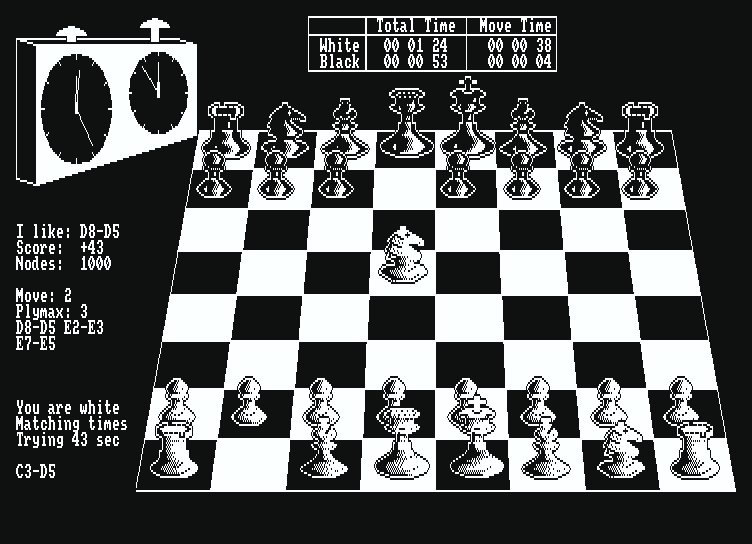
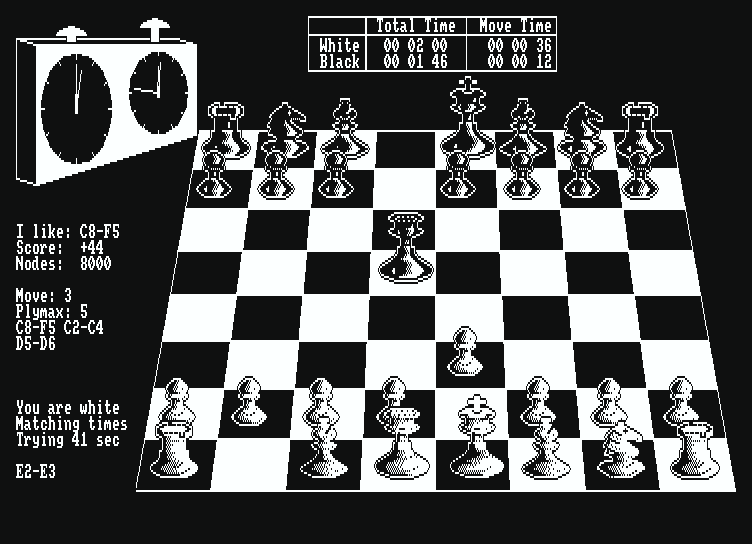
Regarding the on-screen information, 3-D Clock Chess has an extensive and objective series of messages. In the upper left part, we have the clock that will inform us of the total time consumed by the players in the game. We also have another digital clock located in the center that gives us the elapsed time and the time for each move made by the player and the program. Below the first clock, the information we find is ANALIZO (I ANALYZE), which notifies us of the best move made so far. Below, VALOR (VALUE) reflects what the program thinks about our game. A + sign means the computer is winning, a - sign means quite the opposite, that we are winning. NODOS (NODES) communicates the number of moves analyzed so far by the computer. YO JUEGO (I PLAY) indicates the movement made by the program. JUGADA (MOVE) informs about the phase the game has reached. NIVEL (LEVEL) represents the number of steps that the program has analyzed. Below this, the last movements made by us (on the right) and those made by the program (on the left) appear. LIMITE (LIMIT) is the time determined by us in the "Another game" option to set the level of play. TENGO (I HAVE) is the time in which the program will try to make its move.
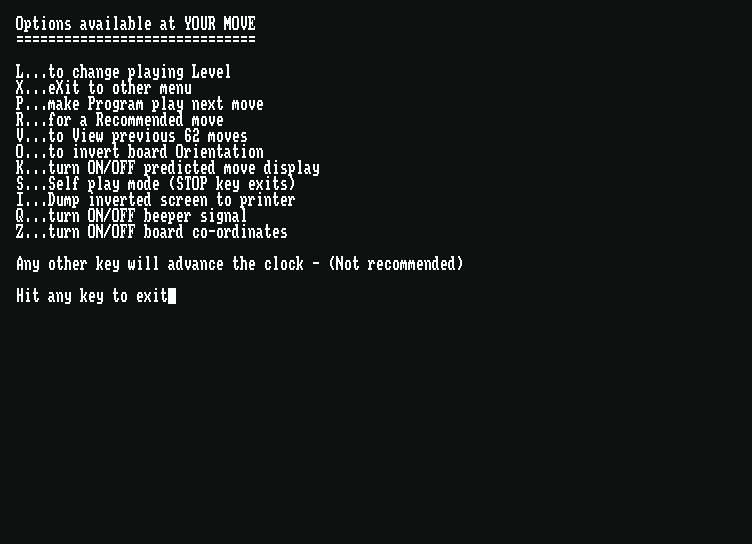
By pressing the key that displays all our possible options during the game, we observe the following and interesting menu: change the level of play, return to the previous menu, the computer suggests a move, the computer makes our move, view the last 62 moves, invert board, view moves being analyzed, select automatic play, copy the screen to the printer, activate sound, and view board coordinates. The latter do not appear initially, which can be a difficulty for the inexperienced.
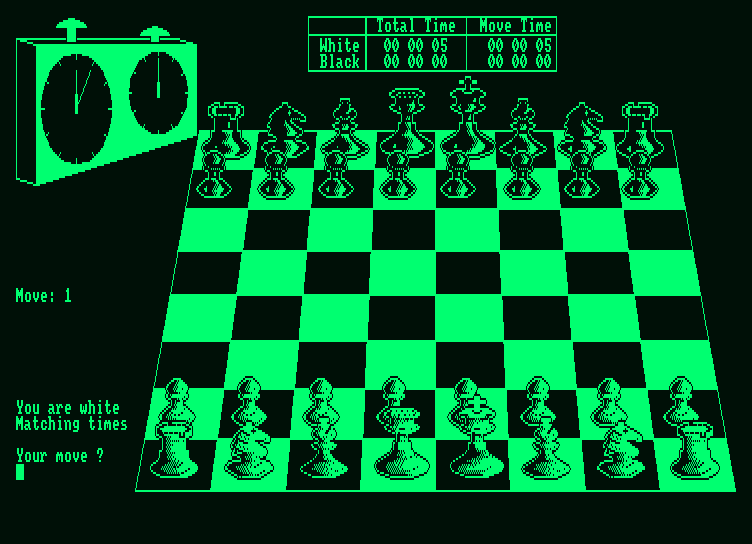
Returning to the previous menu, and choosing the option to start a new game, a three-dimensional board appears on the screen accompanied by two clocks, which will control the time spent by each of the opponents.
Previously, we will be asked about the level of play, the type of game (normal or problem), and the color of our pieces. In problem mode, the program will ask us for the number of moves in which we want Clock Chess to achieve checkmate.
In the same way, before starting a simple game, we will enter the time in which we want the computer to respond, the minimum of which is five seconds. The program allows, of course, to save the game to disk and continue it at any other time.
A curious detail of this program is the option to be able to print all the screens we want during the game.
In general, 3-D Clock Chess gathered the necessary quality to become one of the best chess programs on the market, being very good, interesting, and easy to use. If you think you have a relatively high level in this, the most curious of sports, face your PCW, the swords are held high. Take a risk!
It is one of the most popular chess games for the Amstrad PCW. It features a clock that controls the time of the moves, a three-dimensional display of the board, the possibility of playing against the computer or having it play alone, etc. It can be clearly differentiated from other chess programs, as we can create our own opening library.
This chess game provides the computer's opponent with a wide variety of options that we are going to analyze now. First of all, the game was programmed with the collaboration and advice of Jon Speelman, 1985 British Chess Champion.
There are six options that appear at the beginning of the program: swap character set, start game, analyze a position, return to CP/M, list of options, and save or load a game from disk.
Regarding the on-screen information, 3-D Clock Chess has an extensive and objective series of messages. In the upper left part, we have the clock that will inform us of the total time consumed by the players in the game. We also have another digital clock located in the center that gives us the elapsed time and the time for each move made by the player and the program. Below the first clock, the information we find is ANALIZO (I ANALYZE), which notifies us of the best move made so far. Below, VALOR (VALUE) reflects what the program thinks about our game. A + sign means the computer is winning, a - sign means quite the opposite, that we are winning. NODOS (NODES) communicates the number of moves analyzed so far by the computer. YO JUEGO (I PLAY) indicates the movement made by the program. JUGADA (MOVE) informs about the phase the game has reached. NIVEL (LEVEL) represents the number of steps that the program has analyzed. Below this, the last movements made by us (on the right) and those made by the program (on the left) appear. LIMITE (LIMIT) is the time determined by us in the "Another game" option to set the level of play. TENGO (I HAVE) is the time in which the program will try to make its move.
By pressing the key that displays all our possible options during the game, we observe the following and interesting menu: change the level of play, return to the previous menu, the computer suggests a move, the computer makes our move, view the last 62 moves, invert board, view moves being analyzed, select automatic play, copy the screen to the printer, activate sound, and view board coordinates. The latter do not appear initially, which can be a difficulty for the inexperienced.
Returning to the previous menu, and choosing the option to start a new game, a three-dimensional board appears on the screen accompanied by two clocks, which will control the time spent by each of the opponents.
Previously, we will be asked about the level of play, the type of game (normal or problem), and the color of our pieces. In problem mode, the program will ask us for the number of moves in which we want Clock Chess to achieve checkmate.
In the same way, before starting a simple game, we will enter the time in which we want the computer to respond, the minimum of which is five seconds. The program allows, of course, to save the game to disk and continue it at any other time.
A curious detail of this program is the option to be able to print all the screens we want during the game.
In general, 3-D Clock Chess gathered the necessary quality to become one of the best chess programs on the market, being very good, interesting, and easy to use. If you think you have a relatively high level in this, the most curious of sports, face your PCW, the swords are held high. Take a risk!
Packaging
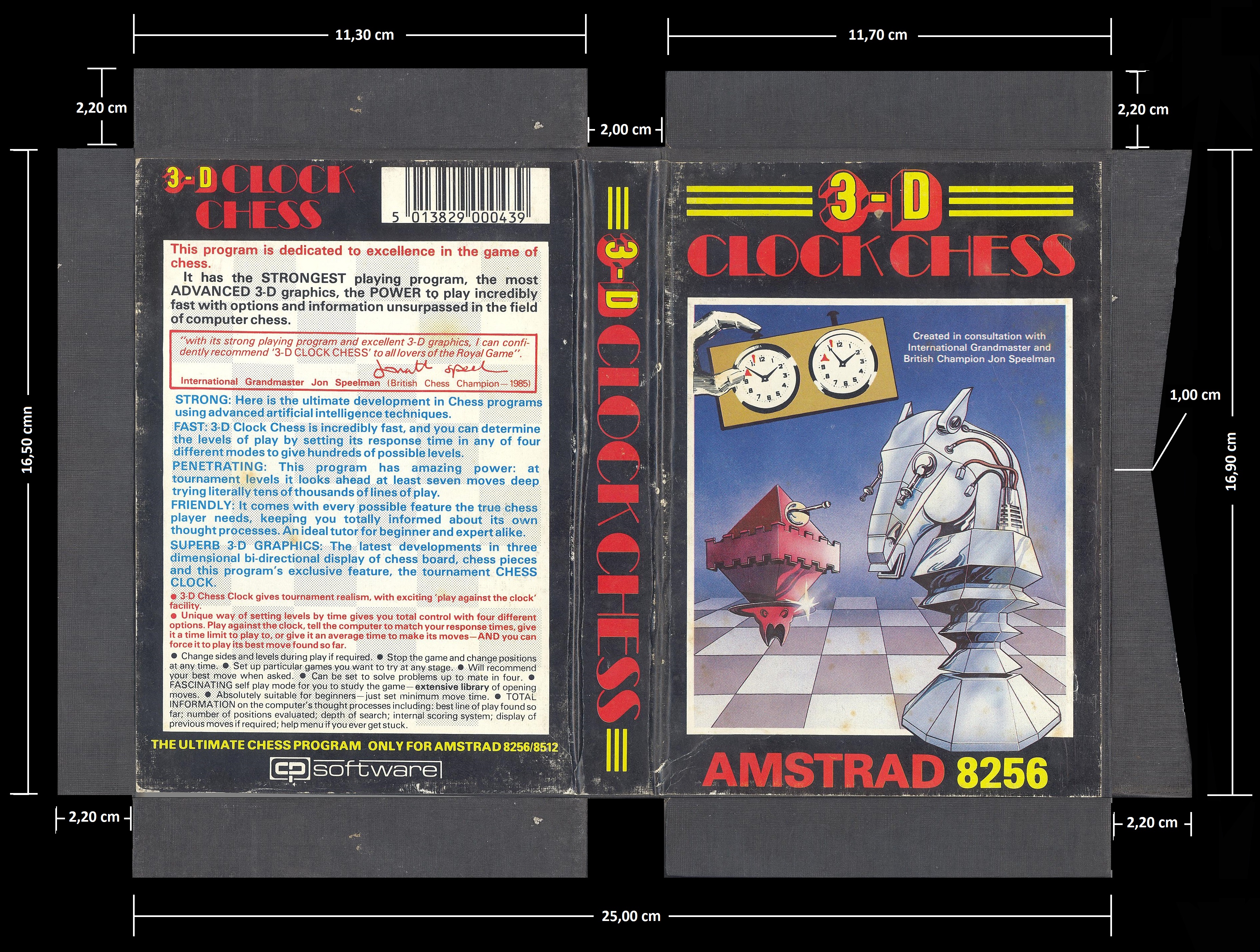
Inlay
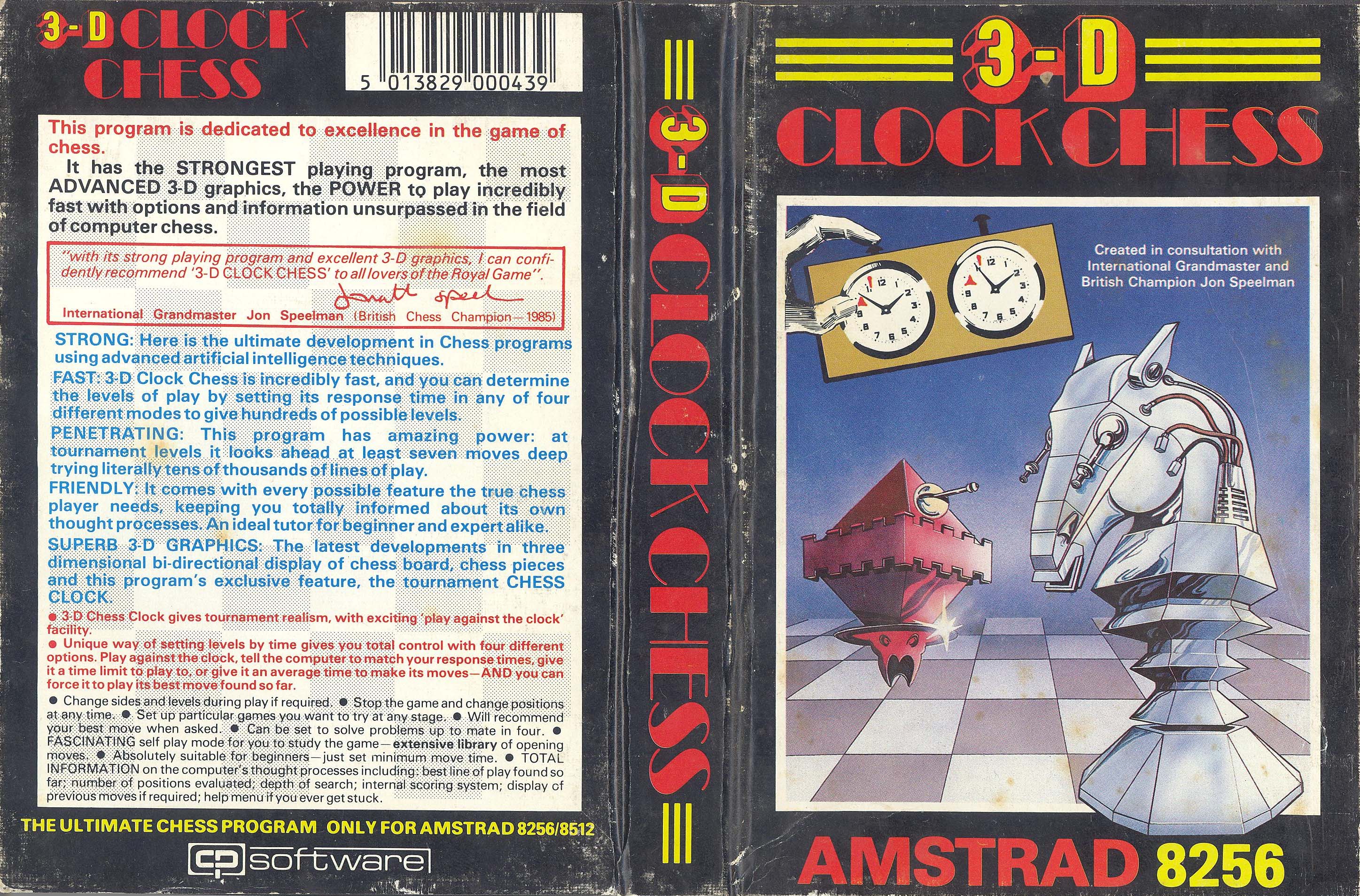
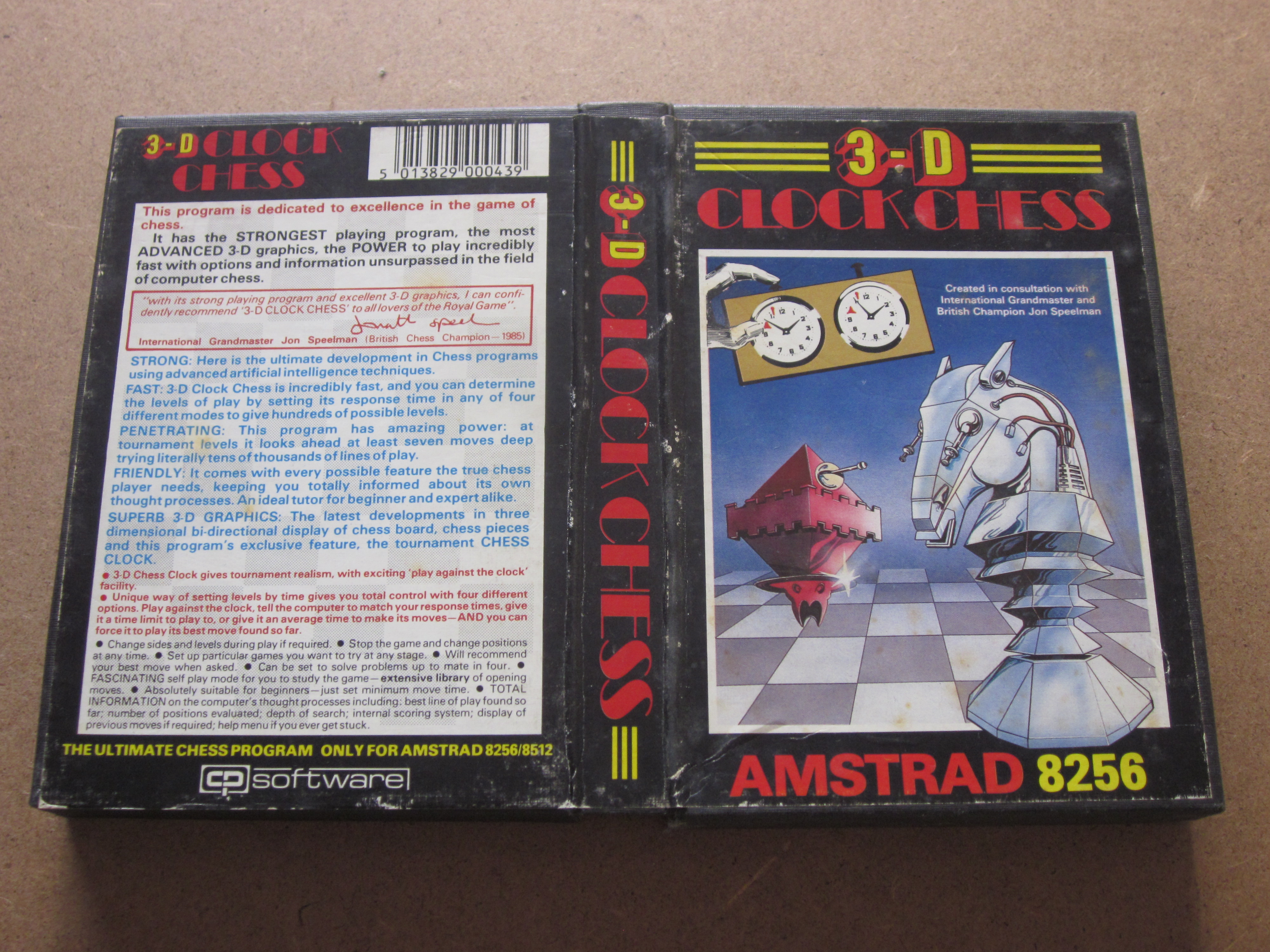
Original inlay: Dimensions: Width: 22.20 cm x Height: 16.00 cm.
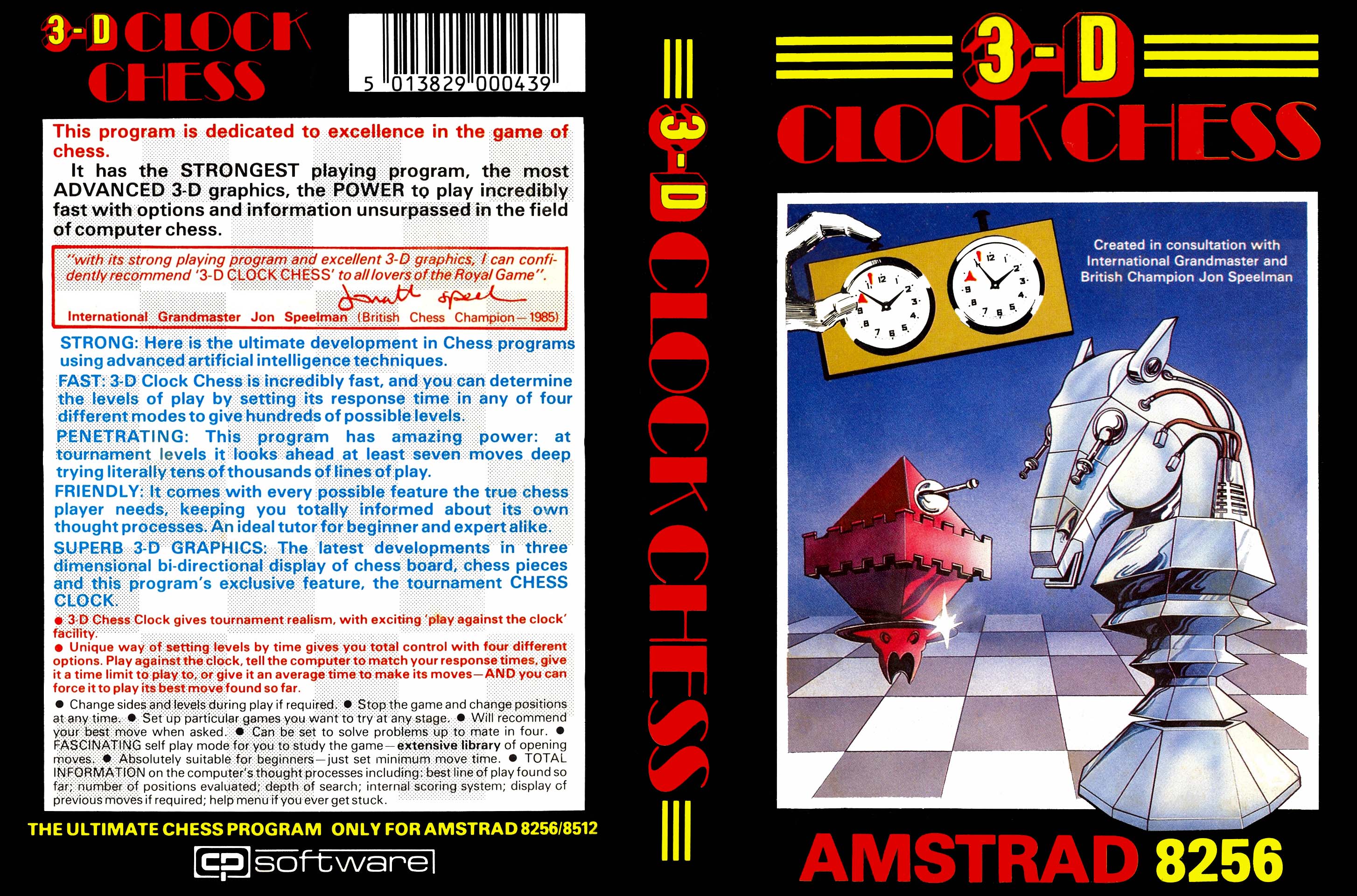
Retouched cover
Manual
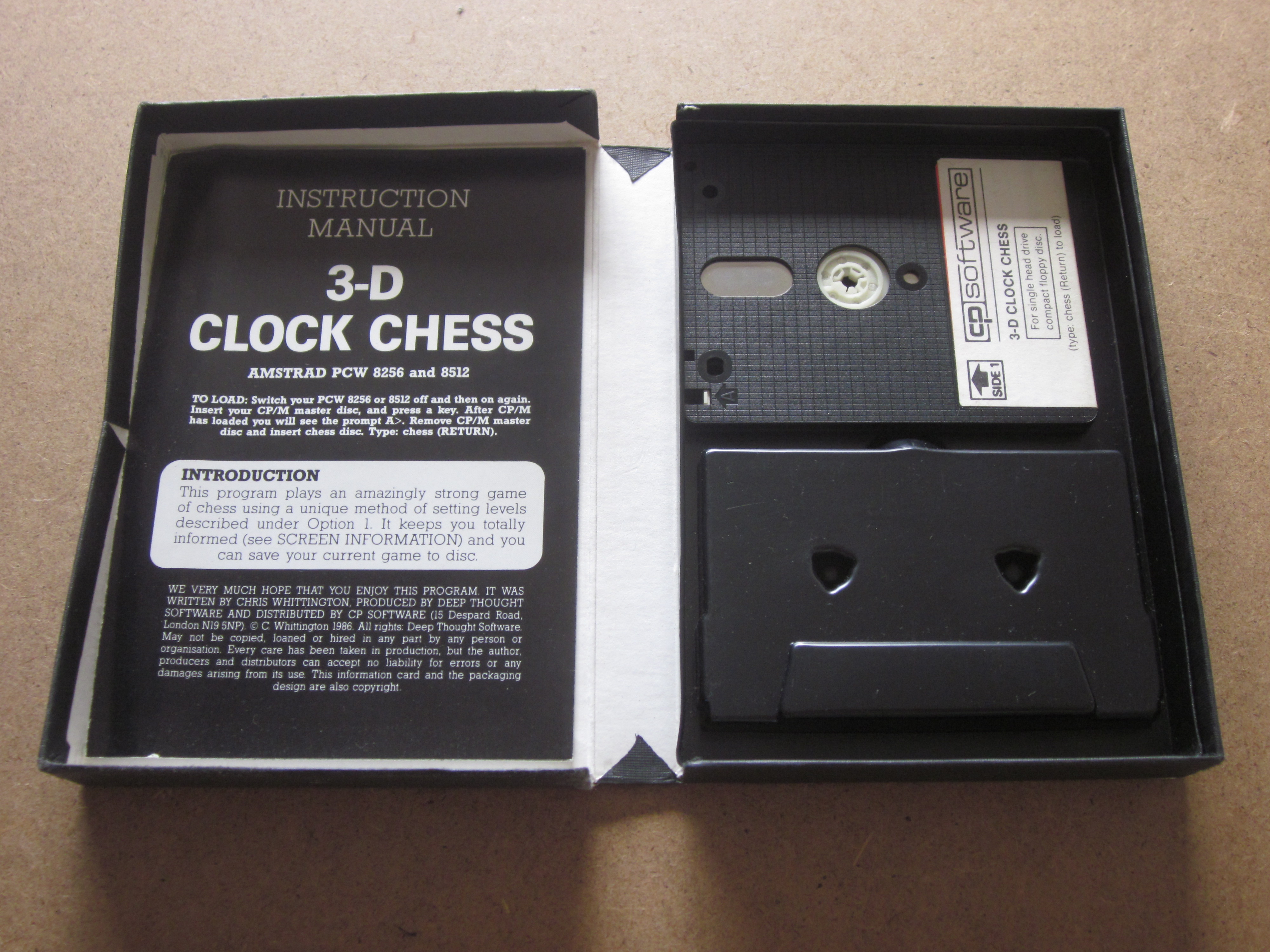
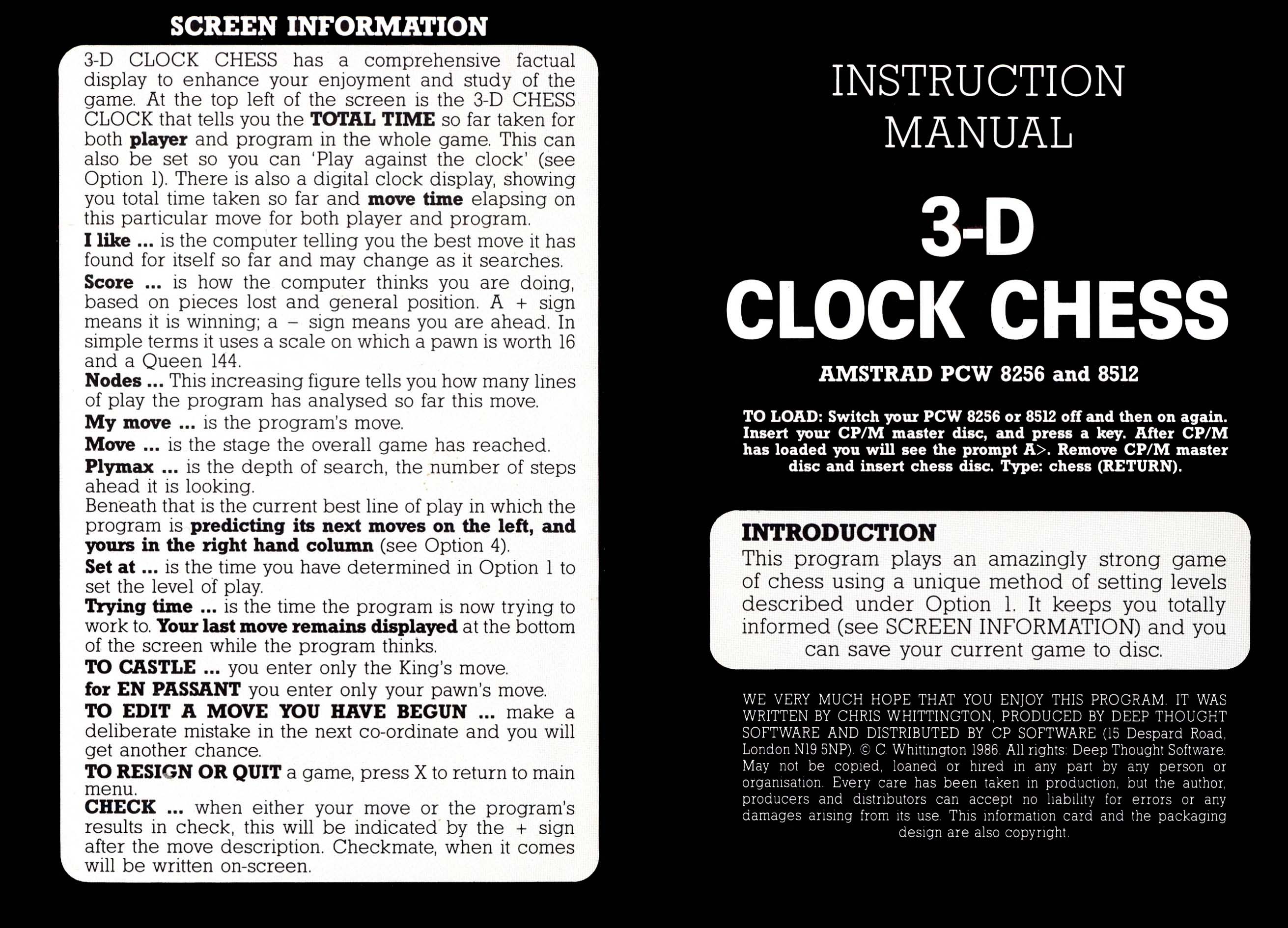
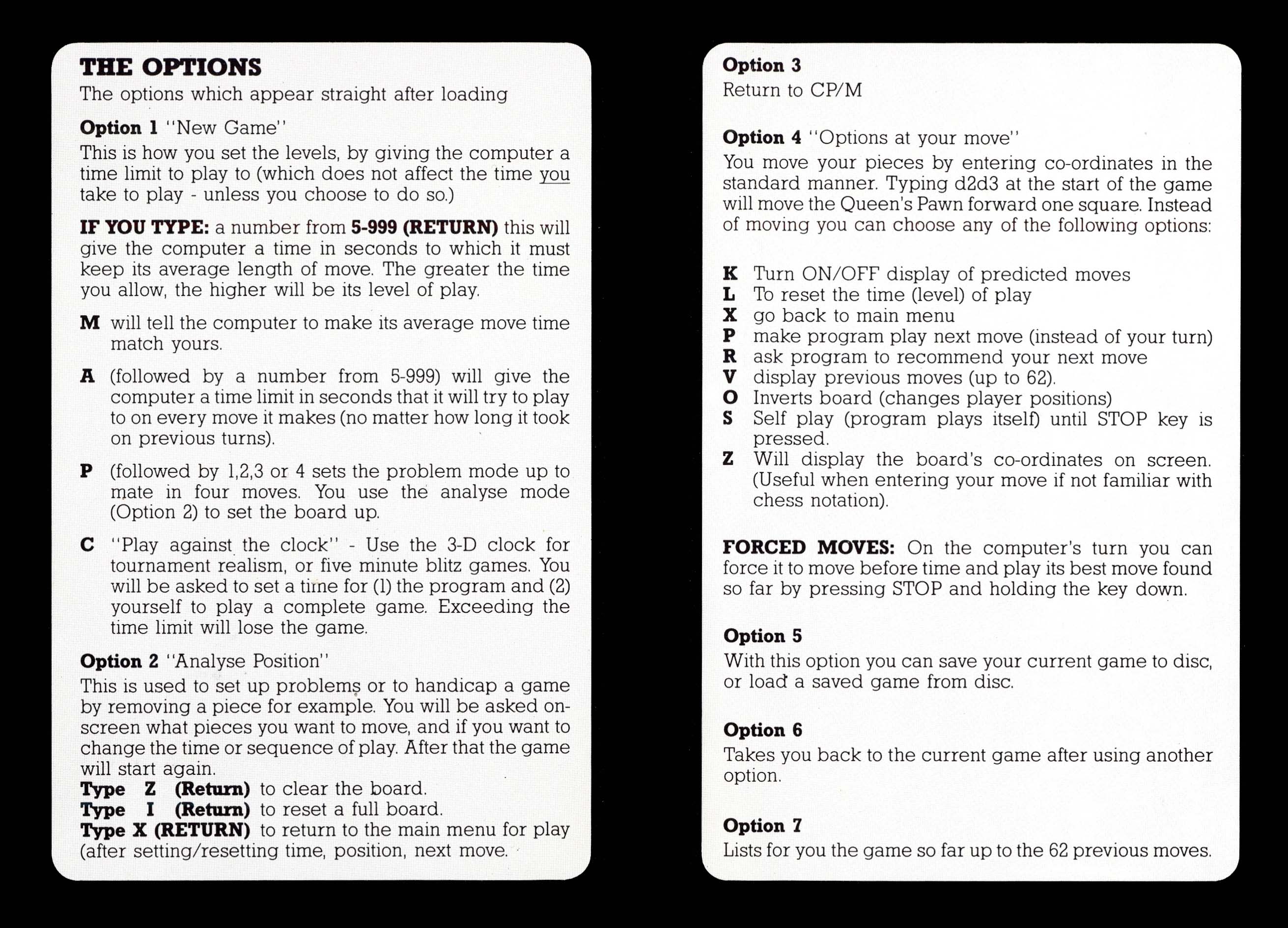
The instruction manual is attached, presented in a double-sided format. It has been printed on high-quality glossy paper, using a black and white color palette. Once opened, the manual measures 16.00 cm high by 22.20 cm wide. Each individual panel has dimensions of 16.60 cm high by 11.10 cm wide.
Disks

Labels
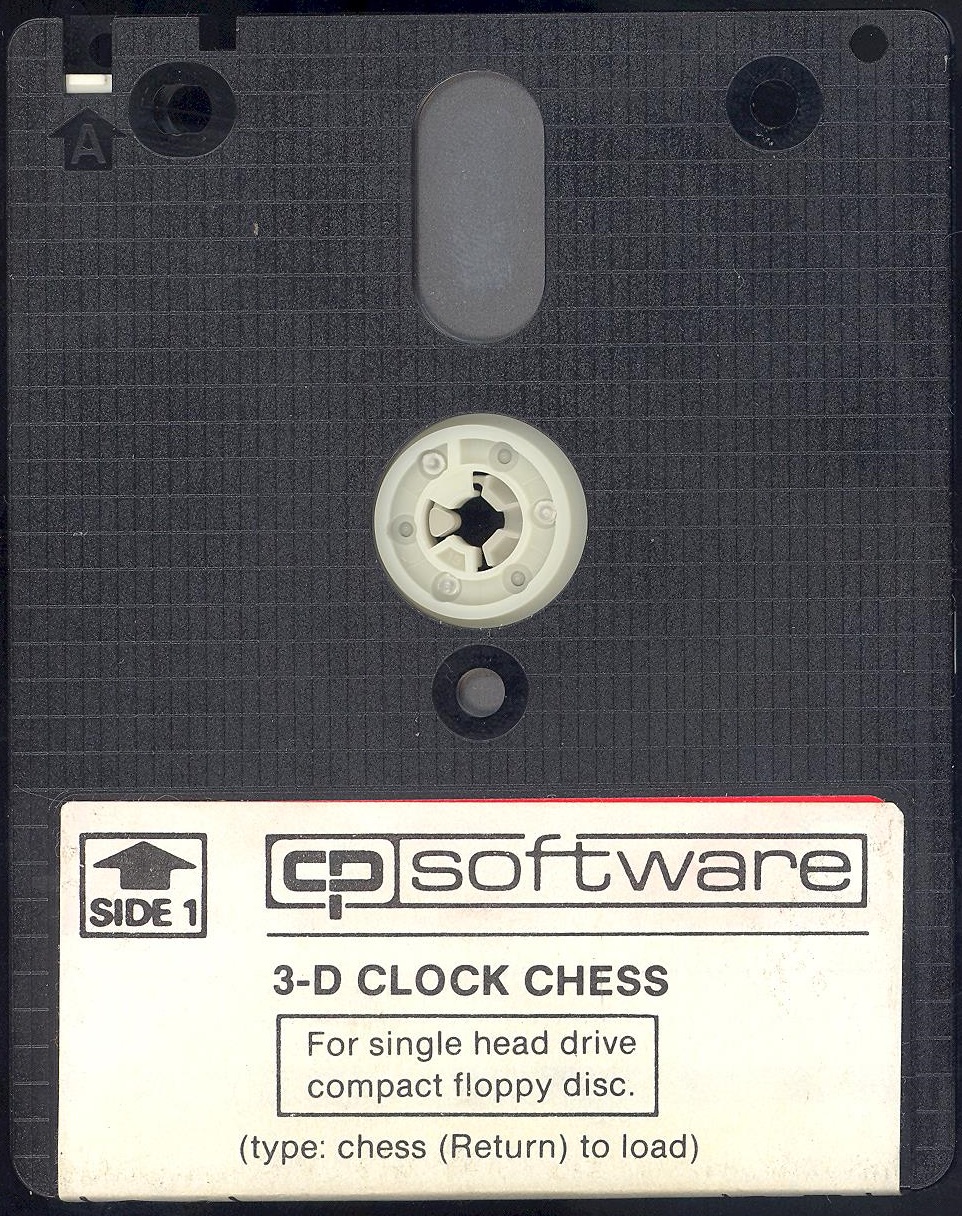
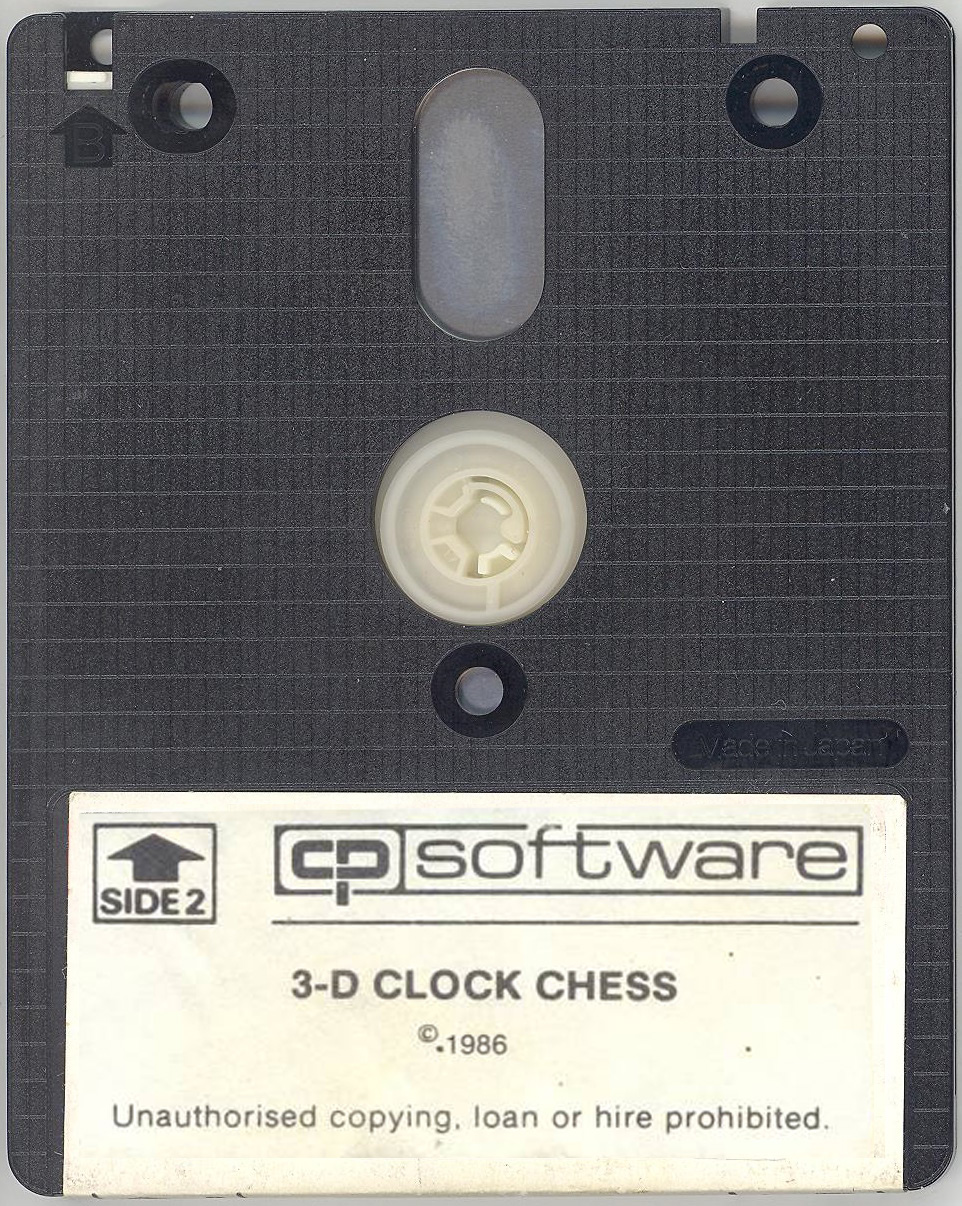
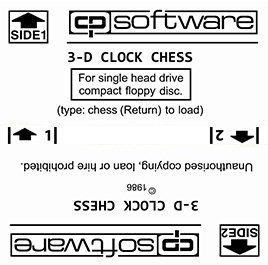
Over the years, due to use, labels deteriorate and lose color and quality. We now try to adapt them as faithfully as possible, within our means, so that they can be printed and replaced, serving those who work with a copy of the program, while keeping the original disk intact. Measurement in 3" height: 7.00 cm - width: 7.10 cm.
Extras
Tips and Tricks
You can print out everything you want automatically. Simultaneously press the "0", "5", "6", "." and "ENTER" keys on the numeric keypad and immediately your computer screen transfers to the printer.
Period Advertising
Available Downloads
Game
Manuals
Videos
en/software/juegos/3d_clock_chess_en.txt · Última modificación: por jesus