
en:software:nuevos_desarrollos:pacmania
¡Esta es una revisión vieja del documento!
PAC-MANIA
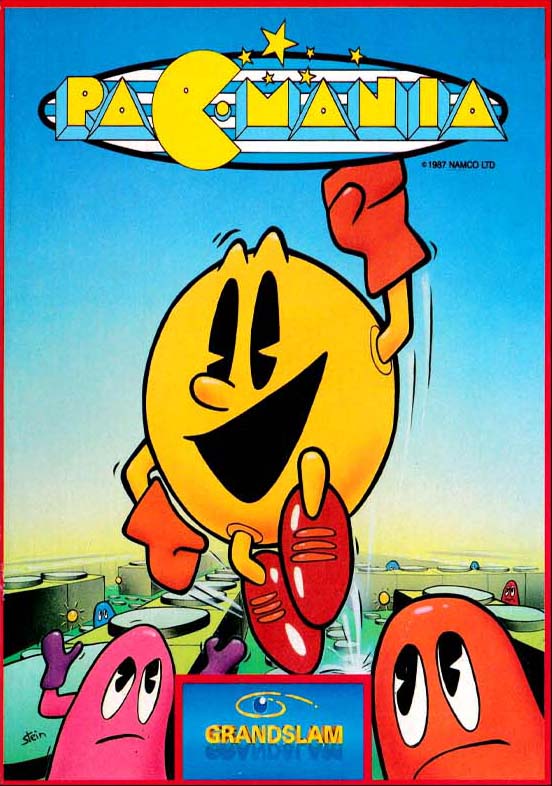
TECHNICAL SPECIFICATIONS

Developer:Namco
Publisher:Grandslam Entertainment
Production Team:Original Design: Toru Iwatani
Base Port Programming: Steinar Lund / Peter Johnson
Base Port Programming: Steinar Lund / Peter Johnson
Ported by:HabiSoft (https://habisoft.com)
Release Year:1987 (Arcade)
Port Year:2024
Compatibility:Amstrad PCW 8256 - PCW 8512 - PCW 9256 - PCW 9512
Peripherals:Keyboard / Joystick (Dk'Tronics)
Boot Type:Autoboot
Genre:Maze / Pseudo-3D Arcade
Language:Spanish (Manual) / English (Game)
Screenshots
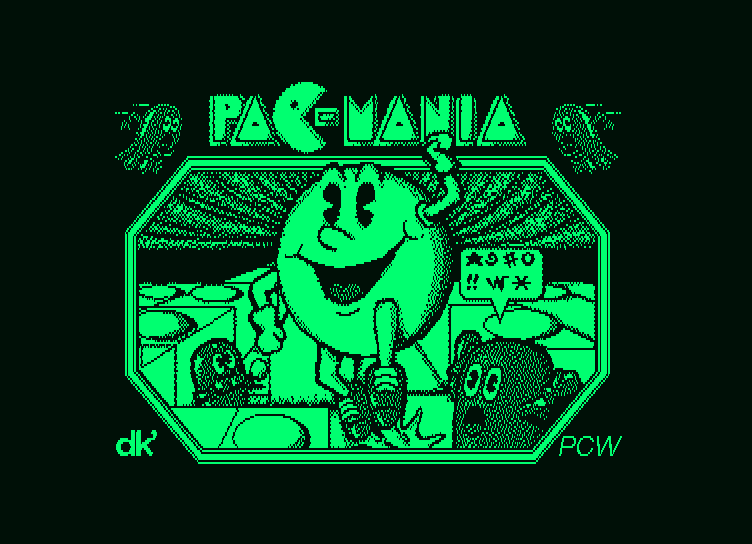 |
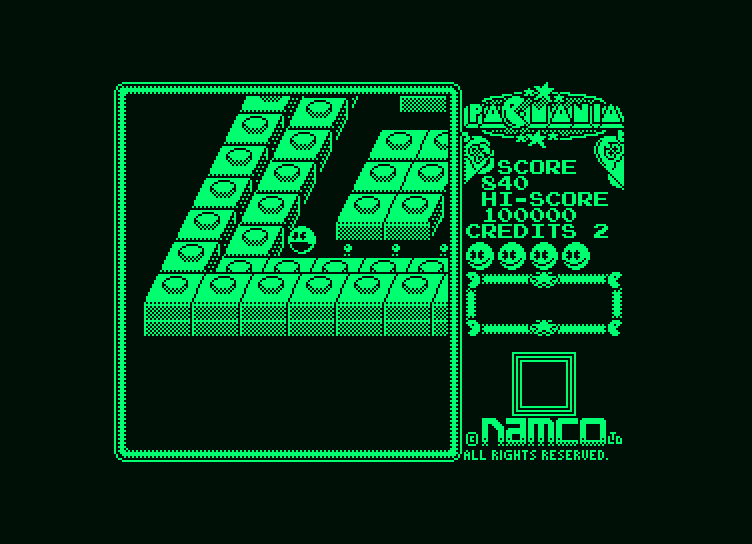 |
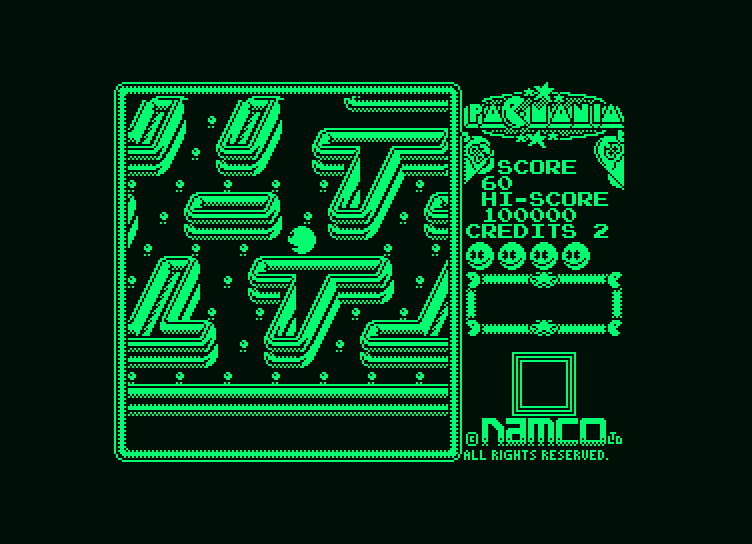 |
 |
 |
 |
 |
 |
Description
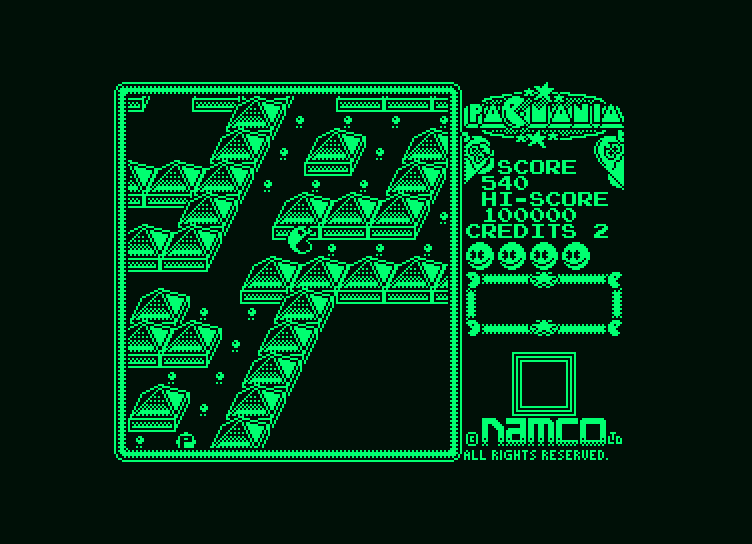
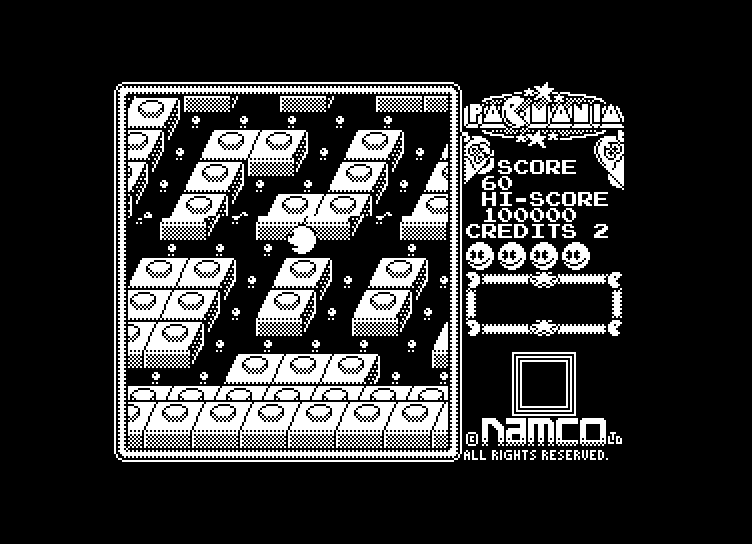
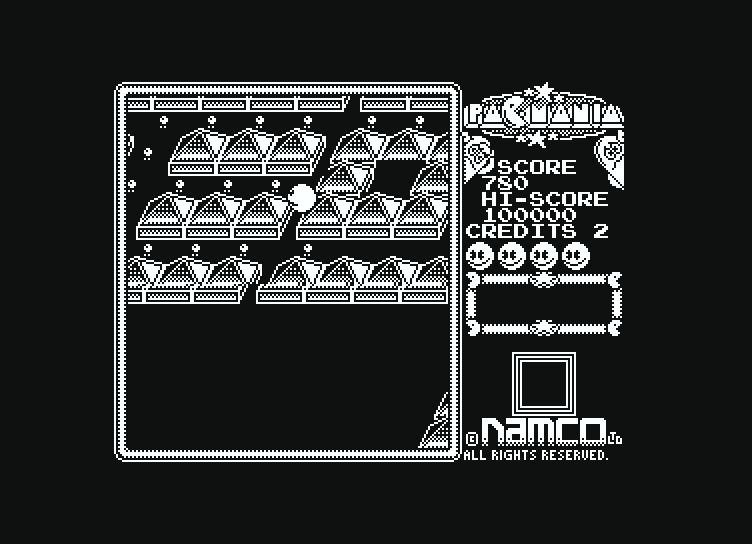
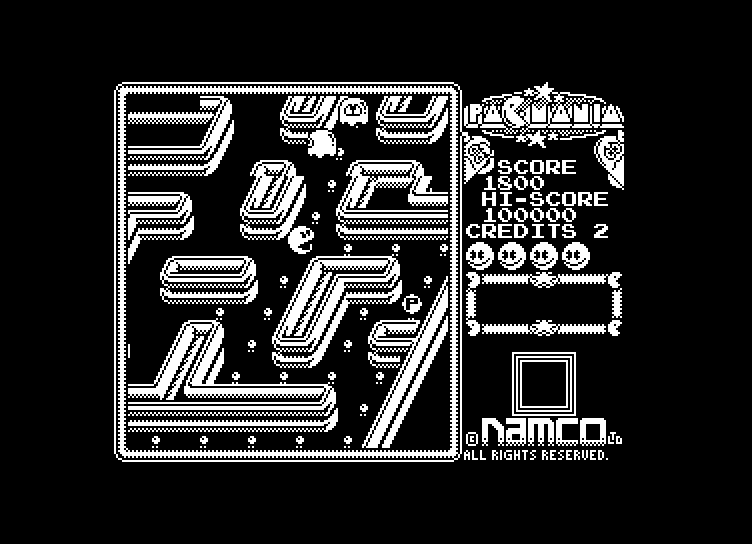
Pac-Mania represented one of the most ambitious mechanical and visual evolutions of Namco's famous franchise in arcade halls. Originally released in 1987, the video game abandoned the classic top-down two-dimensional perspective in favor of a stunning isometric projection in fake 3D with multi-directional scrolling. The greatest gameplay innovation lay in Pac-Man's ability to jump over ghosts, introducing a vertical dimension that completely altered traditional evasion strategies.
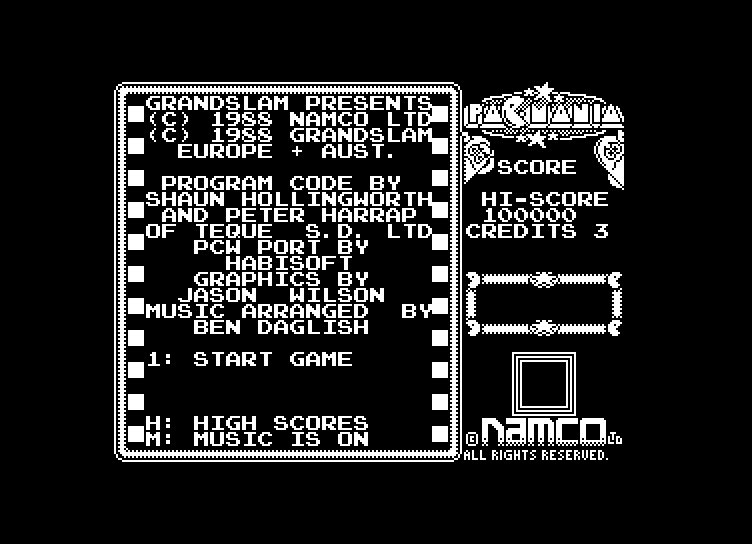
This outstanding native version for the Amstrad PCW range, developed in 2024 by the prolific preservationist HabiSoft, is a highly interesting feat of optimization and Z80 code archaeology. Interestingly, the conversion from the Amstrad CPC system proved particularly viable due to the internal architecture of the original software itself: the commercial game originally adapted by Grandslam spent its time constantly converting the screen from a "Spectrum format" to the CPC buffer in the background. HabiSoft took advantage of this structural importance to simply replace that routine with one optimized for the PCW's video system, redirecting the data directly to the high-resolution monochrome matrix.
Beyond the visual translation, this port resolves severe inherited technical flaws that put the hardware at risk. In the commercial CPC version, the sound routine executed when consuming a power pellet ("fat ball") was never properly ported; the game kept trying to write directly to the Sinclair ZX Spectrum's ULA, an orphan and dangerous instruction in Amstrad architectures. HabiSoft has completely corrected this audio buffer, cleanly porting the sound for the Dk'Tronics musical interface and adding full support for its physical joystick. Since the original engine suffers from a certain native refresh sluggishness, a frame selector menu has been implemented at startup to allow balancing movement smoothness versus execution speed at will.
This outstanding native version for the Amstrad PCW range, developed in 2024 by the prolific preservationist HabiSoft, is a highly interesting feat of optimization and Z80 code archaeology. Interestingly, the conversion from the Amstrad CPC system proved particularly viable due to the internal architecture of the original software itself: the commercial game originally adapted by Grandslam spent its time constantly converting the screen from a "Spectrum format" to the CPC buffer in the background. HabiSoft took advantage of this structural importance to simply replace that routine with one optimized for the PCW's video system, redirecting the data directly to the high-resolution monochrome matrix.
Beyond the visual translation, this port resolves severe inherited technical flaws that put the hardware at risk. In the commercial CPC version, the sound routine executed when consuming a power pellet ("fat ball") was never properly ported; the game kept trying to write directly to the Sinclair ZX Spectrum's ULA, an orphan and dangerous instruction in Amstrad architectures. HabiSoft has completely corrected this audio buffer, cleanly porting the sound for the Dk'Tronics musical interface and adding full support for its physical joystick. Since the original engine suffers from a certain native refresh sluggishness, a frame selector menu has been implemented at startup to allow balancing movement smoothness versus execution speed at will.
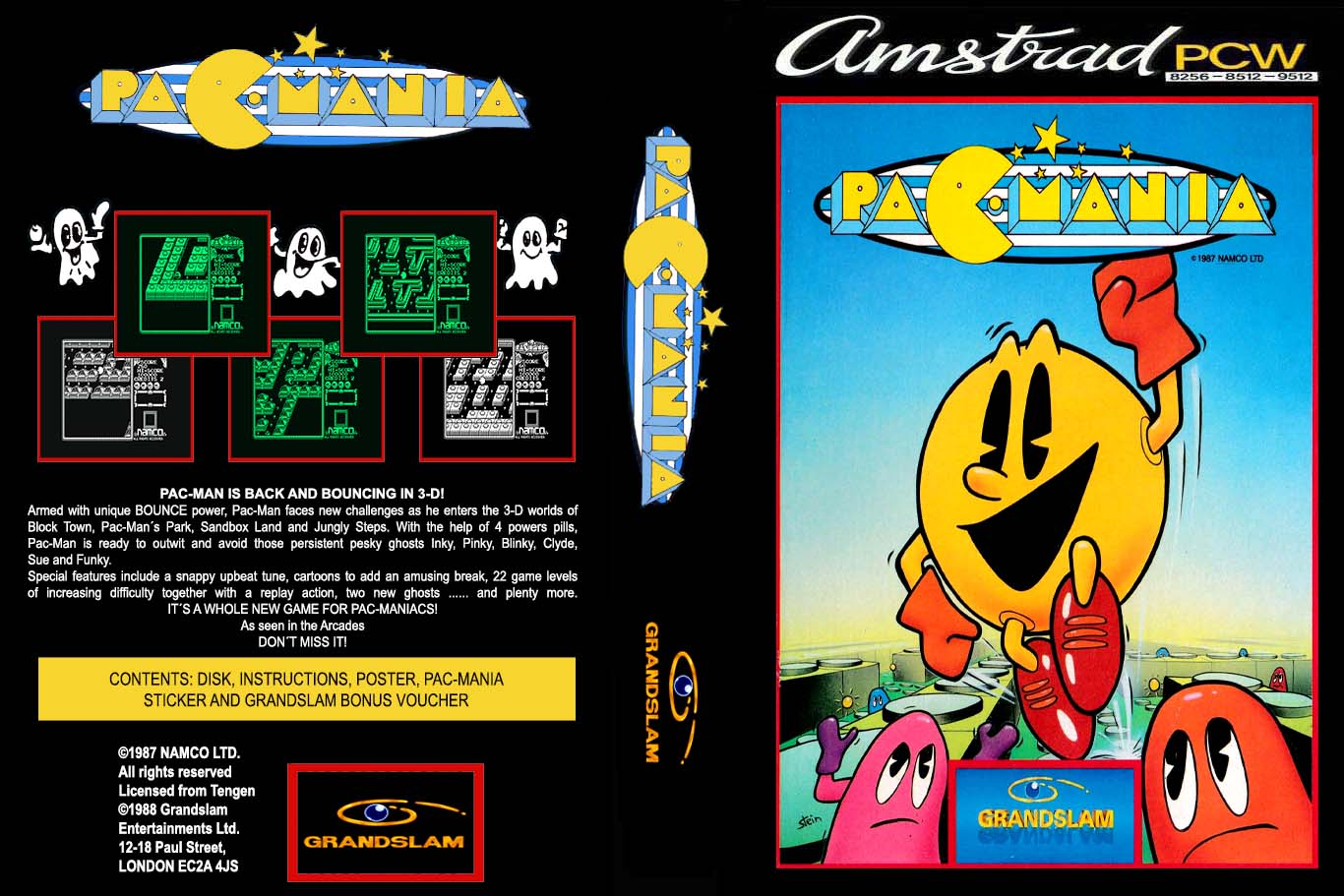
Cover Art
Manual
The official manual page translated and adapted by HabiSoft, preserved with official instructions, is attached below.
Disks

Labels
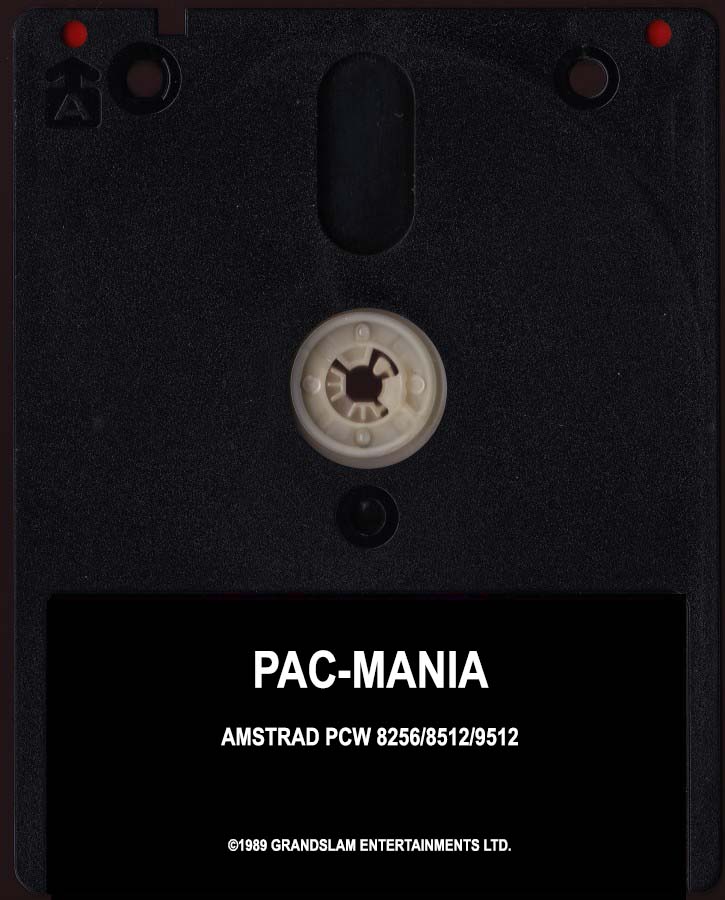
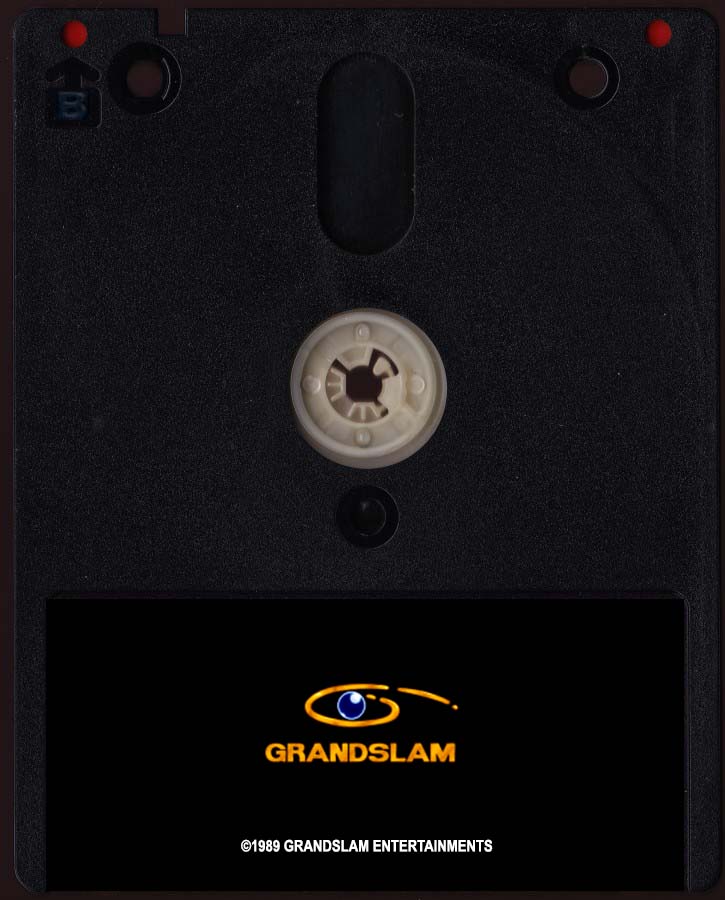
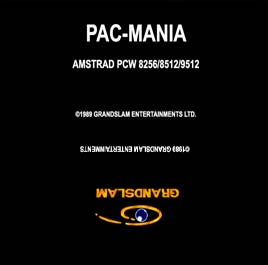
Standardized dimensions for Amstrad 3-inch floppy disks: Height: 7.00 cm - Width: 7.10 cm.
Extras
Promotional Historical Preservation Material
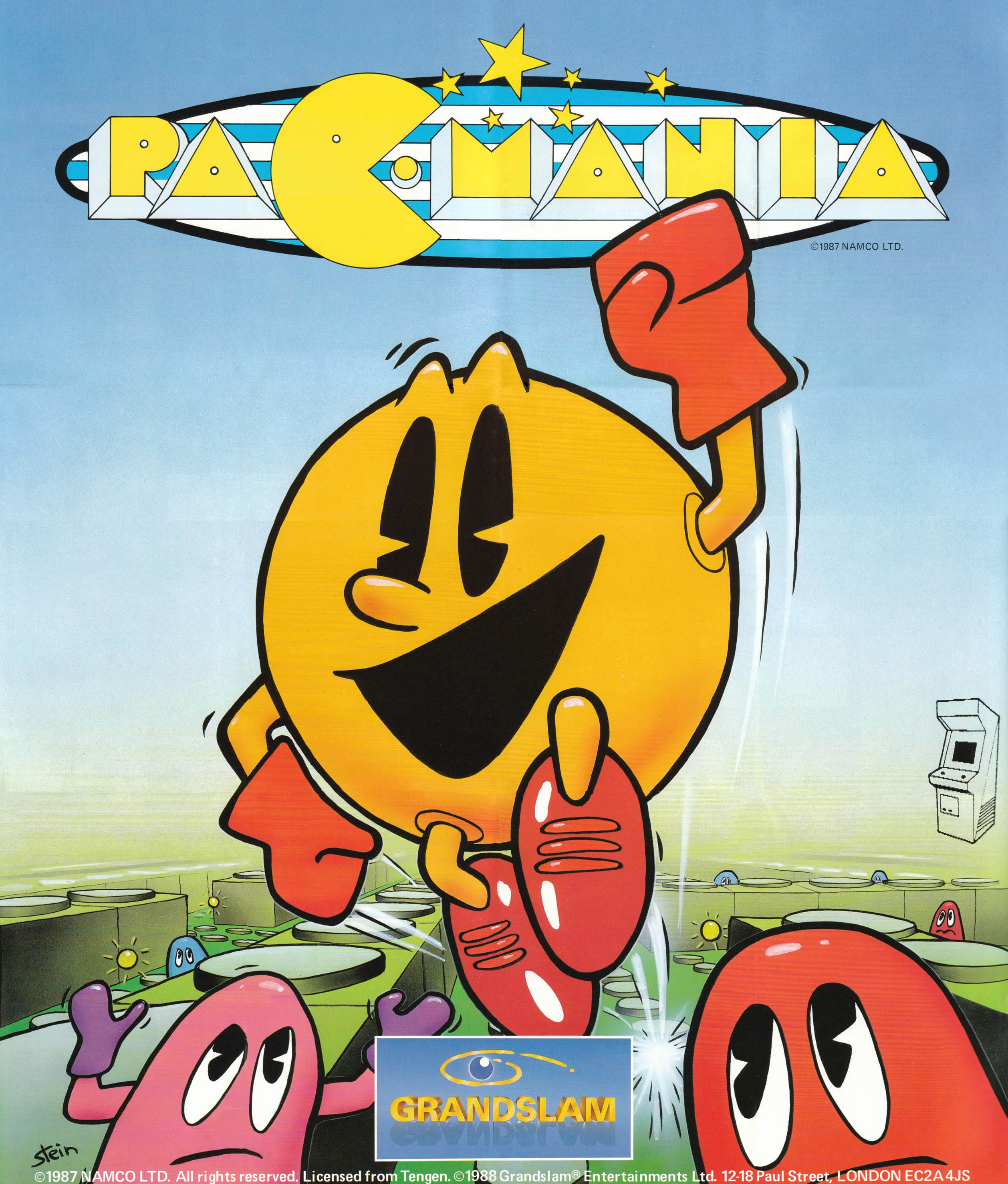
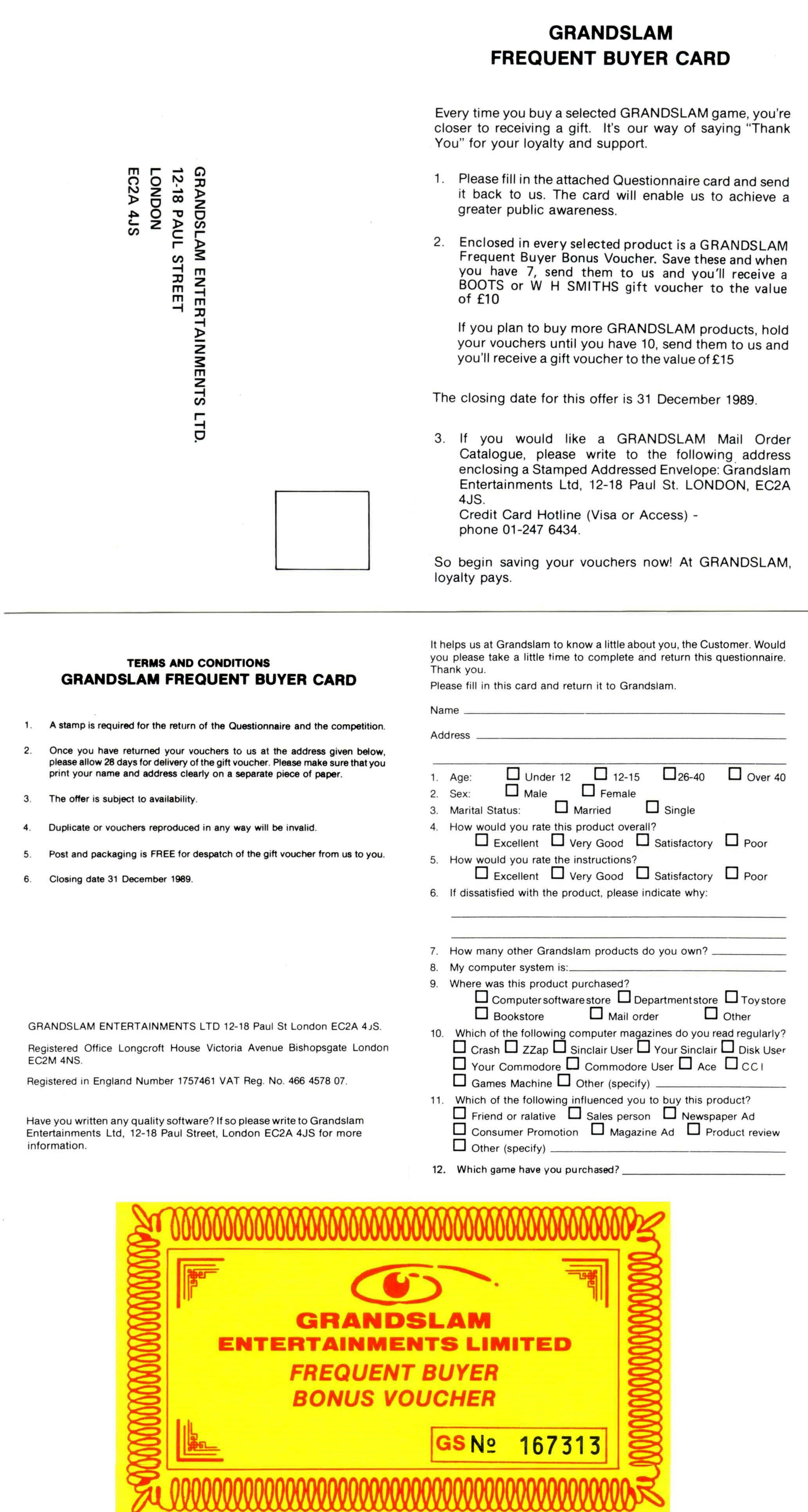
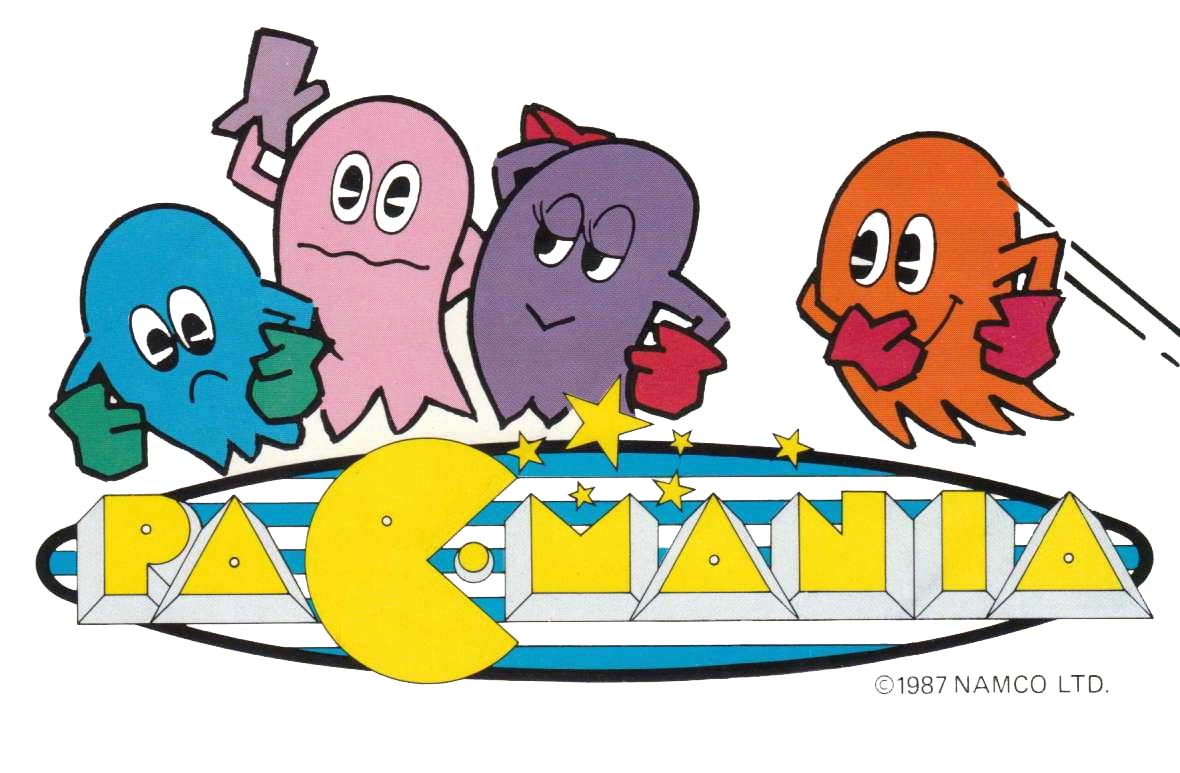
Official promotional and printed material included in the physical editions of the era is added. Below are the official poster, the user registration / reference card, and the Grandslam commemorative sticker. Clicking on any thumbnail will expand it to full resolution in the viewer.
Official Loading Instructions (By Disk Sides)
PCW 8256 / 8512 Models:Insert the disk via Side A into the drive and turn on the PCW. Loading will execute automatically.
PCW 9256 / 9512 Models:Insert the disk via Side B into the drive and turn on the PCW. Loading will execute automatically.
Native Keyboard Configuration and Joystick Mapping
Left:Z key or Left Arrow [←] / Joystick Left (Inverted in manual)
Right:X key or Right Arrow [→] / Joystick Right (Inverted in manual)
Up:O key or Up Arrow [↑] / Joystick Up
Down:K key or Down Arrow [↓] / Joystick Down
Jump:Spacebar / Central Joystick Button
Quit Game:Combination Shift + Q
Pause:Combination Shift + P
Official Mechanics and Maze Investigation
• Performance Optimization (Startup Frameskip): Due to the innate sluggishness that the original engine already dragged on the Amstrad CPC, HabiSoft has incorporated an ingenious boot menu. If you are looking for maximum graphic smoothness to appreciate the scroll, keep the value at 100%. If, on the contrary, you prefer a much faster and more frantic game response sacrificing intermediate frames, reduce the frame dump rate in the initial menu to accelerate the logic of the labyrinth.
• Difficulty Selection and Progression: The game allows selecting the initial loop starting from level 1, 2, or 4. The higher the section, the base speed and aggressiveness of the AIs will increase exponentially. The primary goal is to clear the three-dimensional rooms (Block Town, Pac-Man's Park, Sandbox Land, and Jungly Steps) of pellets and fruits while dodging the harassment of the spiritual entities.
• The Ghost Lineup: The classic roster led by Clyde is joined by two new talents: Sue and Funky. These enemies are specifically designed to intercept long trajectories and perform simultaneous predictive jumps, making Pac-Man's journey considerably more problematic and difficult in the later stages.
• Power Pellet Mechanics: Upon consuming a large energy ball, the ghosts will temporarily change color to a vulnerable bluish tone. In this state, their chase AI is deactivated and they flee in random directions, allowing Pac-Man to devour them to clear his way and achieve hefty score multipliers.
• Special Items and Speed Multipliers: In addition to the standard fruits that grant direct bonuses on the scoreboard, the game offers the opportunity to temporarily increase speed or obtain double points depending on the pellet taken. Fruit can also appear unexpectedly and, when eaten, will add juicy extra points to your total score.
• Difficulty Selection and Progression: The game allows selecting the initial loop starting from level 1, 2, or 4. The higher the section, the base speed and aggressiveness of the AIs will increase exponentially. The primary goal is to clear the three-dimensional rooms (Block Town, Pac-Man's Park, Sandbox Land, and Jungly Steps) of pellets and fruits while dodging the harassment of the spiritual entities.
• The Ghost Lineup: The classic roster led by Clyde is joined by two new talents: Sue and Funky. These enemies are specifically designed to intercept long trajectories and perform simultaneous predictive jumps, making Pac-Man's journey considerably more problematic and difficult in the later stages.
• Power Pellet Mechanics: Upon consuming a large energy ball, the ghosts will temporarily change color to a vulnerable bluish tone. In this state, their chase AI is deactivated and they flee in random directions, allowing Pac-Man to devour them to clear his way and achieve hefty score multipliers.
• Special Items and Speed Multipliers: In addition to the standard fruits that grant direct bonuses on the scoreboard, the game offers the opportunity to temporarily increase speed or obtain double points depending on the pellet taken. Fruit can also appear unexpectedly and, when eaten, will add juicy extra points to your total score.
Available Downloads
Game File
Manuals
Videos
en/software/nuevos_desarrollos/pacmania.1784732430.txt.gz · Última modificación: por jesus